How to Get Rid of Mice in Walls in Colorado
Learn how to get rid of mice in walls safely, seal Colorado entry points, clean up evidence, and know when to call a Denver rodent professional.
When you hear scratching behind drywall, the fastest way to get rid of mice in walls is not to seal the first gap you find. First confirm the activity, identify how mice are entering the home, remove them safely, and then close the routes they use to return. That sequence matters in Denver homes, where mice can move through wall voids, crawl spaces, garages, and attic areas that connect to utility openings.
Call Beeline Pest Control at 303-586-5231 for a rodent inspection, or review the rodent control service to request a free estimate.
How can a Colorado homeowner get mice out of walls safely?
Use a four-part plan: confirm mouse activity from sounds and evidence, place accessible traps instead of putting loose poison inside an inaccessible wall, inspect and seal exterior entry points, and clean droppings or nesting material using CDC precautions. If sounds continue, evidence is widespread, or a mouse may be near wiring or insulation, schedule a professional inspection before opening the wall or sealing an active nest inside.
How to get rid of mice in walls: first steps
Do not cut into drywall or fill an exterior opening immediately. A wall can be a travel route, a nesting area, or both. Sealing one visible gap while mice remain inside may force them into another room or leave odor and contamination in a hidden space.
- Record the activity. Note the room, wall section, time, and type of sound. Scratching, light scurrying, gnawing, and squeaking after dark are useful clues.
- Look for nearby evidence. Check the edges of cabinets, behind appliances, around pipe openings, and along baseboards. Do not touch droppings or nesting material with bare hands.
- Remove easy attractants. Store food in sealed containers, clean crumbs, secure trash, and fix accessible leaks. Keep pet food in closed containers rather than leaving bowls out overnight.
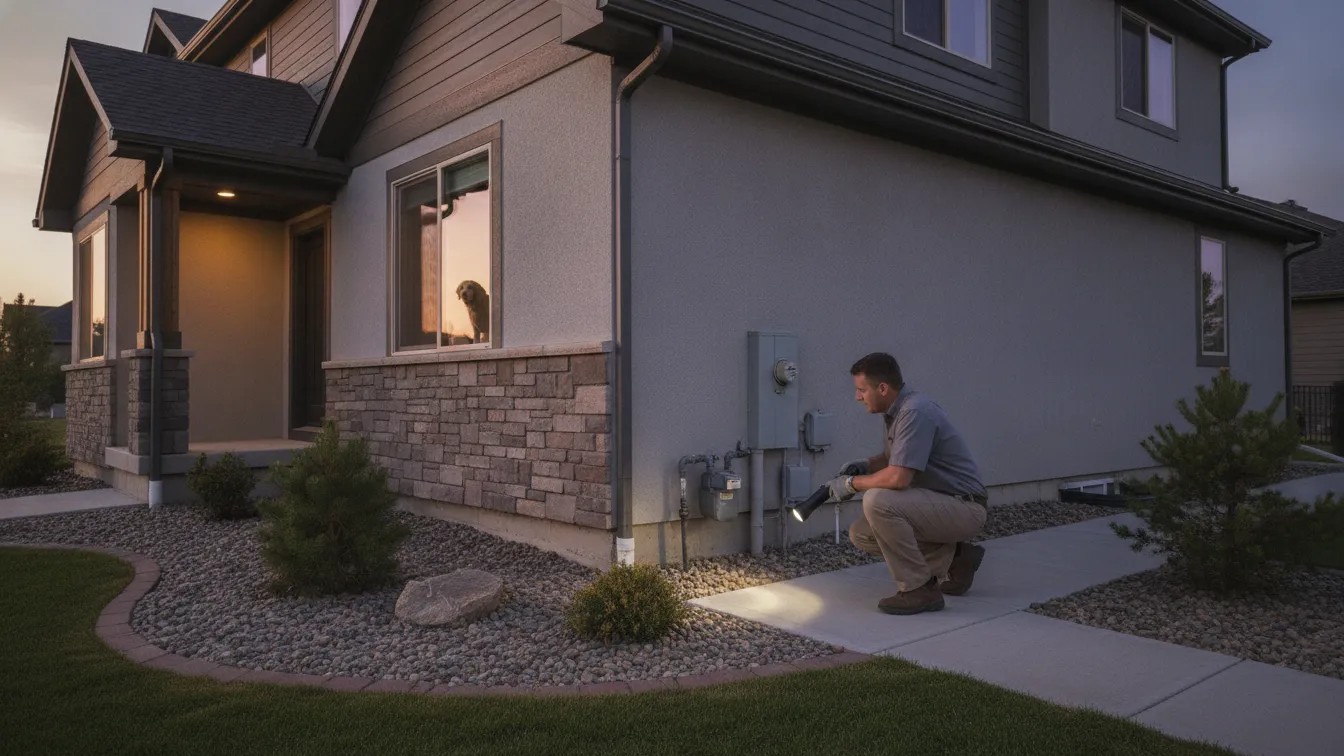
- Inspect the outside of the same wall. Look for gaps near utility lines, doors, vents, foundations, siding, and the wall-to-floor joint. A flashlight helps reveal routes that are hard to see in daylight.
For a diagnostic list of sounds, droppings, odors, and gnaw marks, read Beeline's guide to how to tell if mice are in your walls. This article focuses on the next question: how to remove the activity and keep it from returning.
How to confirm that mice are using the wall void
Sound alone does not identify the pest. Mice, rats, squirrels, birds, and building movement can all create noises. Look for a pattern that connects the sound to mouse evidence outside the wall.
Match sounds with timing and location
Mice are usually most active after dark. Repeated scratching in one wall, followed by fresh droppings in a nearby cabinet or pantry, is more meaningful than a single unexplained noise. Use a note on your phone to track where the sound starts and whether it moves toward the kitchen, attic, basement, or garage.
Check for evidence without disturbing it
Common evidence includes small dark droppings, shredded paper or fabric, gnaw marks, greasy rub marks, a stale odor, and disturbed insulation. The U.S. EPA identifies droppings, nesting materials, chewed packaging, holes, and stale odors as signs that can help confirm rodent activity.
Rule out a plumbing or electrical problem
A dripping pipe, expanding ductwork, loose vent, or electrical issue can mimic pest sounds. If you smell burning, see damaged wiring, notice water stains, or hear a loud repeated vibration, address that safety issue first. A pest inspection should not replace an electrician or plumber when the evidence points elsewhere.
How to get rid of mice in walls safely
The safest removal method depends on where the mouse is traveling and whether you can place a trap without exposing children or pets. A wall void is not a good place for loose poison. A dead mouse that cannot be retrieved can create a strong odor, and bait can create risks if a pet or child reaches it through a damaged wall, vent, or opening.
Use traps only where they can be checked
If you can identify an accessible travel route, a properly placed snap trap can be more practical than a hidden product. Place traps in protected locations along the wall edge, behind appliances, or in another area where children and pets cannot reach them. Follow the product label and check traps regularly. Do not place traps where a pet could trigger or contact them.
Do not seal an active mouse inside the wall
Sealing a hole can be part of the solution, but timing matters. If fresh evidence and sounds show that mice are still using the void, ask a professional to assess the route before closing it. The goal is to remove active rodents and then exclude them, not simply block the opening closest to the noise.
Skip scent remedies as the main solution
Peppermint oil, dryer sheets, ultrasonic devices, and similar home remedies may change activity briefly, but they do not repair an entry point or remove a nest. Use them only if a qualified professional recommends a specific product for your situation. Lasting control comes from inspection, removal, exclusion, sanitation, and monitoring.
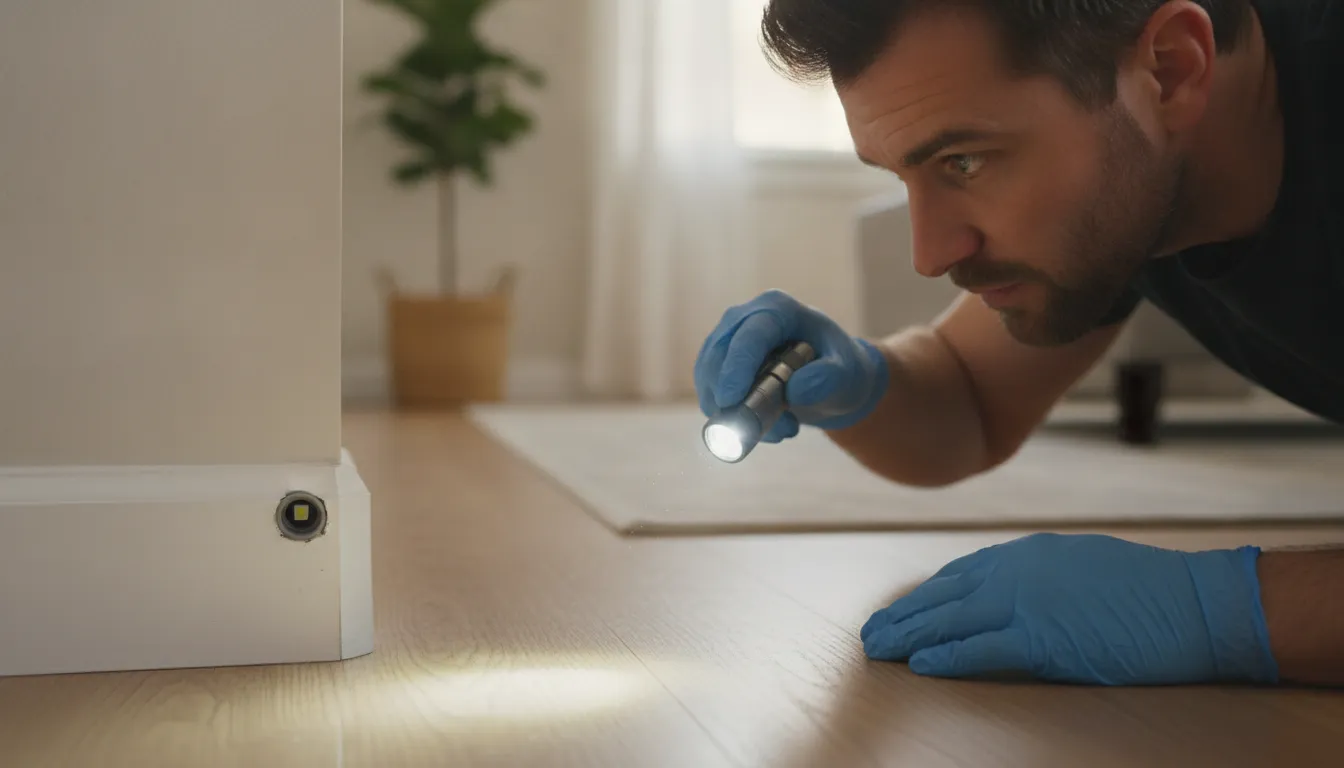
Checking wall-floor joints and utility openings can reveal how mice are reaching a wall void.
Where Colorado homes commonly let mice into wall voids
After removal, trace the wall to the exterior and connected spaces. Colorado homes can have multiple transitions between finished rooms, garages, crawl spaces, attics, roof lines, and foundation walls. A small gap near one transition may lead to a much larger hidden route.
- Utility penetrations: Check around gas lines, plumbing, cables, conduit, hose bibs, and air-conditioning lines.
- Foundation and siding joints: Look at cracks, loose trim, gaps under siding, and the seam where the foundation meets the exterior wall.
- Doors, windows, and garage edges: Inspect worn weather stripping, door sweeps, corner gaps, and the garage-to-house transition.
- Vents and roof connections: Examine crawl-space vents, attic vents, dryer vents, and other openings. Any screen or cover must preserve airflow and be securely fastened.
- Wall-floor and cabinet openings: Inside, look behind cabinets and appliances where pipes enter the wall and where baseboards meet flooring.
Colorado State University Extension guidance notes that house mice can enter through openings larger than one-quarter inch, so a gap that looks too small to matter deserves attention. Use durable, chew-resistant materials appropriate for the location. Do not block a required combustion-air opening, dryer vent, or other building-system opening without professional guidance.
How to seal mouse entry points after removal
Exclusion is more than filling a hole with expanding foam. Foam can help in some protected applications, but mice may chew through exposed foam. The repair should fit the opening, resist gnawing, and preserve the purpose of the vent or utility penetration.
- Start with the highest route. Seal the exterior openings connected to the wall where activity occurred, then work around the foundation, garage, attic, and crawl-space transitions.
- Use the right barrier. Depending on the opening, a repair may require metal mesh, hardware cloth, sheet metal, mortar, a properly fitted door sweep, or another durable material.
- Protect edges. Fasten screening and metal so there are no loose corners that a rodent can pull away.
- Keep ventilation open. Never seal a vent just because it looks like an entry point. Use an appropriate screen or have the opening evaluated first.
- Monitor after repair. Continue checking for new droppings, sounds, odors, or gnawing. New evidence after exclusion means the route or the source may not be fully addressed.
Beeline's Denver rodent exclusion guide explains why sealing and prevention belong in the same plan as removal.
How to clean mouse droppings near a wall
Do not sweep or vacuum dry droppings, urine, or nesting material. The CDC recommends wetting contaminated material with disinfectant and following its cleanup steps rather than putting contaminated dust into the air. Read the CDC's complete guide to cleaning up after rodents before handling contamination.
- Keep children and pets away from the area while you assess it.
- Ventilate the space when the CDC guidance says it is appropriate, and wear protective gloves.
- Wet droppings and other contaminated material with the recommended disinfectant before removal.
- Bag waste as directed, then wash hands and disinfect hard surfaces.
- Use a professional cleanup service when contamination is heavy, the area is difficult to access, or insulation and wall materials are affected.
If a mouse may have died inside the wall, do not open drywall solely to search without a plan. A professional can evaluate odor, access, and the least disruptive way to locate and remove the source.
Need help with mice in a wall? Call Beeline Pest Control at 303-586-5231 for a safe inspection and a plan for removal and exclusion.
When to call a Denver rodent professional
DIY steps can help with a small, accessible problem. A professional inspection is the better next step when activity is inside a wall, ceiling, attic, crawl space, or insulation, or when you cannot find the entry route.
- Sounds continue after traps or basic sanitation steps.
- You find fresh evidence in more than one room.
- There is a strong odor, heavy contamination, or suspected nesting in insulation.
- You see gnawed wiring, damaged ductwork, or openings around important utilities.
- Children, pets, or sensitive household members could reach traps or bait.
- You live in an attached home where the source may be outside your unit.
- You have sealed several gaps but the activity returns.
Beeline Pest Control's rodent service uses an inspection, targeted treatment, and ongoing protection approach for mice and rats. The company serves Denver metro and Front Range homeowners and can recommend next steps based on the home's access points, activity pattern, and safety concerns.
Frequently asked questions about mice in walls
What is the fastest way to get rid of mice in walls?
The fastest safe route is to confirm the activity, remove accessible mice with properly placed traps or professional treatment, and identify the entry route before exclusion. Spraying scents or sealing one nearby hole may not solve the source.
How long can mice live in a wall?
There is no reliable universal timeline. A wall void can provide shelter, but mice still need access to food and water. Continued sounds, fresh droppings, or odor indicate that the problem is active and should not be left to resolve on its own.
What is the five-day mouse rule?
There is no universal five-day rule that confirms mice are gone. A quiet wall for several nights is encouraging, but it is not proof of successful removal. Look for the end of fresh evidence and complete the exclusion and monitoring steps.
Will mice leave if I turn on the lights?
Lights may change mouse movement temporarily, but they do not remove mice or close their entry route. Use activity patterns to guide inspection rather than relying on light, noise, or scent repellents.
Should I put poison in a wall?
Do not place loose poison inside an inaccessible wall. A professional should evaluate the location, product, label directions, and risks to people, pets, and wildlife before any bait is used. Removal and exclusion are essential parts of lasting control.
Ready to stop wall activity? Call Beeline Pest Control at 303-586-5231 or request a free rodent inspection for your Denver-area home.
Sources
Get Your Free Pest Control Quote Today | Beeline Pest Control Aurora
Ready to make your home pest-free? Tell us a little about your pest problem, and a friendly expert from Beeline Pest Control will call you back. We'll provide a free, no-obligation quote for effective pest control services tailored to your Aurora home. Get started now and say goodbye to unwanted guests!
More Blogs
Some other blogs you might be interested in