Mice in Walls: How to Tell They're There
Schedule a Denver rodent inspection from Beeline.
A small mound of loose soil in a sunny Denver yard may be a harmless ground-nesting bee site. But not every insect using an old burrow is a bee. Before you dig, flood, seal, or apply a product, keep children and pets back and observe the entrance from a safe distance.
Call Beeline Pest Control at 303-586-5231 for a safe inspection or free estimate.
To understand how to remove a ground bees nest, first confirm what is using the opening. Many ground-nesting bees are beneficial pollinators and may need no treatment, while ground-nesting yellowjackets require a more cautious response. If activity is near a doorway, play area, pets, or anyone with a severe allergy, keep away and request professional help.
Start by looking at the nest's shape, location, and insect behavior without disturbing the soil. Those details can help separate a temporary bee nesting area from a stinging-insect hazard.
What Does a Ground Bee Nest Look Like?
A ground bee nest often looks less dramatic than homeowners expect. Instead of a large hanging hive, you may see a small mound of loose soil with one clear entrance or emergence hole in the center. Several mounds close together can resemble a colony, even though many ground-nesting bees are solitary. The entrances may also be mistaken for ant activity or another insect nest, so avoid disturbing the area while you observe it.
Ground-nesting bees commonly choose warm, dry, sunny locations with well-drained soil and little organic matter. Look for activity in bare patches, thin turf, garden edges, or other areas with sparse vegetation. The surrounding ground may appear undisturbed except for the small soil tumulus around each opening. The burrow itself can extend six inches or more below the surface, but you do not need to investigate underground to identify a likely nest.
Timing can provide another clue. Many species become active in mid-to-late spring, when females excavate nesting burrows and begin flying from the entrances during the day. Some early-spring mining bees are especially noticeable between March and May, although activity varies by species and local weather. A group of small insects entering and leaving individual holes during a warm, sunny period is more informative than the color of any one bee.
Observe from a safe distance, preferably from the edge of the yard or through a window. Do not kneel beside the entrances, poke the soil, block a hole, or send children and pets into the area. Ground-nesting insects can be difficult to identify by appearance alone, and the occupants should be identified before anyone considers removal. The NC State pollinator guide provides additional examples of ground-nest entrances and seasonal activity.
How Can You Tell Ground Bees From Ground-Nesting Yellowjackets?
A small opening in the soil does not identify the insect by itself. Ground-nesting bees and yellowjackets can use similar areas, but their appearance, nesting habits, and response to disturbance differ. Watch from a safe distance, especially if children, pets, or anyone with a serious sting allergy may approach the area.
| Clue | Ground-nesting bees | Yellowjackets | If you are unsure |
|---|---|---|---|
| Appearance | Many bees have visible body hair, although appearance varies by species. | They typically have hard, shiny bodies with few hairs and can be mistaken for honey bees. | Do not handle an insect or rely on a quick glimpse. |
| Nesting pattern | Many ground-nesting bees are solitary, with individual females using small soil entrances. | They may establish a colony below ground in an old rodent burrow or another cavity. | A shared entrance with frequent traffic deserves extra caution. |
| Behavior | Activity may be limited to bees entering and leaving their individual openings. | Colony traffic can be more concentrated, particularly when the nest is disturbed. | Stay back and observe movement without blocking the entrance. |
| Response | Preservation may be reasonable when the nest is away from busy areas. | A nest near regular human activity may require professional attention to reduce sting risk. | Do not dig, flood, seal, or apply a product based only on a guess. |
These are useful clues, not a species-level diagnosis. The University of Minnesota Extension guide to wasps and bees notes that yellowjackets commonly nest underground, including in old rodent burrows, and that wasps are generally less troublesome when nests are away from human activity. If the entrance is beside a walkway, door, play area, or pet space, keep everyone away and arrange an inspection rather than testing the nest yourself.
How to Remove a Ground Bees Nest Safely
The safest first step is not removal. Ground nests can belong to bees, yellowjackets, or other insects, and the right response depends on identifying the occupants before disturbing the site. North Carolina State University advises taking care to identify nest occupants before any removal action.
- Observe from a safe distance. Watch the area without approaching the entrance, kicking soil, or blocking the flight path. Note whether insects enter a small soil mound, move calmly, or show defensive behavior. Colorado State University notes that most native Colorado bees are not inclined to sting or cannot deliver a painful sting, but that does not make close inspection appropriate. Species and behavior vary.
- Keep people and pets away. Use a temporary visual boundary and keep children, dogs, and other pets away from active insect traffic. Give the area extra space if someone in the household has a severe sting allergy, or if the nest is beside a doorway, walkway, play area, or other high-traffic location.
- Document the location without disturbing it. From a distance, record the nest's position, nearby activity, approximate size of the affected area, and time of day when insects are visible. A zoomed photograph can help a technician assess the situation, but do not move closer simply to get a clearer image.
- Do not dig, flood, seal, or apply insecticide based on a guess. These actions can disturb insects, damage the surrounding area, or address the wrong pest. Avoid covering an entrance or probing the soil. Ground-nesting bees may be beneficial pollinators, while a ground-nesting yellowjacket situation requires a different safety assessment.
- Arrange an inspection when the identification or risk is unclear. A qualified professional can evaluate the insects, location, and household risk before recommending any management. Choose an inspection especially when activity is near people or pets, continues around a frequently used area, or cannot be safely observed.
Call Beeline Pest Control at 303-586-5231 for a safe inspection.
For additional context, review guidance from NC State Extension and Colorado State University Extension. Their guidance supports a measured response: identify the nest first, protect people and pets, and limit control to situations where it is essential.
Should You Leave a Ground Bee Nest Alone?
Leaving a suspected ground bee nest undisturbed may be reasonable when it is away from doors, walkways, play areas, and other high-traffic parts of the yard. Start by observing from a distance rather than stepping near the entrances, digging into the soil, flooding the burrows, or applying a product based only on a guess. Ground nests can belong to different insects, and identification matters before you choose how to remove a ground bees nest.
Many ground-nesting bees are beneficial pollinators. They visit flowers and provide pollination services to different plant species, while some complete their life cycle underground and produce a new generation the following spring. North Carolina State Extension advises using best management practices for pollinating insects and taking control steps only when essential, to reduce unintended impacts on pollinators.
NC State Extension explains the pollinator role of bees in managed green spaces and why unnecessary control can affect more than the insects in the immediate nest area.
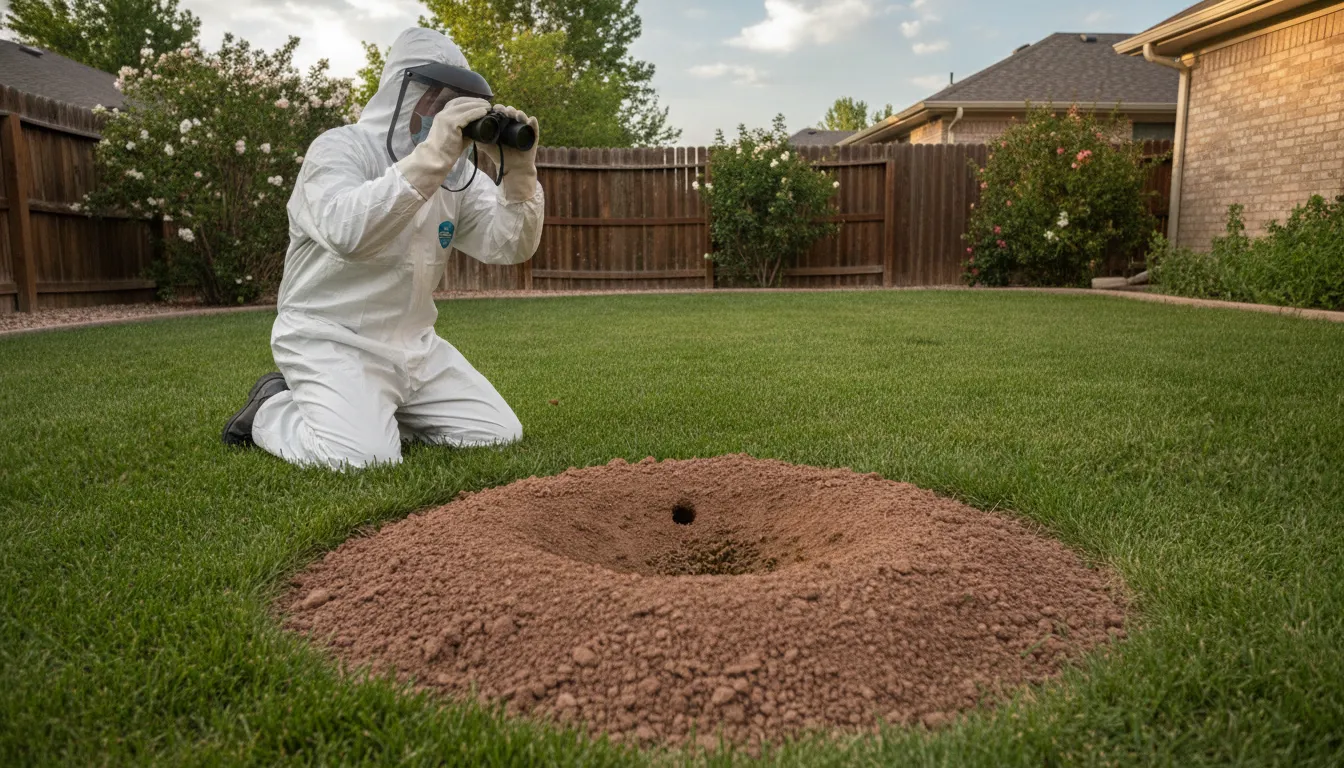
Proximity changes the decision. A nest beside a frequently used gate, children's play area, pet run, or outdoor seating area deserves more attention than one in a quiet corner that can be avoided. Children and pets may not maintain a safe distance, and people with severe sting allergies need a more cautious plan. Most Colorado native bees are not inclined to sting, but behavior varies and an unfamiliar ground nest should not be treated as automatically harmless.
To monitor without disturbing it, mark the general area from a safe distance, keep foot traffic away, and note whether activity increases or spreads. If the nest is close to people, the insect identity is uncertain, or avoiding the area is impractical, arrange a professional inspection rather than experimenting with DIY removal.
When Does a Ground Bee Nest Need Professional Attention?
Professional help makes sense when the nest cannot be safely avoided or when you are not confident about what is living underground. A ground nest near a front door, walkway, patio, driveway, play area, or pet run creates repeated opportunities for an accidental encounter. The same is true when insects are entering a wall, spreading into a high-traffic part of the yard, or showing unusually defensive behavior.
Take extra care if children, pets, or someone with a severe sting allergy regularly uses the area. North Carolina State Extension notes that management may be necessary when stinging insects overlap with these sensitive groups. That does not mean every ground bee nest requires treatment. The same guidance recommends taking control steps only when essential to reduce unintended impacts on pollinators. Read the extension guidance on bees in turf for additional context.
Call when identification is uncertain
Do not assume every insect using a ground opening is a bee. Ground-nesting bees can be mistaken for other insect nests, including yellowjacket nests, and the appropriate response can differ. If activity is repeated, concentrated around one opening, or difficult to observe safely from a distance, avoid digging, flooding, sealing, or applying a product based only on a guess. Keep people and animals away, then arrange an inspection.
Beeline Pest Control can examine the location, help identify the activity, and recommend a proportionate response for your Denver-area property. The goal is to address a real safety or access problem while avoiding unnecessary disruption to beneficial insects. For broader context on identifying and responding to Colorado stinging insects, see this guide to Colorado stinging insect safety.
Call Beeline at 303-586-5231 or request a free inspection through our professional pest control services.
How Can Denver Homeowners Reduce Future Ground Nesting?
You cannot guarantee that ground-nesting bees will not return, but you can make future activity easier to notice and manage. Start by observing the area from a safe distance during the season when insects are active. In Denver, adult ground-nesting bees commonly become active in mid-to-late spring, although timing varies by species. Watch for repeated traffic over the same patch of soil without stepping into the area or disturbing possible entrances.
Pay attention to site conditions. Ground-nesting bees generally favor warm, dry, sunny locations with well-drained soil, and they are more likely to use bare ground or areas with sparse vegetation. The North Carolina State University Extension guidance on bees in turf explains why these conditions can attract nesting activity. If a patch is beside a walkway, play area, driveway, or door, consider how the space can be made more usable without taking action around an active nest.
Where appropriate, improve ground cover after the active period has passed by maintaining healthy turf or choosing suitable, established landscape plants for the location. Do not dig into, flood, seal, or treat an active entrance based only on a visual guess. A ground opening can belong to a bee, yellowjacket, or another insect, and changing the surface without identifying the occupants can create a safety problem.
Keep a simple seasonal record of where activity appears, when it starts, and whether the area is close to routine foot traffic. Some ground-nesting bee species return to the same location in later years, so early observation helps you plan before children, pets, or guests use the area heavily. For more seasonal guidance, see our article on Colorado spring bee activity.
If activity returns in a high-traffic spot or you cannot confidently identify the insect, arrange an inspection rather than attempting removal yourself. A qualified professional can help distinguish a beneficial ground-nesting bee from a stinging insect that requires a different response.
Frequently Asked Questions
How do you remove a ground bee nest safely?
Start by keeping children and pets away, then observe the area from a safe distance. Do not dig into, flood, seal, or treat the opening based only on a guess. Ground nests can belong to bees or yellowjackets, so identify the occupants before removal. If the nest is near a doorway, play area, walkway, or someone with a severe allergy, request a professional inspection.
What is the fastest way to get rid of ground bees?
The fastest safe option is professional identification and guidance, especially when activity is close to people or pets. Many ground-nesting bees are beneficial pollinators, and control should be limited to situations where it is essential. Avoid disturbing the soil while bees are active and arrange an inspection if you cannot confidently identify the insect.
Can I fill in a ground bee hole with dirt?
Do not fill the hole while insects may still be using it. Ground-nesting bee burrows can extend six inches or more below the surface, and disturbing the entrance may increase contact with active insects. Mark the area from a distance, keep traffic away, and obtain species-specific advice before changing the site.
Will ground bees go away on their own?
Some activity is seasonal, and many ground-nesting bees are present only during their active period. However, some species return to the same nesting location in later years. If the area is away from regular activity, monitoring from a distance may be reasonable. A professional assessment is better when the nest creates a recurring safety concern.
How can I tell a ground bee from a ground-nesting yellowjacket?
Identification is not always reliable from a quick glance. Yellowjackets commonly nest below ground and typically have hard, shiny bodies with few hairs, while ground-nesting bees vary widely in size, color, and appearance. Keep your distance and avoid removal attempts if you are unsure. Source: University of Minnesota Extension.
Get Started With a Safer Next Step
If you are unsure whether the nest belongs to ground-nesting bees or a more defensive stinging insect, a professional inspection can help you choose a sensible response for your household and property.
Call Beeline Pest Control at 303-586-5231 to schedule an inspection or discuss a free estimate.
Get Your Free Pest Control Quote for Your Aurora Home
Ready to get rid of unwelcome pests in Aurora, Colorado? Fill out our quick form for a free, no-obligation quote from Beeline Pest Control. Our local experts will call you back to discuss tailored solutions and help protect your home and family from pests.
More Blogs
Some other blogs you might be interested in