Subterranean Termites in Colorado: Denver Home Guide
Learn how subterranean termites in Colorado enter Denver homes, what damage to watch for, and how inspections and treatment options protect your property.
Termite evidence can be easy to miss in a Denver home. Activity may begin below the soil line and move through foundation cracks or utility openings. It can remain hidden until a swarm, mud tube, or damaged wood brings it to your attention. The right response is not to guess at the species or choose a treatment from a checklist. An inspection can identify the pest, trace likely entry routes, and show how the home's construction and moisture conditions affect the plan.
Call Beeline Pest Control at 303-586-5231 to schedule a termite inspection or estimate.
Subterranean termites in Colorado are wood-destroying insects that typically reach homes from soil through hidden pathways. They can cause damage before activity is obvious. Signs such as mud tubes, discarded wings, or hollow-sounding wood deserve a professional evaluation rather than a rushed treatment decision.
This guide explains what makes subterranean termites different, how they enter Colorado homes, how damage develops, and how treatment options are selected. For a broader overview of Beeline's Colorado termite alert guide, see Beeline's pillar guide as you consider the biology behind the problem.
What Are Subterranean Termites?
Subterranean termites are social insects that live in colonies connected to soil, moisture, and wood or other cellulose food sources. The word subterranean matters because these termites commonly travel through soil or protected mud tubes instead of crossing open areas. They may remain hidden in soil, tubes, or the wood they tunnel through, which makes an active colony difficult to spot without an inspection. The EPA explains how to identify and control termites.
How the colony works
Worker termites do most of the feeding, tunneling, and care that keeps the colony functioning. They can move between the colony and a food source through protected routes, including mud tubes. Because workers are usually concealed, homeowners may not see them even when activity is present.
Soldier termites protect the colony from threats. Their bodies are adapted for defense rather than foraging, so they are less likely to be found in exposed wood or open rooms. A professional may identify them or their activity during an inspection, but a single insect is not enough to determine the extent of a problem.
What swarmers look like
Winged reproductive termites, often called swarmers, leave an established colony to reproduce and start new colonies. They may be noticed more easily than workers or soldiers. According to the EPA, termite swarmers have wings that are roughly equal in length and straight antennae that may droop. Homeowners may first notice termites during a swarm or when construction exposes hidden damage. Discarded wings or winged insects deserve attention, but identification can be difficult because ants and termites can look similar.
Finding possible termite evidence does not automatically reveal how large or active a colony is. An inspection can distinguish termite activity from unrelated wood damage and identify routes that may connect soil, foundations, and structural materials.
Why Subterranean Termites in Colorado Matter for Denver Homes
Colorado homeowners should take termite evidence seriously without assuming every damaged board or flying insect means an infestation. Subterranean termites matter because their colonies can remain concealed below ground, inside mud tubes, or within wood while workers search for food. That soil-to-structure pathway makes foundations, crawl spaces, utility openings, and damp areas important parts of an inspection.
Why are subterranean termites a concern in Colorado? Colorado has documented subterranean termite activity, including along the Front Range, and these termites can reach structures from soil or other concealed pathways. The exact risk depends on the property, moisture conditions, construction, and evidence found during an inspection.
Colorado activity can also be seasonal. A Colorado State University Extension insect calendar for the Pueblo and Fremont area notes that winged termite reproductives may begin swarming in January and February, with swarms continuing into late winter. CSU cautions that the calendar is only a general guide and that conditions vary considerably from year to year. A swarm in one home, therefore, should prompt identification and evaluation rather than a broad conclusion about every property in the area.
Subterranean and drywood termites behave differently
The word subterranean describes a key behavior: these termites typically maintain contact with soil or use protected shelter, such as mud tubes, while moving toward food. Drywood termites have a different pattern. They can live and feed within relatively dry wood, without relying on the same soil connection. This is a behavior distinction, not a claim that one termite type is absent across all of Colorado.
For Denver-area homeowners, the practical question is how the insects are entering and where activity is located. An inspection can distinguish termites from ants and other wood-damaging pests, assess severity, and identify contributing conditions. If you find discarded wings, shelter tubes, or suspicious wood damage, document the location and seek a professional evaluation rather than disturbing hidden areas.
How Do Subterranean Termites Enter Colorado Homes?
Subterranean termites usually reach a home from soil below or beside the foundation. They can travel through soil, protected gaps, or mud tubes until they find wood or another food source. Because they often remain hidden in soil, wall voids, or the wood they tunnel through, homeowners may not see the entry route until signs appear.
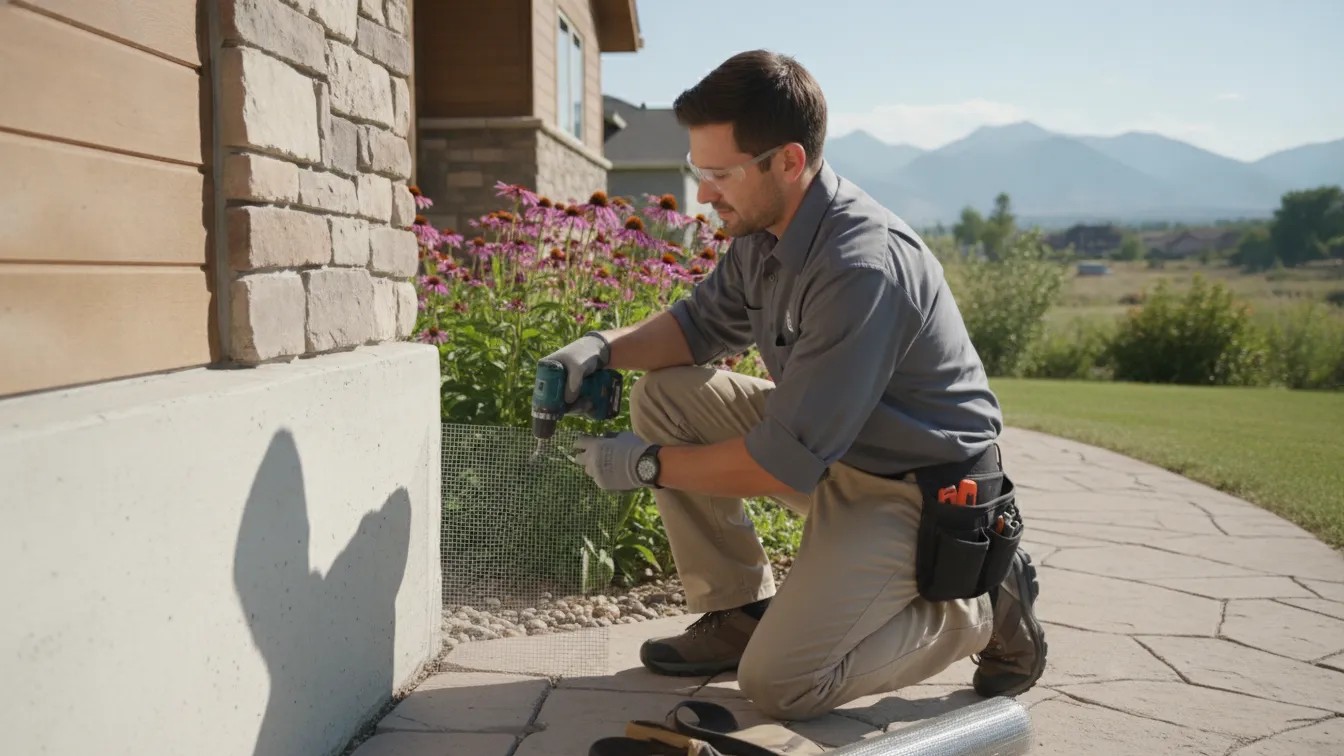
Common access points include small foundation cracks and openings around plumbing, electrical lines, and other utilities that pass through the foundation wall. The EPA recommends reducing these openings by sealing suitable cracks and utility penetrations with materials such as cement, grout, or caulk. Sealing is a practical exclusion step, but it should not replace an inspection when termites or mud tubes are present.
Moisture can make the foundation more inviting
Moisture near the foundation does not prove termite activity, but it can contribute to conditions that make an area more favorable for termites. Check whether the soil slopes away from the house instead of holding water against it. Keep gutters clear, make sure downspouts discharge away from the foundation, and address drainage problems before they persist. The EPA specifically recommends keeping foundation-adjacent soil dry through proper grading and drainage, including gutter and downspout maintenance.
Indoor and exterior leaks also deserve prompt attention. Repair leaking faucets, hose connections, roof areas, supply lines, and other sources of recurring moisture. In Denver homes, seasonal weather and freeze-thaw conditions can also make routine checks worthwhile, especially around older concrete, basement walls, crawl spaces, and utility penetrations.
For more practical exclusion ideas, review this Denver pest prevention guidance. If you find mud tubes, damaged wood, or suspected activity, avoid disturbing hidden areas and arrange an evaluation. Beeline starts with an inspection to identify the pest, entry points, severity, and contributing conditions before recommending a plan.
Call Beeline Pest Control at 303-586-5231 for a termite inspection or estimate.
What Damage Can Subterranean Termites Cause?
Subterranean termites can feed out of sight, traveling through soil or protected mud tubes before reaching wood in a home. Because their activity is often hidden, the first clue may be a swarm or damage uncovered during construction, rather than termites seen in an open room. The Environmental Protection Agency notes that termites rarely emerge from the soil, mud tubes, or food sources they tunnel through.
Signs that deserve attention
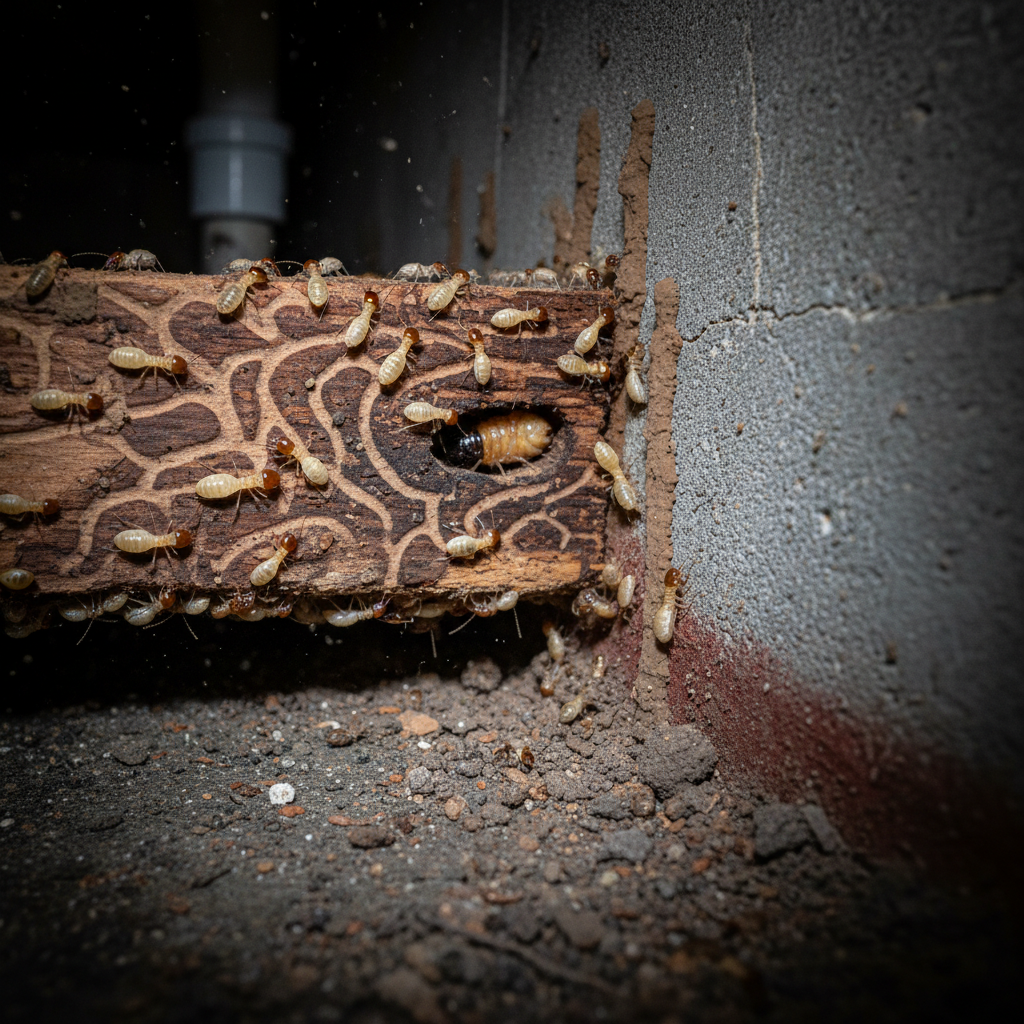
Watch for narrow mud tubes along foundation walls, crawl-space supports, basement areas, or other routes between soil and wood. Swarm evidence can include winged insects or piles of discarded wings near windows, doors, or light sources. Termite swarmers typically have wings of roughly equal length and straight antennae, but other insects can look similar.
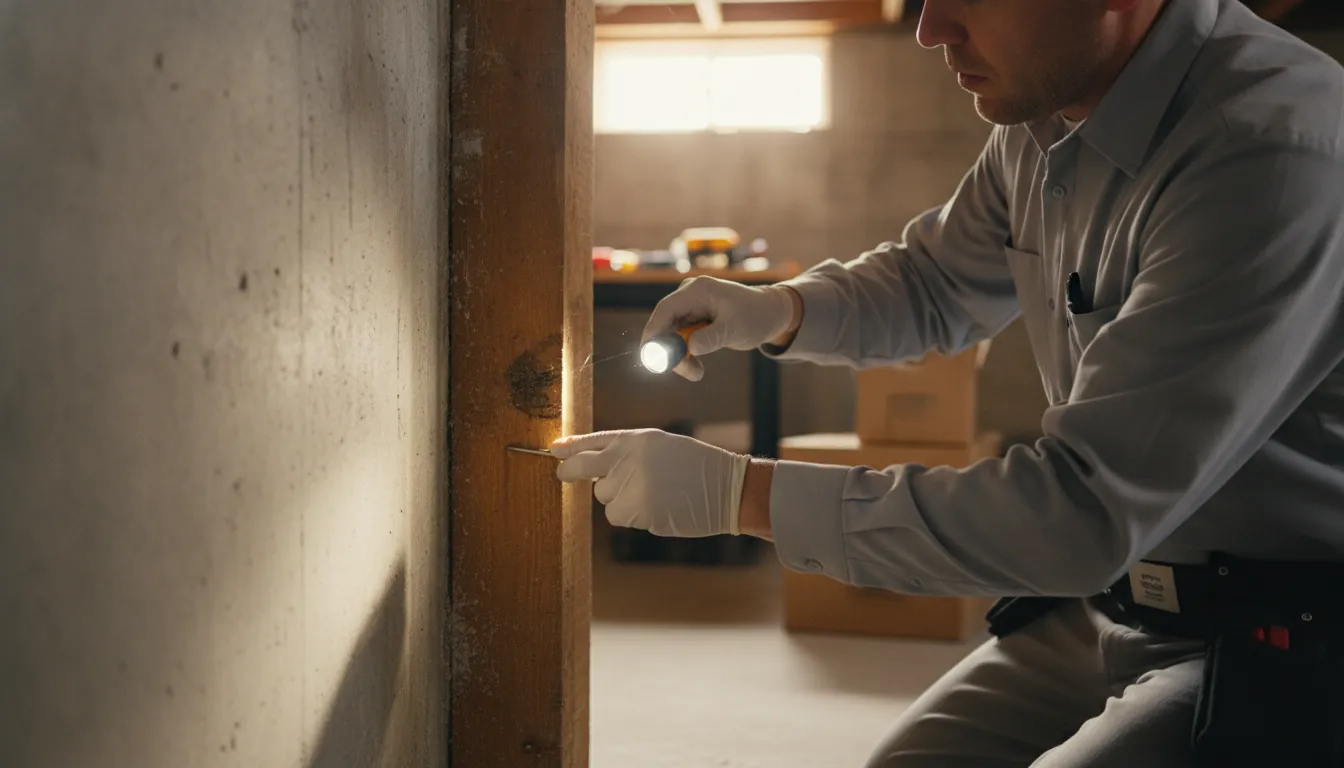
Exposed wood may sound hollow when gently tapped or show weakened areas when carefully probed. The EPA specifically recommends probing exposed wood for hollow spots when checking for possible termite activity. Blistered or uneven wood surfaces may also justify a closer look, especially when they occur near moisture or soil contact.
Why an inspection matters
These signs are clues, not conclusive proof. Mud can come from other sources, flying insects may be ants, and wood can sound hollow because of age, construction, or water damage. A professional inspection helps distinguish subterranean termites in Colorado from other pests and non-insect building problems. Beeline's inspection process considers pest type, severity, entry points, and contributing factors before recommending a treatment plan. Finding a sign does not mean you should panic, but it does mean a timely evaluation is a sensible next step.
Preserve a photo or small sample of any insect or wings you find, and note where the evidence appeared. Avoid disturbing suspected tubes or damaged areas until they can be examined.
How Long Does Serious Termite Damage Take?
There is no fixed timeline for serious termite damage. The pace depends on factors such as colony size and access, moisture around the structure, construction details, and how much accessible wood is exposed. Two homes with similar signs can therefore face very different levels of risk.
Subterranean termites often remain hidden in soil, mud tubes, or the wood they are feeding on, so visible damage may not show the full extent of activity. Homeowners may notice a swarm or discover damage when wood is opened during construction, while other activity remains concealed. The U.S. Environmental Protection Agency recommends probing exposed wood for hollow spots as one part of examining possible termite damage: EPA termite identification guidance.
What changes the timeline?
- Colony access: Activity with an easy route from soil to structural wood may behave differently from activity limited by construction features.
- Moisture: Leaks and damp areas can create conditions that support hidden activity and complicate the inspection.
- Construction: Foundation design, utility penetrations, crawl spaces, and finished walls affect where termites can travel and how easily signs are found.
- Wood exposure: Accessible wood, concealed framing, and previous repairs can all change what termites encounter and what a homeowner can see.
The practical decision rule is simple: visible mud tubes, discarded wings, hollow-sounding wood, or other evidence deserves a timely professional inspection. Those signs do not prove the cause by themselves, but waiting for a precise damage timeline can allow hidden activity to continue. Beeline starts with an inspection to assess the pest, severity, entry points, and contributing factors before recommending a customized plan.
Call Beeline Pest Control at 303-586-5231 to schedule a termite inspection or free estimate.
Treatment Options for Subterranean Termites in Colorado
The right response depends on what an inspection finds, including the termite type, activity level, entry points, construction details, and conditions that may support access. Beeline's approach starts with that evaluation, then matches the plan to the property and the household's concerns. There is no single treatment that fits every Denver home.
Quick comparison:
- Professional inspection: Identifies the pest, likely entry routes, affected areas, construction details, and moisture conditions.
- Liquid soil-applied termiticide or barrier: Uses a product labeled for soil treatment around the structure and requires licensed professional application.
- Bait systems: Use stations and follow-up monitoring to address termite activity through feeding and colony behavior.
- Targeted wood or treated-material approaches: Address suitable materials and locations when the inspection and product label support that choice.
| Approach | How it is used | What homeowners should know |
|---|---|---|
| Professional inspection | A trained technician evaluates visible evidence, likely entry routes, affected areas, property construction, and conditions such as moisture. | Inspection comes first because it determines whether treatment is appropriate and which combination of control and prevention steps makes sense. |
| Liquid soil-applied termiticide or barrier | A labeled termiticide is applied in the soil where termites may travel between the ground and the structure. Soil-applied barrier treatment is a common termite-treatment technique. | Barrier products must be specifically labeled for that use. Improper application can contaminate a home or drinking-water well and may fail to protect the structure. This work should be performed by a licensed, trained professional. |
| Bait systems | Stations use cellulose bait containing a slow-acting insecticide. The system is designed to address termite activity through feeding and colony behavior. | Placement and follow-up depend on the property and evidence found during inspection. The plan should explain what is being monitored and how observations guide next steps. |
| Targeted wood or treated-material approaches | Wood treatments or building materials impregnated with termiticides may be used for appropriate locations and conditions. | These approaches are selected for the affected materials and construction, rather than assumed to replace a complete property evaluation. Product labels govern application and re-entry instructions. |
The U.S. Environmental Protection Agency identifies liquid soil-applied termiticides, termite baits, treated building materials, and wood treatments among recognized approaches. Because barrier work involves application around a structure, safety depends on using the correct labeled product, following label directions, and accounting for wells, occupants, pets, and site conditions. A licensed professional should handle this work, not a do-it-yourself application.
For a broader homeowner overview, see Beeline's Beeline's Colorado termite alert guide pillar guide. The treatment decision for suspected subterranean termites in Colorado should still be based on an inspection of the specific home.
Call Beeline Pest Control at 303-586-5231 before choosing a termite treatment for your home.
Sources: U.S. EPA termite identification and control guidance; Beeline Pest Control service information.
Frequently Asked Questions
Should I be worried about subterranean termites?
Take signs seriously, but do not panic. Mud tubes, discarded wings, hollow-sounding wood, or a swarm can justify an inspection, yet no single sign proves an active infestation. Homeowners often discover termites during a swarm or when construction exposes damage. A timely inspection can clarify whether activity is present and where it may be located. Source: U.S. Environmental Protection Agency.
Do you have to worry about termites in Colorado?
Colorado homeowners can encounter subterranean termite activity, especially where soil contacts the structure or moisture creates favorable conditions. Keep foundation-adjacent soil dry, maintain gutters and downspouts, repair leaks promptly, and seal cracks or utility openings. These steps reduce access but do not replace an inspection when evidence appears.
Can you ever get rid of subterranean termites?
Termite activity can be addressed, but the appropriate plan depends on the inspection findings, construction, access points, and household needs. Options may include soil-applied liquid termiticides, bait systems, treated building materials, or wood treatments. Barrier treatments require products labeled for that use and should be handled by a licensed, trained professional. Source: U.S. Environmental Protection Agency.
What should I do if I find termite signs?
Photograph the evidence, avoid disturbing suspected tubes or damaged areas, and arrange a professional termite inspection. Do not apply a general pesticide or start digging around the foundation before the cause is identified. An inspection helps distinguish termites from other wood or moisture problems and guides a treatment choice based on the property.
Schedule a Professional Termite Inspection
An inspection can help clarify whether the signs around your Denver-area home point to subterranean termites and which next step fits the property. To book a professional termite inspection or request a free estimate, call Beeline Pest Control at 303-586-5231.
Free Pest Control Quote in Aurora, CO | Beeline Pest Control
Ready to get rid of unwanted pests? Share a few details about your pest problem in Aurora, Colorado, and Beeline Pest Control will call you back with a fast, free, and no-obligation quote. Let us help you protect your home!
More Blogs
Some other blogs you might be interested in