Rat Exterminator | Colorado Homeowner Guide
See the signs of rats, reduce food and entry points, and learn when to call a Denver rat exterminator for a careful inspection and treatment plan.
Rat Exterminator | Colorado Homeowner Guide
Hearing scratching after dark or finding droppings in a garage can leave you wondering whether you need a rat exterminator. In Denver and across the Front Range, start by looking for repeated signs, likely access points, and food or water that may be attracting rodents. A careful inspection can help distinguish a rat problem from other activity and guide a safe, practical response.
Call Beeline to discuss a rat concern
When should a Denver homeowner call a rat exterminator? Call when you find repeated fresh droppings, gnawing, recurring sounds paired with other signs, or activity in a wall or other hard-to-reach space. Secure food, keep people and pets away from suspected contamination, and avoid disturbing nests or applying products in hidden areas. An inspection can help identify the rodent, likely access route, and practical next steps.
When should you call a rat exterminator?
Contact a pest professional when you see fresh droppings more than once, hear recurring movement in a wall or ceiling, find gnawing or nesting material, or discover signs in several parts of the home. Repeated evidence matters more than one unexplained sound. A professional can inspect the pattern, look for access routes, and recommend next steps rather than treating a single clue as proof of a large infestation.
It is especially sensible to ask for help if activity is inside a wall or ceiling, near food storage, or in a place that is difficult to inspect safely. Rats can chew materials and contaminate areas where they travel. Avoid reaching into hidden spaces or disturbing suspected nesting material. If you are unsure whether the signs point to rats or mice, describe what you have seen and where; identification helps determine the right plan. Beeline provides residential rodent control in the Denver area.
What signs can indicate rat activity?
Look for a combination of clues rather than relying on one. Rats are often active after people settle down, so sounds may be more noticeable at night. But noises alone do not identify the animal. Note the location, timing, and whether other evidence appears nearby.
- Droppings: Check along walls, behind stored items, near food, and around suspected travel routes. Do not handle droppings with bare hands or sweep or vacuum them dry.
- Gnaw marks: Damaged packaging, wood, or other materials may indicate an animal is chewing. Photograph the area and avoid touching wires or damaged materials.
- Scratching or movement: Recurring sounds from a wall, ceiling, crawlspace, or garage deserve attention, especially when paired with other signs.
- Nesting material: Shredded paper or fabric gathered in a sheltered spot may be a clue. Do not reach into a suspected nest.
- Tracks or rub marks: Dusty footprints or dark smudges along a narrow path can help show where an animal travels.
- Food damage: Torn bags, gnawed containers, or food that has been disturbed in a pantry or storage area should prompt a closer check.
Keep a short record: date, room or outdoor area, what you observed, and whether the sign appeared again. Photos taken from a safe distance can be useful during an inspection. For help comparing rodent clues, see this guide to rats versus mice in a Denver home.
How can you make your observations useful?
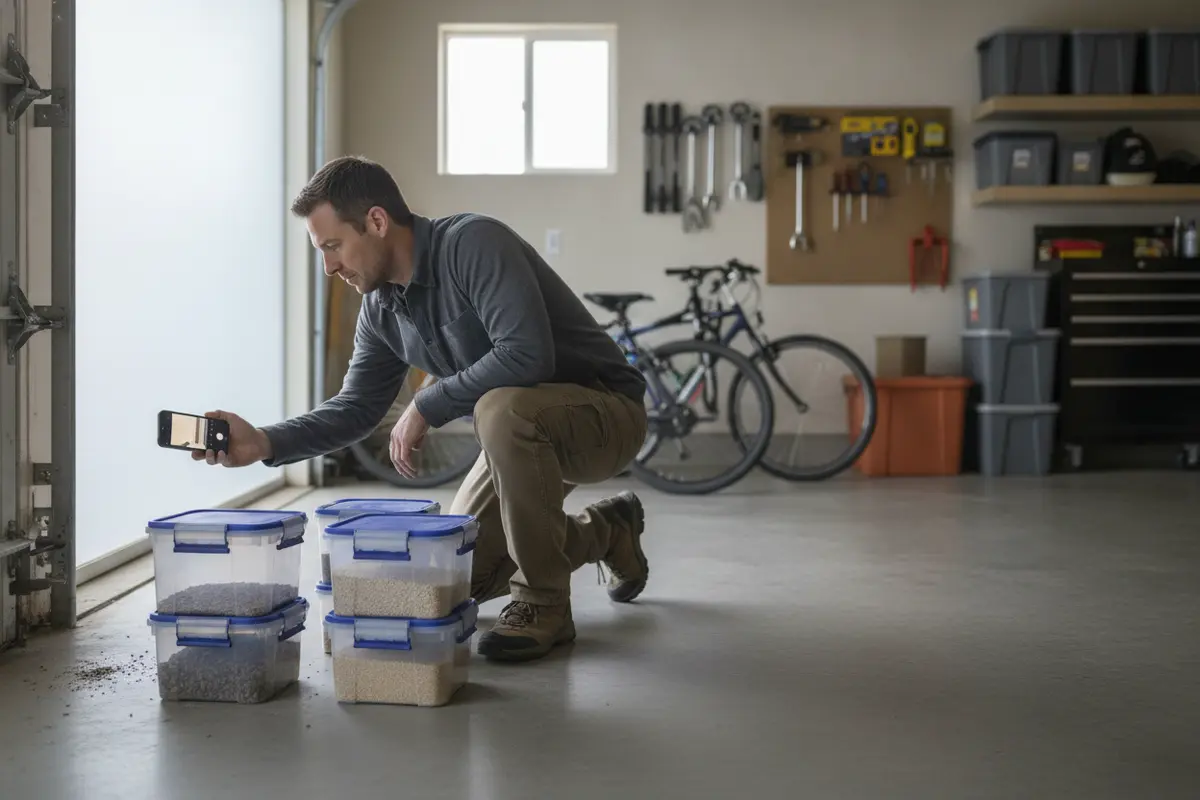
Try to describe evidence precisely instead of labeling it before identification. For example, "small dark droppings beside the water heater, noticed twice this week" gives more useful context than "rats are in the basement." A date-and-location note can also reveal whether signs cluster around one route or appear in separate areas. If you hear sounds, note the time, duration, and exact room; a single sound may have another cause, while a recurring pattern beside fresh evidence deserves closer attention.
Take pictures from a distance and include nearby landmarks so a technician can understand where the sign was found. Do not move stored boxes, pull apart insulation, or open a wall just to get a clearer view. If an object blocks access, mention that instead. Keep pets and children out of the immediate area, especially where droppings, damaged food packages, or nesting material are visible. This simple record helps an inspection focus on the right spaces without turning your own investigation into a risky cleanup or repair project.
Where do rats get into a Colorado home?
Rats can enter through openings around the building or follow routes into sheltered spaces. Check the outside perimeter first, then consider where signs appear indoors. Common areas to inspect include gaps around utility lines and pipes, damaged vents, openings beneath doors, foundation gaps, garage edges, and places where siding or trim meets another surface. Also note branches, stored items, or clutter that touch the home and may provide a sheltered route.
Do not assume that a visible hole is the only way in. A small gap may be obscured by landscaping or stored belongings, and an animal may travel through a connected crawlspace, attic, or utility area. Look for droppings, gnawing, and rub marks around potential openings, but do not put your hand into a gap to test it. Keep children and pets away from suspect areas until you know what is there.
In the Denver metro and Front Range, winter weather can make sheltered indoor spaces more attractive to rodents seeking cover. That does not mean every winter sound is a rat. It does make prevention checks useful before cold weather: store food securely, tidy storage areas, and repair obvious gaps with materials suited to the opening. A professional can help identify less obvious access routes.
What should you check on the outside?
Walk the exterior in daylight and look from a safe standing position. You do not need to touch a suspected opening or dismantle a vent. Start where utilities enter, around garage doors, along the foundation, and at damaged screens or vents. Notice whether vegetation, firewood, bins, or stored equipment conceal an area or sit directly against the wall. Then compare these observations with the places where you found indoor signs. A gap near the kitchen, for instance, may be a more useful inspection clue when there is also evidence in a nearby pantry or utility space.
Make a brief list or take a wide photo of any visible gap so you can show its location. Avoid sealing openings based only on appearance if there may be active movement inside the structure. Exclusion works best as part of a plan that considers whether animals are present, how they are moving, and what material is appropriate for the opening. If you rent, report suspected damage to the property manager and coordinate repairs rather than altering shared building features yourself.
What should you do before a professional visit?
A few calm steps can make an inspection more useful without putting you at risk:
- Record what you noticed. Write down where and when you saw signs, how often they appear, and whether you have heard sounds.
- Take clear photos. Use a phone camera from a safe distance. Do not move suspected nesting material or handle droppings to get a better picture.
- Secure food and waste. Move pantry goods and pet food into closed, sturdy containers. Keep garbage covered and clean up crumbs or spills.
- Reduce clutter where practical. Clear a path to the area so it can be inspected, but avoid disturbing a suspected nest or contaminated material.
- Tell the technician about household considerations. Mention children, pets, food storage, and any areas you cannot access. Ask what preparation is needed before treatment.
Do not apply a pesticide in an enclosed space or use a product in a way that is not permitted by its label. The U.S. Environmental Protection Agency provides information about pesticides and safe use at EPA.gov; always read and follow the directions on a specific product label. If there is a risk of contact with electrical wiring, damaged building materials, or an animal in a hard-to-reach space, leave that area alone and tell the professional.
What should you have ready when you call?
A short description can make the first conversation clearer. Share the rooms where you noticed signs, the dates they appeared, and whether you have seen droppings, damage, food disturbance, or only heard sounds. Mention whether the activity seems to be in an attic, wall, crawlspace, garage, or an accessible room. If you have photos, keep them available, but do not delay asking for guidance because you cannot photograph a hidden area.
It also helps to note practical access details: a locked gate, a crowded storage area, a tenant or shared-space arrangement, or a pet that needs to be kept separate. Ask what areas the inspection will cover, whether you should move anything beforehand, and what precautions apply to your household. These questions do not require you to diagnose the issue. They help the provider understand the setting and explain a sensible next step in plain language.
What happens during professional rat control?
A thoughtful service starts with gathering information and inspecting the places connected to the signs. The exact process depends on the property and what the inspection finds. A technician may check accessible interior and exterior areas, identify likely activity and entry points, and ask when the signs began. That context helps distinguish an active problem from an old or unrelated clue.
Next, the professional should explain the recommended approach, including any preparation, treatment, exclusion, and follow-up that may apply. A plan may involve more than one step. For example, removing or controlling active rodents without addressing access and attractants can leave the home vulnerable to another entry. Conversely, sealing an opening without confirming what is happening inside may not resolve an active issue. Ask what each recommended step is intended to address.
Before work begins, make sure you understand where products or devices will be used, any precautions for household members, and what follow-up is recommended. Beeline describes a service process built around inspection, treatment, and protection, with recommendations tailored to the pest situation. Its technicians are licensed, and the company emphasizes a personal, accountable approach. For nearby service information, visit Beeline's Denver pest control page.
What questions can help you understand the plan?
Before agreeing to work, ask the technician to connect the recommended steps to the evidence found. Which signs suggest current activity? What areas were inspected, and are any important spaces inaccessible? If treatment is recommended, where will it be applied and what preparation or precautions are needed for people, pets, food, or stored items? If exclusion or repair is part of the plan, ask which opening it addresses and whether any activity inside needs attention first.
Also ask what you should monitor afterward and when to request follow-up if fresh signs continue. A clear explanation should distinguish the immediate control step from longer-term prevention. It should also identify any actions that are yours to complete, such as moving stored items or arranging a building repair. The point is not to demand one standard method for every house; it is to understand why the approach fits the inspection findings and how progress will be evaluated.
Which response is right for your situation?
The right next step depends on how strong the evidence is, where it appears, and whether you can safely address the cause. This comparison can help you decide what to do next; it is not a substitute for identifying the animal or inspecting a difficult-to-reach space.
| What you notice | Reasonable next step | What to avoid |
|---|---|---|
| One uncertain noise, with no other signs | Note the time and location; check accessible areas for additional clues. | Assuming the sound proves there are rats or placing products without identifying the issue. |
| Repeated droppings, gnawing, or food disturbance | Secure food, keep people and pets away from signs, and arrange an inspection. | Sweeping or vacuuming droppings dry or handling them bare-handed. |
| Activity in a wall, ceiling, or other inaccessible space | Call a professional and explain the location and pattern of activity. | Opening a wall, reaching into a void, or using products in an enclosed space without guidance. |
| Visible opening plus recurring indoor signs | Ask for an inspection that considers both activity and possible entry points. | Sealing a suspected route before understanding whether rodents may be inside. |
| Signs continue after an initial response | Document what has changed and request follow-up guidance. | Repeatedly changing products or methods without knowing why activity persists. |
Request a free estimate or inspection from Beeline
How can you reduce the chance of rats returning?
Prevention is a combination of access control and good housekeeping. It cannot guarantee that rodents will never appear, but it can reduce conditions that make a home easier to enter or use. Begin with the areas where you found signs and work outward.
- Store dry goods and pet food in closed containers rather than open bags.
- Keep trash in covered bins and clean food residue from storage or utility areas.
- Reduce cardboard piles and clutter that can conceal signs or provide sheltered nesting material.
- Check door sweeps, vents, utility penetrations, and visible foundation openings. Repair damage with an appropriate durable material or ask a professional about the right repair.
- Keep shrubs, stored materials, and other items from pressing against exterior walls when practical.
- Recheck previously affected areas periodically and note any fresh signs.
Use care when cleaning a contaminated area. Do not dry-sweep or vacuum droppings. Follow current public-health cleanup guidance for the material and location, and ask a qualified professional if there is a large amount, a hard-to-reach area, or any uncertainty about safe cleanup. A technician can also advise whether a separate repair is needed after pest work.
How can you make prevention manageable?
Focus first on the conditions you can change without entering a risky space. Put opened pantry goods and pet food into closed containers, sweep up food scraps, and make sure garbage lids stay shut. In a garage or basement, leave enough space to see along walls instead of stacking boxes directly against them. This makes later checks easier and helps you notice changes without repeatedly moving heavy belongings.
Next, schedule a simple seasonal walk-around of accessible areas. Check the door sweep, visible vent covers, and points where pipes or cables enter, then note damage that needs repair. Do not use a temporary patch that could trap an animal inside or block a component that needs ventilation. If you are unsure which material or repair is suitable, ask a professional or qualified repair provider. A repeatable short check is more useful than an extensive inspection that is difficult to maintain.
When is a rat problem urgent?
Arrange prompt professional advice when signs are recurring, spread across multiple rooms, appear near food preparation or storage, or involve a space you cannot inspect safely. A chewed wire, damaged building component, or suspected animal trapped in a wall is also a reason not to improvise. Keep people and pets clear of the area and explain the specific concern when you call.
If you see a rat outdoors once and have no signs inside, you may not need to treat the home immediately. Secure garbage and food sources, check the building perimeter, and watch for repeated activity. The decision changes if you find fresh evidence indoors or the same route is used again. The goal is a measured response based on what is present, not alarm over a single sighting.
Request a free estimate or inspection from Beeline
Frequently asked questions about rat exterminators
How do I know if I have rats or mice?
Droppings, damage, sounds, and the location of signs can offer clues, but one clue may not be enough to identify the rodent. Note the evidence and have a professional inspect if signs recur or are in a concealed space. Beeline's rat-versus-mouse guide explains common differences homeowners may notice.
Should I try to seal a hole before calling?
You can document a visible opening, but do not seal a suspected active route before considering whether an animal may be inside. A professional inspection can help connect the opening with indoor evidence and recommend an appropriate exclusion step.
Are store-bought rat products enough?
It depends on the cause and location of activity. A product alone may not address entry points or attractants, and pesticide labels specify where and how products may be used. If there are repeated signs, activity in a void, or household safety concerns, ask a professional to assess the situation.
Does a rat exterminator only remove rodents?
A complete recommendation may address inspection, active control, potential entry routes, attractants, and follow-up. The steps depend on the findings and property. Ask the provider to explain what is included and what repairs or preparation remain your responsibility.
Get a clear next step for rat activity
Repeated droppings, gnawing, or sounds in a hidden space are good reasons to ask for an inspection, while one uncertain clue calls for careful observation rather than panic. Beeline Pest Control serves Denver metro and Front Range communities with residential pest services and a personal approach. Share what you have seen, where it occurred, and whether it has happened more than once so the next step can fit your home.
Get Your Free Pest Control Quote in Aurora, CO
Ready to get rid of pests for good? Fill out our quick form to receive a free, no-obligation pest control quote from Beeline Pest Control. Our local experts in Aurora, Colorado, are here to help you find the perfect solution for your home. We'll call you back to discuss your needs and provide a personalized price to make your home pest-free!
More Blogs
Some other blogs you might be interested in