

Rat vs. Mouse: Which Rodent Is Invading Your Denver Home?
Hearing scratching in your walls or finding droppings in your pantry? Stop guessing! Our expert guide helps Denver homeowners easily figure out: rat vs mouse, which do I have? Identify your intruder today and discover how Beeline Pest Control can expertly remove them for a truly pest-free home.
A scratching sound in the wall does not tell you whether you have a rat or a mouse. In a Denver home, the most useful clues are the animal's overall size, nose and ears, droppings, and the scale of any gnaw marks. Identifying the rodent correctly helps you choose a response that addresses how it enters, nests, and searches for food.
To figure out rat vs mouse which do i have, compare size and features first: mice are smaller, with pointed noses and relatively large ears. While rats are larger, with blunter noses and smaller ears relative to their bodies. Smaller droppings and footprints usually point to mice, but a professional inspection is the most reliable answer.
The CDC recommends checking for droppings and gnaw marks and sealing openings around your home to prevent rodent problems. The differences matter beyond identification, because rat and mouse behavior can call for different treatment and exclusion steps. Start with the visible features that separate them, then use this Denver rodent control and exclusion guide to understand the broader solution.
Not sure what you are dealing with? Call Beeline Pest Control at 303-586-5231.
How to Tell a Rat from a Mouse at a Glance
When you are trying to answer, "rat vs mouse which do I have," start with the animal's overall proportions. A mouse is small and delicate, with relatively large ears and a pointed face. A rat is much heavier, with a blunt nose, smaller-looking ears, and a thicker body and tail. You may only get a quick glimpse, but these features can narrow down what is moving through your Denver-area home.
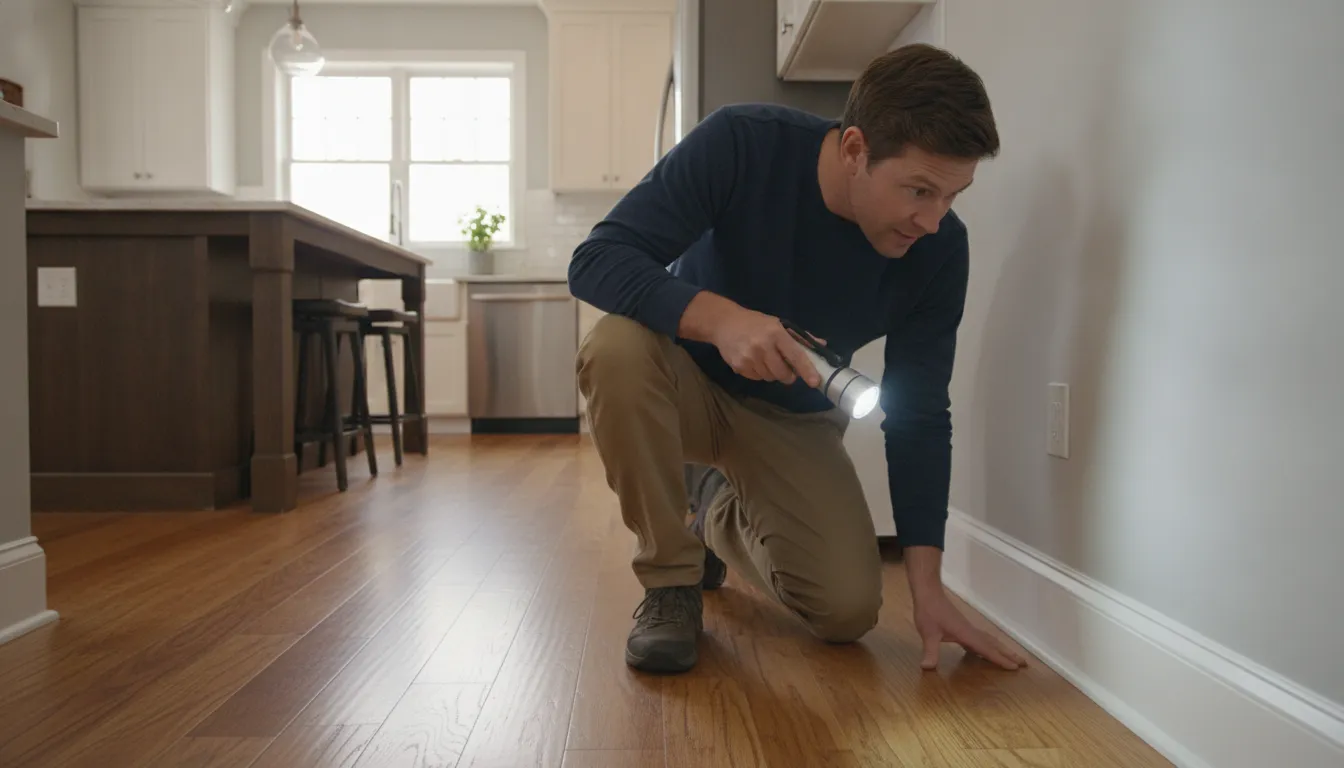
- Body size: An adult house mouse is typically about 3 to 4 inches long, not counting the tail, and usually weighs less than 1 ounce. Rats can reach 10 inches or more in body length and may weigh over 1 pound.
- Ears: Mice have ears that look large compared with the head. Rat ears are smaller in proportion to the rat's larger head and body.
- Nose: A mouse usually has a narrow, pointed nose. A rat's snout looks broader and more blunt.
- Tail: Both rodents have tails, but a mouse's tail often looks thin and delicate. A rat's tail is generally thicker and more substantial, matching its heavier build.
- Feet and droppings: Size matters beyond the body. The CDC notes that mice have smaller feet and smaller droppings than rats, so tracks and waste can help confirm what you saw. The CDC's rodent control guidance recommends checking for droppings and gnaw marks when looking for signs of rodents.
If the animal disappears before you can identify it, look for several clues together rather than relying on one feature. A small pointed face, large ears, tiny tracks, and fine droppings point more toward mice. A heavier body, blunt nose, thicker tail, larger feet, and larger droppings suggest a rat. For more help, review these identifying signs of mice before deciding what to do next.
Rat vs Mouse Droppings: Size and Shape Differences
Droppings are often the clearest clue when you are trying to identify a rodent without seeing it. Rat droppings are usually about three-quarters of an inch long, with a thicker capsule-like shape and blunt ends. Mouse droppings are much smaller, often about one-quarter of an inch long, and commonly taper to pointed ends. Fresh droppings may look dark and slightly shiny, while older waste can become dry, dull, and crumbly.
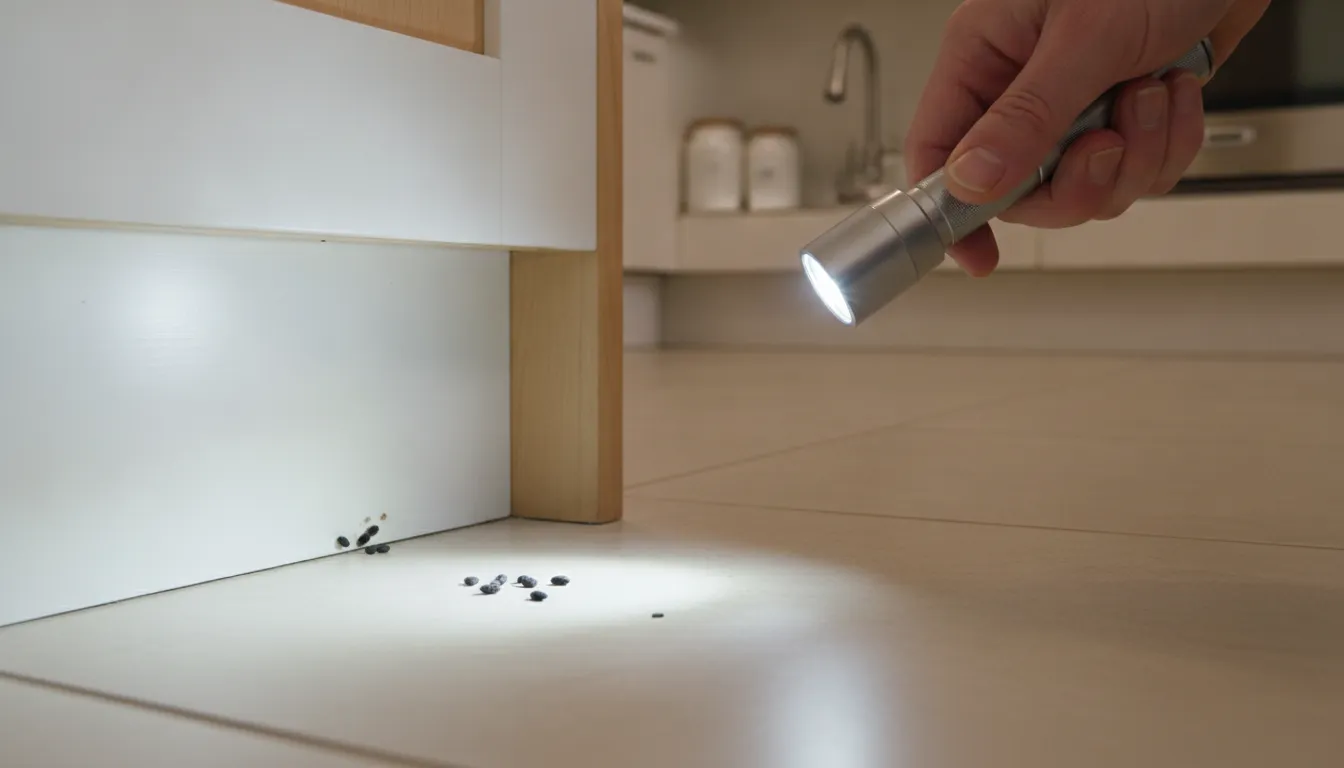
- Rat droppings: About 3/4 inch long, relatively thick, and blunt or capsule-shaped at both ends.
- Mouse droppings: About 1/4 inch long, narrow, and more likely to have pointed ends.
- Uncertain droppings: Several sizes or shapes may indicate more than one rodent, or waste at different stages of age. Avoid relying on one pellet alone.
Check along baseboards, behind appliances, inside cabinets, under sinks, and near food storage. Rodents often leave waste along travel routes or close to nesting and feeding areas. A concentrated trail behind a pantry shelf or beneath a kitchen cabinet deserves attention, even if the individual pellets are small. Also look for gnaw marks, nesting material, grease smudges, or a stale odor nearby.
The Centers for Disease Control and Prevention notes that mice have smaller droppings and feet than rats, making size a useful part of the identification process. The CDC also recommends regularly checking for droppings and gnaw marks because both are signs of rodent presence: CDC rodent control guidance.
Wear gloves and avoid sweeping or vacuuming dry droppings, which can disturb contaminated dust. Lightly wet the area with disinfectant, allow it to sit as directed on the label, then wipe it up and wash your hands. If droppings continue to appear after cleaning, the source is still active. A professional inspection can distinguish rat and mouse activity and identify how the rodents are entering your home.
Damage Patterns: What Each Rodent Destroys
Damage can help distinguish a mouse from a rat, especially when the animal stays hidden. Mice tend to leave smaller, scattered gnaw marks on food packaging, cardboard, and insulation. Their chewing may look like a series of fine nicks around a corner or opening. Rats are stronger and more destructive. They can chew through thicker materials, widen openings, and damage insulation around electrical wires.

What to inspect for
- Food and packaging: Look for torn bags, chewed boxes, tooth marks, or food scattered near cabinets and pantries. Either rodent can damage stored food, so pair this clue with droppings and the size of the gnaw marks.
- Insulation and soft materials: Mice may make small holes or shallow tracks in insulation. Rats can tear and chew more aggressively, leaving larger openings or rough, damaged edges.
- Wires and utility areas: Rats may gnaw through wire insulation. The exposed wiring can create a serious electrical hazard and may spark fires, according to the CDC's rodent-control guidance and technical reference. Read the CDC reference on rat-related damage.
- Droppings and gnaw marks: These are two of the most useful signs to check when looking for rodent activity. The CDC recommends regularly inspecting the home for both. See the CDC's rodent inspection guidance.
Do not handle damaged insulation, contaminated food, or suspected nesting material casually. Photograph the area, keep children and pets away, and note where the evidence appears. A pattern across the kitchen may point to a different entry or nesting route than damage found near a garage, attic, or utility room. If gnawing is close to electrical wiring, arrange a prompt professional inspection rather than waiting for more visible damage.
Which Do I Have, Rat vs Mouse? A Quick Checklist
A quick check of size, droppings, and nighttime sounds can usually help you narrow down whether a rat or mouse is active in your home. No single clue is perfect, so compare several signs before deciding how to respond.
Q: How can I tell if I have rats or mice in my home?
A: Look for the size and shape of droppings, the size and body shape of the animal, and the location and volume of nighttime noises. Mice generally leave smaller droppings and make lighter scratching sounds. Rats tend to leave larger droppings and create louder movement.
Start with the droppings
Use a flashlight to inspect quiet, sheltered areas such as under sinks, behind appliances, inside cabinets, and along wall edges. Mouse droppings are typically small, while rat droppings are larger. Shape matters too: mouse droppings often have pointed ends, while rat droppings are more blunt or capsule-shaped. The CDC confirms that mice have smaller droppings and feet than rats, making these useful early clues. Learn more from the CDC.
Compare size, shape, and sound
A mouse usually has a pointed nose and relatively large ears. A rat generally has a blunter nose and smaller ears in proportion to its body. If you only caught a glimpse, place an object of known size near the area rather than trying to handle or corner the animal. Both rodents can be active at night and may produce scratching or scurrying sounds, but rats often sound heavier and louder.
Q: Did I just see a mouse or a rat?
A: A small animal with a pointed nose and prominent ears is more likely to be a mouse. A larger, heavier animal with a blunt nose is more likely to be a rat. Droppings and gnaw marks can help confirm what a brief sighting suggests.
Do not wait for repeated sightings before checking entry points. Inspect gaps around pipes, vents, doors, and the foundation, then seal suitable openings with durable materials. The CDC recommends sealing holes around the home to help prevent infestations and regularly checking for droppings and gnaw marks for early detection. If the evidence is unclear or activity continues, a professional inspection can identify the rodent and the access route before the problem spreads.
Does It Matter Which One You Have for Treatment?
Yes. The most effective plan depends on the rodent's behavior, travel routes, nesting habits, and response to bait and traps. A treatment that works well for mice may not address a cautious rat that avoids new objects. And treating only the visible activity can leave entry points and hidden nests untouched.
Rats are often suspicious of unfamiliar food and equipment, so control may require carefully placed bait stations, larger traps, and more time for the animal to approach them. Exclusion is especially important because rats can use gaps around foundations, utility penetrations, garages, and other exterior access points. Removing access helps prevent a new rat from replacing the one that was caught.
Mice are smaller and can enter through very narrow openings. They also reproduce quickly, which makes a slow or partial response more likely to turn into continuing activity. Mouse control generally calls for a thorough inspection, rapid placement of appropriately sized traps or bait, and careful sealing of entry gaps throughout the structure. A few traps in one room may not be enough if mice are moving through wall voids, cabinets, attics, or basements.
| Rat treatment | Mouse treatment |
|---|---|
| Baiting: Use cautious placement and allow time for bait-shy rats to accept it. | Baiting: Address active routes quickly and comprehensively because mice can reproduce fast. |
| Trap placement: Use larger equipment along established travel paths, protected from children and pets. | Trap placement: Use mouse-sized traps near walls, food sources, nesting areas, and other signs of activity. |
| Exclusion: Prioritize exterior gaps and larger openings around the foundation, roofline, garage, and utilities. | Exclusion: Seal small openings around pipes, doors, vents, cabinets, and utility lines where mice can enter. |
| Timeline: Monitoring may take longer when a rat is wary of new bait or traps. | Timeline: Early action matters because multiple mice can establish activity quickly. |
These are general treatment differences, not a substitute for identifying the species and inspecting the structure. If signs are unclear, a professional can match trap size, bait strategy, exclusion work, and follow-up monitoring to the rodent present. That approach is safer and more reliable than repeatedly placing products without finding how the animals are getting inside.
Which Is More Common in Denver Homes?
For many Denver-area homeowners asking, "rat vs mouse which do I have," the more likely indoor visitor is a mouse. Mice commonly enter homes through small gaps around doors, utility lines, foundations, and garages, especially when they are looking for food, shelter, or warmth. Rats are also present along the Front Range. But their activity is often more closely connected to outdoor food sources, water, drainage routes, alleys, and protected spaces near foundations.
Denver-area homes can have different rodent entry points depending on nearby landscaping, drainage, and construction.
Why mice are common indoors
A mouse can use a surprisingly small opening to get inside. Once indoors, it may travel along walls, hide in cabinets or insulation, and leave signs in several parts of the home. You may notice small droppings, scratching sounds, nesting material, or gnaw marks before seeing the animal itself.
- Mice often show up in kitchens, garages, basements, attics, and wall voids.
- Indoor sightings can occur in both older homes and newer construction if entry gaps remain unsealed.
- Cool weather can make sheltered indoor spaces more attractive, but a mouse problem is not limited to winter.
Where rats are more likely to appear
Rats, including Norway rats, are more likely to be found where they can follow cover and find steady outdoor resources. Check areas near standing water, drainage features, trash storage, alleyways, dense vegetation, and foundation-level openings. A rat may still enter a home, but the surrounding property often provides clues about why it chose that location.
- Look for activity near crawl spaces, sheds, retaining walls, and foundation gaps.
- Outdoor burrows, larger droppings, or heavier gnaw marks can point toward rats.
- Leaks, unsecured food, and clutter can support rodent activity around a home.
These are useful patterns, not a substitute for an inspection. Denver neighborhoods vary, and a home can have more than one rodent entry point or species. Identifying the animal, locating how it entered, and checking for nesting or damage gives you a clearer path to safe, effective control.
How Beeline Handles Rats and Mice Differently
Once the rodent is identified, the next step is a plan built around how that animal moves, feeds, nests, and enters the home. Rats and mice are not interchangeable problems. Beeline's family-owned team uses a practical process that addresses the source of the activity instead of relying on a one-size-fits-all treatment.
Inspect thoroughly and identify the rodent
A Beeline technician begins by looking for droppings, gnaw marks, nesting material, rub marks, odors, and likely travel routes. The technician also checks the attic, crawl space, garage, basement, utility penetrations, and other areas where activity may be hidden. Size, entry-point dimensions, and behavior help distinguish a rat from a mouse and determine where the problem is concentrated. This matters because the answer to rat vs mouse which do I have affects the next decisions. Every Beeline technician is licensed by the Colorado Department of Agriculture, and inspections are handled with the care expected in a family home.Seal entry points and reduce access
Removal alone may provide only temporary relief if rodents can return through gaps around pipes, vents, doors, foundations, or rooflines. Beeline identifies practical openings and recommends or performs exclusion work that helps keep rodents outside. The CDC also emphasizes sealing holes and gaps as an important part of preventing rodent entry. For the broader prevention process, see this Denver rodent control and exclusion guide.Use targeted removal and baiting
Treatment is selected for the rodent and the conditions found during inspection. Rats may require a different placement strategy than mice because of their size, routes, and cautious behavior. Mice often use smaller spaces and may be active in wall voids, cabinets, or other protected areas. When baiting or other control methods are appropriate, Beeline applies them professionally and with attention to people, pets, and the surrounding environment. The goal is effective control without unnecessary treatment.Monitor activity and follow up
Rodent control is not finished simply because visible signs stop for a day or two. Beeline monitors activity, checks whether entry points remain secure, and adjusts the plan when needed. The company's 100% satisfaction guarantee includes free re-treatment if the problem is not resolved to the customer's satisfaction. Learn more about rodent control services and what an inspection can address.
Call Beeline Pest Control at 303-586-5231 for professional help with rats or mice.
Frequently Asked Questions
How can I tell if I have rats or mice in my home?
Compare the animal's size, nose, ears, droppings, and damage. Mice are smaller, with pointed noses and relatively large ears. Rats are larger, with blunter noses and smaller ears relative to their bodies. Droppings and gnaw marks can confirm what you are seeing, but a professional inspection is the safest way to identify the rodent when it stays hidden.
What is the difference between rat and mouse droppings?
Rat droppings are generally larger and capsule-shaped with blunt ends. Mouse droppings are much smaller and often pointed at the ends. The CDC recommends looking for droppings and gnaw marks when checking for rodent activity: CDC rodent-control guidance.
Do rats or mice make different noises at night?
Both rodents are mainly active at night, so either one may cause scratching, scurrying, or rustling sounds after dark. Rats often make louder noises because they are larger, but sound alone cannot identify the species. Check where the noise occurs and look for droppings or gnawing nearby.
Are treatments for rats and mice different?
Yes. The inspection and treatment plan should account for each rodent's behavior, nesting locations, entry points, and response to control methods. Effective treatment typically combines removal or control with sealing access points and follow-up monitoring, rather than relying on one trap or bait placement.
Which pest causes more damage in a home, a rat or a mouse?
Both can contaminate food and damage property by gnawing. Rats may cause more extensive damage because of their larger size and stronger teeth, but mice can also damage wiring, insulation, and stored materials. Address signs promptly, regardless of which rodent you suspect.
Schedule a Rodent Inspection
Identifying whether you have a rat or mouse helps guide a more targeted inspection and treatment plan. Beeline Pest Control can assess the signs in your Denver home, address entry points, and recommend the next steps for removal. For personal help from a local pest control team, call Beeline Pest Control at 303-586-5231.
Get Your Free Aurora Pest Control Quote Today!
Tired of pests in your Aurora, Colorado home? Fill out our easy form and Beeline Pest Control will quickly call you back with a personalized quote. Our local experts provide effective, home-safe pest solutions to protect your family and property. Get started on a pest-free life today!
More Blogs
Some other blogs you might be interested in