Rodent Control Centennial Colorado: Mice and Rat Removal
Need rodent control Centennial Colorado homeowners can trust? Learn signs, entry points, safe prevention, and how to arrange mice and rat removal.
For rodent control Centennial Colorado homeowners can trust, start with the signs, entry points, and safest next steps. Rodent activity can begin quietly in a home. Droppings near stored food, scratching after dark, disturbed insulation, or chewed packaging may be the first clues. This guide explains how to reduce attractants and when a professional inspection can clarify the next step.
Call 303-586-5231 for a free rodent inspection.
What is the best approach to rodent control in Centennial Colorado? Beeline recommends identifying the activity, likely entry points, and conditions attracting rodents. Effective control combines inspection, targeted treatment when needed, exclusion or repair recommendations, and follow-up monitoring that fits the home.
Beeline Pest Control is a family-owned Colorado company with licensed technicians and a 100% satisfaction guarantee. For broader prevention guidance, read Beeline's Denver rodent control and exclusion guide. The local rodent control service page provides additional context. The sections below focus on Centennial homes and the South Denver corridor.
Why Rodent Activity Rises in Centennial Homes
Why do rodents enter Centennial houses in fall and winter? Mice and rats look for dependable warmth, shelter, and food as outdoor conditions become less comfortable. Small gaps, clutter, accessible food, and protected spaces can make a home more attractive when temperatures change.
Centennial's suburban setting puts homes near garages, sheds, landscaping, open space, and active construction. Those surroundings can provide cover and food close to a foundation. Leaf piles, deep mulch, firewood, bird-feeder residue, unsecured trash, and outdoor pet food may all make an exterior area more inviting.
How cooler weather changes rodent behavior
During warmer months, rodents may find food and shelter outdoors. A garage, crawl space, attic, wall void, basement, or shed can become more appealing when the weather changes. From there, rodents may follow hidden routes toward kitchens, pantries, pet food, or stored materials.
Winter can make earlier entry easier to notice. A mouse or rat that entered through a small opening weeks ago may become more active around indoor food and nesting areas. Scratching after dark, a stale odor, disturbed insulation, and new droppings are useful clues. You do not need to see a rodent during the day before taking the evidence seriously.
Simple ways to reduce attractants
Keep garbage containers tightly covered. Store food and pet food in sealed containers. Move stored materials away from exterior walls, remove leaf piles near the home, and reduce clutter in garages and basements. These steps reduce food and shelter, but they cannot correct a hidden entry point or an established nest inside the structure.
Start with calm observation rather than panic. Note where evidence appears, when you notice it, and whether the signs are increasing. Then inspect accessible areas from a safe position before deciding whether a professional evaluation is needed.
What Signs Should Centennial Homeowners Look For?
What are common signs of mice or rats indoors? Look for droppings near food, shredded nesting material, chewed packaging, gnaw marks, nighttime sounds, disturbed insulation, and stale odors from hidden areas. Several signs together justify a closer inspection.
Rodents often stay out of sight in wall voids, attics, crawl spaces, garages, and the backs of cabinets. You may find evidence before you see the animal. Keep children and pets away from areas with droppings, nesting material, traps, or bait.
Food, droppings, and storage clues
Small droppings around pantry shelves, drawers, cupboards, under-sink plumbing, and behind appliances are important warning signs. Look for torn bags, tooth marks, or holes in cardboard and food packaging. The EPA identifies droppings and chewing damage as signs of rodent activity.
A clean countertop does not rule out a problem. Rodents can travel along edges and enter cabinets through small gaps. If you find droppings, do not touch them with bare hands. Avoid dry sweeping or vacuuming suspected contamination. Follow current public-health guidance or ask a qualified professional when evidence is extensive or difficult to reach.
Nesting, gnawing, odors, and sounds
Shredded paper, fabric, cardboard, and dried plant material may indicate nesting. Check insulation, storage boxes, garage corners, and other dark areas without reaching into an unknown void. Gnaw marks can appear on food packages, baseboards, doors, utility openings, wires, and structural materials.
A stale odor from a wall, cabinet, attic, or crawl space can have more than one cause. It becomes more meaningful when it appears with droppings, nesting material, or damage. Beeline's checklist of signs of mice in a Denver home can help you organize what you find.
Mice and rats are primarily nocturnal. Scratching, scurrying, or light gnawing may be most noticeable near ceilings, walls, attics, garages, and food storage areas. The CDC's hantavirus prevention guidance explains why fresh urine, droppings, and nesting material should be handled carefully. Keep people and pets away from the area while you decide on cleanup and inspection steps.
Where Do Mice and Rats Enter Centennial Houses?
Where should you look for rodent entry points? Inspect the foundation, garage door seals, utility penetrations, vents, roofline, soffits, crawl spaces, and joints where building materials meet. A mouse can use an opening about the size of a dime, while a rat may use an opening about the size of a quarter.
Small gaps matter when they connect an exterior wall, garage, attic, crawl space, or basement to the indoors. The EPA's guidance about rats and mice recommends sealing openings and checking common access routes.
- Foundation and exterior walls: Check cracks, siding-to-foundation seams, basement windows, and holes around pipes or cables.
- Garage doors: Inspect the bottom seal and side weather-stripping. Also check the shared wall between the garage and house.
- Pipes, vents, and utilities: Look around plumbing lines, electrical conduits, dryer vents, exhaust vents, and other service openings.
- Rooflines: Examine soffits, fascia, roof-to-wall joints, attic vents, and openings near chimneys from a safe location.
- Attached structures: Check sheds, porches, additions, and storage areas that touch or sit close to the house.
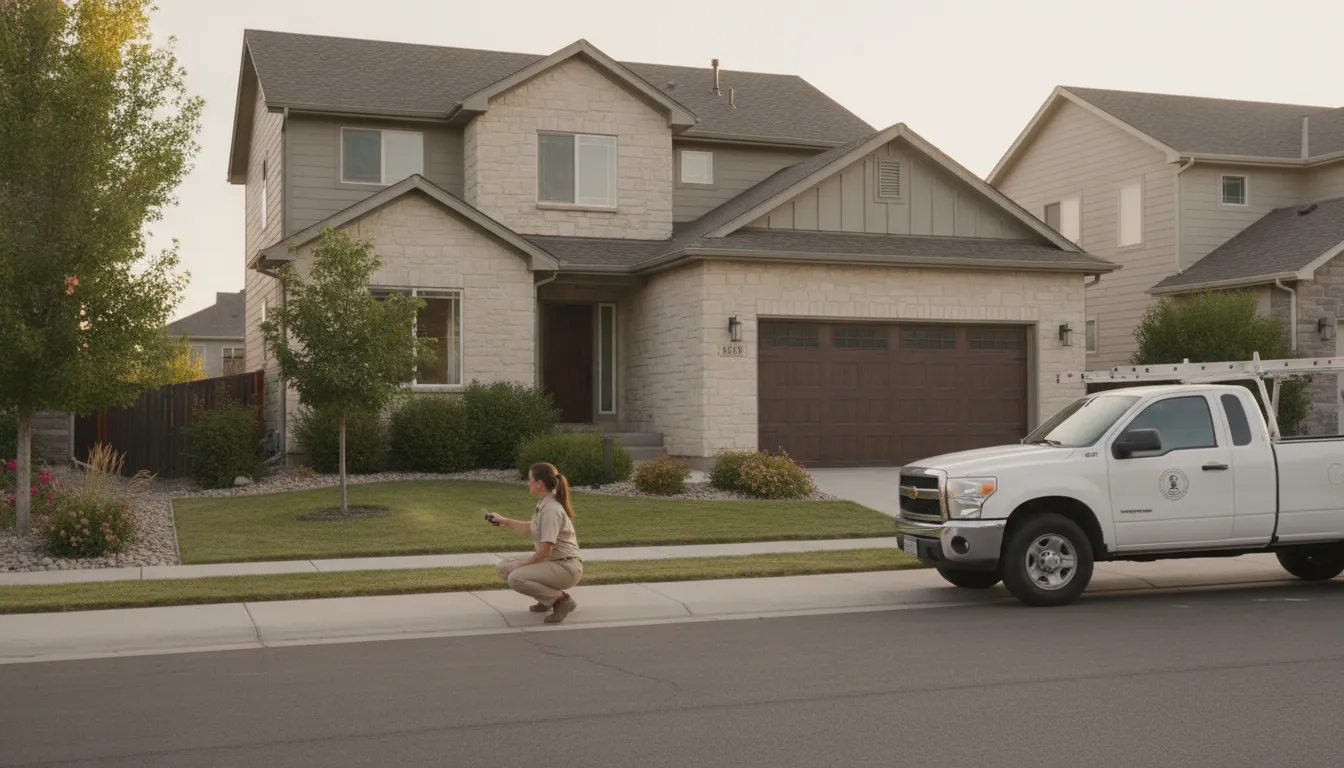
A careful exterior inspection helps identify routes rodents may use to enter a Centennial home.
A safe inspection routine
Walk the exterior during daylight and work around the full foundation. Use a flashlight in accessible areas, then check the garage, basement, crawl space, attic, and under-sink cabinets. Note gaps, rub marks, droppings, nesting, gnawing, and odors. Photograph locations from a safe distance and record their approximate size.
Do not reach into holes, disturb insulation, block a vent, or close an opening before determining whether rodents are still inside. Sealing one visible gap may redirect activity into another part of the home. Beeline's rodent exclusion cost guide explains why inspection and exclusion planning should be considered together. Its rodent exclusion guide also outlines the prevention process.
DIY Prevention or Professional Rodent Control in Centennial?
When is professional rodent control appropriate? Professional help is appropriate when signs repeat or activity is inside walls or ceilings. It is also wise when entry points are hidden, wiring or insulation may be affected, or prevention has not stopped the problem. DIY steps remain useful for reducing food, shelter, and access.
Homeowners can reduce risk by storing food in airtight glass, metal, or thick plastic containers. Use tight-fitting garbage lids, remove leaf piles and deep mulch near the structure, and reduce clutter in garages, attics, and basements. Keep pet food stored securely and avoid leaving it outdoors overnight.
When prevention has not stopped activity, a licensed technician can look beyond the easiest-to-see areas and match the response to the property. Beeline uses professional, EPA-approved methods and treats household safety as an important part of planning. Treatments are not risk-free, so follow the technician's instructions for children, pets, and treated areas.
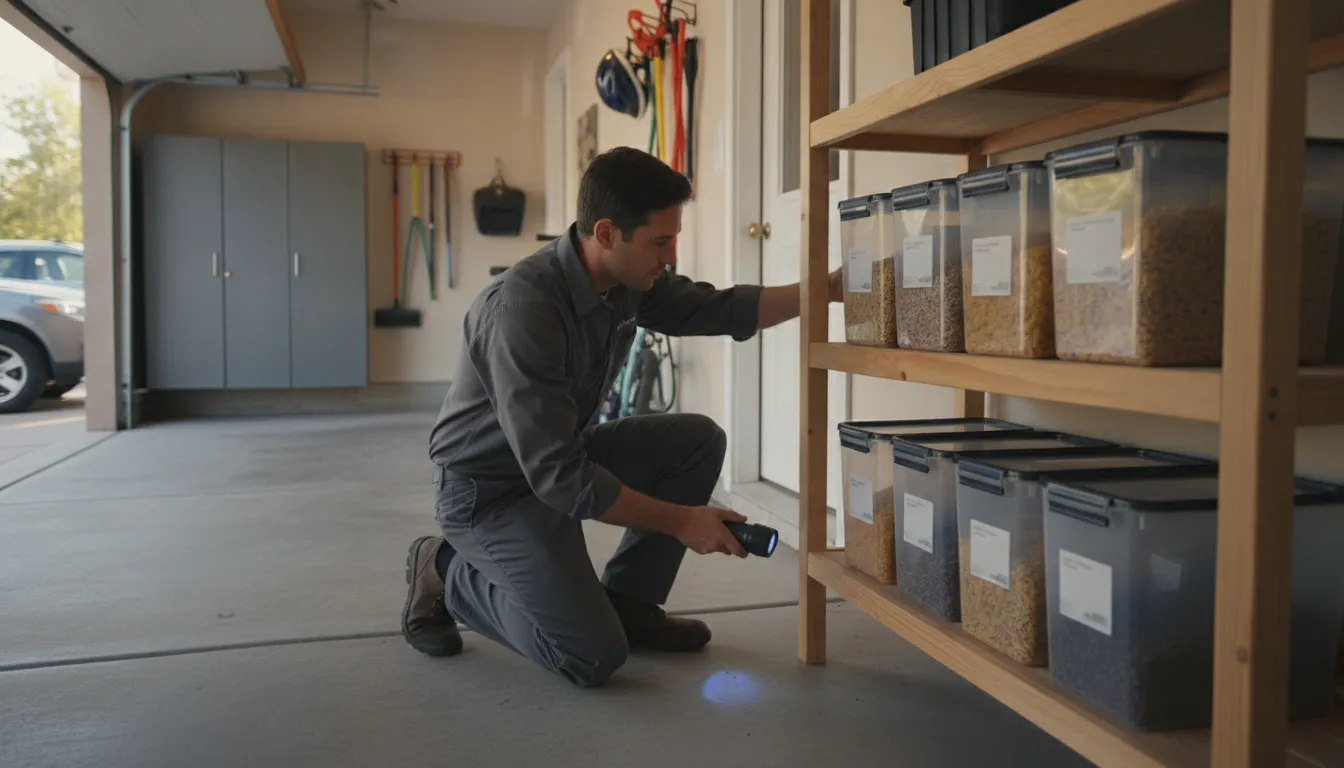
Secure food storage and an orderly garage can reduce conditions that attract rodents.
Call Beeline at 303-586-5231 for a free rodent inspection or estimate.
How Beeline Provides Rodent Control in Centennial Colorado
How does Beeline approach rodent control in Centennial Colorado? Beeline starts with a property inspection, applies targeted treatment based on the activity and access points, and recommends ongoing protection or exclusion steps when appropriate. The plan is adjusted to the home and household.
1. Inspection identifies activity and access
A licensed Beeline technician checks areas where mice or rats commonly enter, including the foundation, garage, utility penetrations, vents, doors, roofline, and transitions between the home and outdoors. The technician also looks for droppings, nesting, gnaw marks, odors, and other evidence. This keeps the response tied to the property rather than a one-size-fits-all assumption.
This step is useful in Centennial homes with attached garages, finished basements, landscaping near the foundation, and multiple utility connections. The inspection connects visible signs inside the home with conditions outside it and gives you a clearer list of actions. Learn more about the company's approach on the Beeline rodent control service page.
2. Targeted treatment addresses current activity
Based on inspection findings, Beeline may use exterior bait stations, interior solutions where needed, and perimeter repellent around the exterior. A technician can explain placement, household precautions, and the role of sanitation or repair work. Products and methods are selected for the property, the rodent activity, and household safety considerations. For service details, visit the rodent control service overview.
3. Ongoing protection supports prevention
Rodent control should continue beyond the first visit when conditions make reinfestation likely. Follow-up may include monitoring activity, renewing exterior protection, improving sanitation, reducing clutter, and addressing suitable entry points. Beeline has served Colorado since 2009, is family-owned and operated, and backs its service with a 100% satisfaction guarantee.
Centennial homeowners can request a free inspection or estimate before treatment so the next step is clear. Same-day or emergency availability may be possible, but scheduling depends on current capacity and the nature of the problem. Call the team rather than assuming a particular appointment time.
How to Book Mice or Rat Removal in Centennial
How should you prepare to book rodent removal? Record the locations and dates of signs, secure food and trash, identify accessible entry points without disturbing contamination, and ask what the inspection and follow-up include. Sharing this information helps the technician plan a safe, focused visit.
- Record the evidence. Note where you saw droppings, gnaw marks, nesting material, damaged packaging, noises, or odors. Take photos from a safe distance. Do not dry sweep or vacuum suspected contamination.
- Secure food and waste. Move pantry goods into sealed containers, close garbage securely, cover compost, and keep pet food stored. Keep children and pets away from suspected activity areas.
- Note likely access points. Check the foundation, garage door, utility penetrations, vents, roofline, and areas where pipes or cables enter. Do not reach into holes or disturb insulation.
- Ask what the visit includes. Confirm that the appointment begins with an inspection. Ask how targeted treatment, exterior baiting, perimeter protection, exclusion, and follow-up may fit the plan.
- Share household concerns. Tell Beeline about children, pets, sensitive areas, recent repairs, and access limitations. This helps the technician explain precautions and next steps.
Beeline serves Centennial and other Front Range communities with a local, personal approach. The goal is a safe, effective plan that addresses current activity and the conditions that allow rodents to return. You can also review the broader Beeline services overview when comparing next steps, including planning for rodent exclusion.
Call 303-586-5231 to schedule a free Centennial rodent inspection.
Need help before the FAQ? Call 303-586-5231 for a free rodent inspection or estimate.
Frequently Asked Questions About Rodent Control in Centennial
When is rodent activity highest in Colorado?
Activity often increases during fall and winter, when mice and rats seek warmth, shelter, and dependable food indoors. Signs can appear any time of year when a home has accessible food, clutter, moisture, or unsealed openings.
How small of an opening can mice or rats use?
A mouse can fit through an opening about the size of a dime, while a rat may use an opening about the size of a quarter. Check utility lines, vents, doors, the garage, roofline, and foundation.
What should I do if I find droppings or nesting material?
Keep children and pets away, do not dry sweep or vacuum the material, and follow current CDC cleanup guidance. Contact a qualified professional when evidence is extensive, enclosed, or difficult to clean safely.
Can I prevent rodents without professional treatment?
Sealing accessible openings, storing food securely, using tight-lid garbage containers, removing nearby leaf piles, and reducing clutter can help. If droppings, odors, sounds, or gnaw marks continue, an inspection can identify hidden access and activity.
What does a Beeline rodent inspection include?
A technician evaluates activity areas, likely entry points, surrounding conditions, and household safety considerations. Beeline then explains targeted treatment and protection options suited to the property.
Ready to Address Rodent Activity in Centennial?
What is the next step if you suspect rodents? Protect people and pets from suspected contamination, record the evidence, and request an inspection. A professional evaluation can clarify where rodents are entering and which treatment or prevention steps fit your home.
Beeline Pest Control offers local guidance for Centennial homeowners, backed by a family-owned team and a 100% satisfaction guarantee. If you are seeing new evidence or hearing activity, do not wait for the problem to become easier to notice.
Call 303-586-5231 to schedule a free inspection or estimate.
Aurora Pest Control: Get Your Free Quote Today!
Are unwanted pests invading your Aurora, Colorado home? Get fast, reliable pest control solutions from Beeline Pest Control! Fill out our simple form to receive a free, no-obligation quote tailored to your specific needs. We'll call you back quickly to discuss how we can make your home pest-free and comfortable again.
More Blogs
Some other blogs you might be interested in