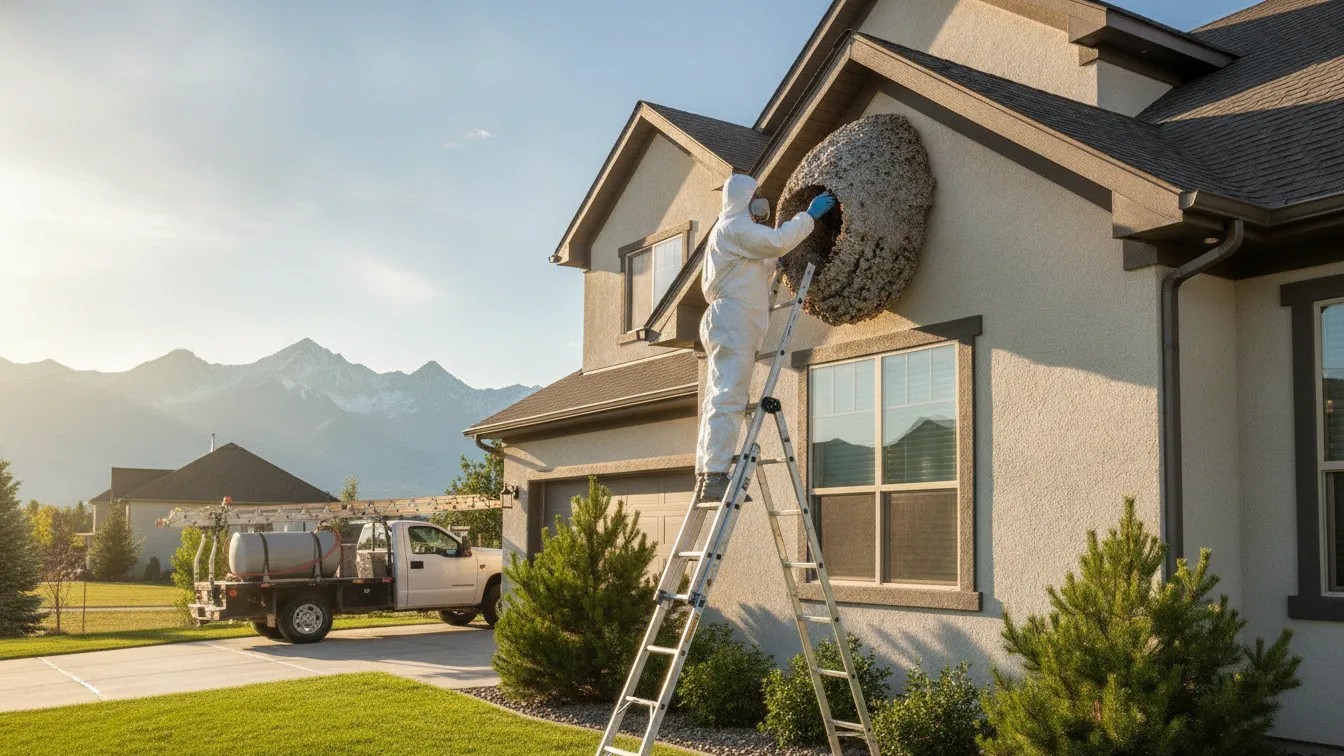
Wasp Nest Removal Cost Colorado: 2026 Guide
Learn Wasp Nest Removal Cost in Colorado, what shapes Denver estimates, when prevention helps, and how to choose safe professional service for your home.
A wasp nest under the eaves, inside a wall, or high in a tree is not priced the same way as an easy-to-reach nest. For Denver homeowners, the right estimate depends on the situation at the property, not a universal menu price.
Call Beeline Pest Control at (303) 586-5231 for a free estimate.
Wasp nest removal cost colorado varies with the wasp species, nest size, location and access, number of nests, treatment method, urgency, and whether follow-up or prevention is needed. A professional inspection should explain each factor before work begins.
That approach helps you compare estimates fairly while keeping children, pets, and anyone allergic to stings away from an active nest. Beeline combines inspection, targeted treatment, physical nest removal when appropriate, and prevention planning for Denver metro and Front Range homes. For broader family-safety guidance, see our guide to wasp and bee control in Colorado. First, let us look at what a typical Colorado estimate should account for.
Average Wasp Nest Removal Cost in Colorado: What Can You Really Expect?
There is no single responsible price that applies to every wasp nest in Colorado. A professional estimate depends on what is present, where it is located, how accessible it is, and what level of treatment the property needs. That is why a trustworthy answer to "wasp nest removal cost colorado" should explain the inspection process instead of presenting a universal dollar figure.
How much should you expect to pay for wasp nest removal in Colorado? The total depends on the nest's size, species, location, access, number of nests, treatment method, urgency, and whether follow-up or prevention is included. An on-site inspection is the most reliable way to receive a customized written estimate.
Why estimates vary from one home to another
A nest attached beneath an easily reached eave may require a different plan than activity inside a wall, high above a garage, or near a busy entryway. Access affects the equipment, time, and safety controls needed for the work. Multiple nests can also change the scope because each location may require separate inspection and treatment.
The insect itself matters as well. Paper wasps, yellowjackets, and mud daubers are common in the region, but their nesting habits and behavior are not identical. Treatment should be selected for the pest biology and the property, not simply labeled "wasp removal." For background on regional species, review these yellow jacket and paper wasp differences.
What a useful inspection should establish
Before comparing estimates, ask whether the inspection identifies the pest, confirms the active nest or entry point, evaluates access and household concerns, and explains the proposed treatment. It should also clarify whether physical nest removal is included, whether follow-up is recommended, and what prevention steps may reduce repeat activity. A low quote can be difficult to compare with a higher quote if one covers only an initial application while the other includes removal, monitoring, or return service.
Beeline's approach begins with inspection and moves to targeted treatment and ongoing protection when appropriate. State-licensed technicians consider the pest, property conditions, and the presence of children or pets before selecting methods. The goal is a clear scope of work, not a rushed promise based on a phone description.
Call Beeline at (303) 586-5231 for a free inspection or estimate.
When you receive written estimates, compare the same details line by line: identified pest, nest locations, treatment method, physical removal, safety instructions, follow-up terms, and any prevention recommendations. That comparison gives you a better basis for choosing safe, effective help than price alone.
What Makes Wasp Nest Removal Cost More or Less?
A professional estimate reflects the job in front of the technician, not a universal fee for every nest. Several practical details determine how much time, equipment, treatment, and follow-up a removal may require.
Nest size and wasp type
A small, newly established nest may require a different response than a large, active nest with heavy wasp traffic. The species matters, too. Paper wasps, yellowjackets, and mud daubers are common in Colorado, but their biology and nesting habits are not identical. That affects where technicians look, how they approach the nest, and which treatment method is appropriate. Learn more about yellow jacket and paper wasp differences before comparing estimates.
Location, height, and access
A nest that is visible and easy to reach is usually simpler to inspect and treat than one hidden inside a wall void, attic, soffit, roofline, tree, or other elevated area. Limited access can require additional preparation and safety measures. A technician also needs to consider how people and pets use the area, whether the nest is near an entryway, and whether activity suggests an unseen nest or entry point nearby. Difficult access should never be a reason to take unnecessary risks with a ladder or disturb an active nest yourself.
Number of nests and treatment method
One nest is a different scope from several nests spread around a property. During an inspection, a professional evaluates pest type, severity, nest location, access, entry points, and contributing conditions. The plan may include targeted treatment, physical nest removal when appropriate, or measures that address conditions attracting or sheltering wasps. Treatment is customized to the pest biology, property, and household concerns. The goal is not simply to spray what is visible, but to choose a focused response that fits the situation.
Urgency and follow-up
An active nest beside a frequently used door, play area, or walkway may need prompt attention. Availability for urgent service depends on the situation and schedule, so explain the risk and timing when requesting an estimate. Follow-up can also affect the overall scope. Some properties need a return visit, nest monitoring, entry-point recommendations, or prevention work involving moisture, food, shelter, or landscaping. Ask what is included, what happens if activity continues, and whether re-treatment is available.
For a clear recommendation based on your home rather than a guess from a photo, request an inspection and explain where you see wasp activity.
Call Beeline Pest Control at (303) 586-5231 for a free estimate or inspection.
Is One-Time Nest Removal Enough, or Should You Consider Prevention?
A one-time response can be the right choice when a single, visible nest is creating an immediate problem. It should begin with an inspection, not a spray from a distance. The technician identifies the pest, checks the nest location and access, looks for additional activity, and considers conditions that may draw wasps to the property.
For a contained nest, the service may include targeted treatment followed by physical nest removal when it is safe and practical. Removing the visible structure can reduce the chance that the same nest is reused, but it does not automatically address nearby shelter, moisture, food sources, or other nests. The best fit depends on what the inspection finds.
| Approach | Best fit | What it addresses | Questions to ask |
|---|---|---|---|
| One-time nest response | One visible nest or an urgent, isolated stinging-insect concern | Inspection, targeted treatment, and physical nest removal when appropriate | Was the pest identified? Is the nest inactive before removal? Were nearby areas checked? |
| Preventive or ongoing protection | Recurring activity, multiple nests, or a property with favorable nesting conditions | Repeat inspections, targeted control, nest and breeding-site removal, and habitat changes | What conditions are attracting wasps? What follow-up is included? Which areas need monitoring? |
Prevention is more than applying treatment on a schedule. An Integrated Pest Management approach combines targeted treatment with physical controls and environmental changes. That may mean removing old nests or breeding sites, correcting moisture issues, reducing accessible food and shelter, and adjusting landscaping near the home. These steps can make the property less attractive without relying on unnecessary chemical applications.
Denver homeowners should also consider seasonal patterns and household needs. Wasps may use protected spaces around eaves, wall voids, sheds, decks, and landscaping. Children and pets should be kept away from active areas, and difficult or elevated nests deserve professional handling. Treatment should be matched to the pest's biology and applied by licensed technicians using appropriate, EPA-approved products. Colorado State University Extension provides additional background on nuisance wasps and bees at its Colorado guidance.
When comparing wasp nest removal cost Colorado estimates, ask whether you are paying for an isolated response or a broader plan to reduce repeat activity. A clear estimate should explain the inspection findings, treatment scope, removal method, and any recommended follow-up. That makes the decision practical rather than based on a number without context. Beeline's Colorado wasp and bee control guide provides the broader safety and service context, while this article focuses on building a clear nest-removal budget.
What Should a Professional Wasp Removal Estimate Include?
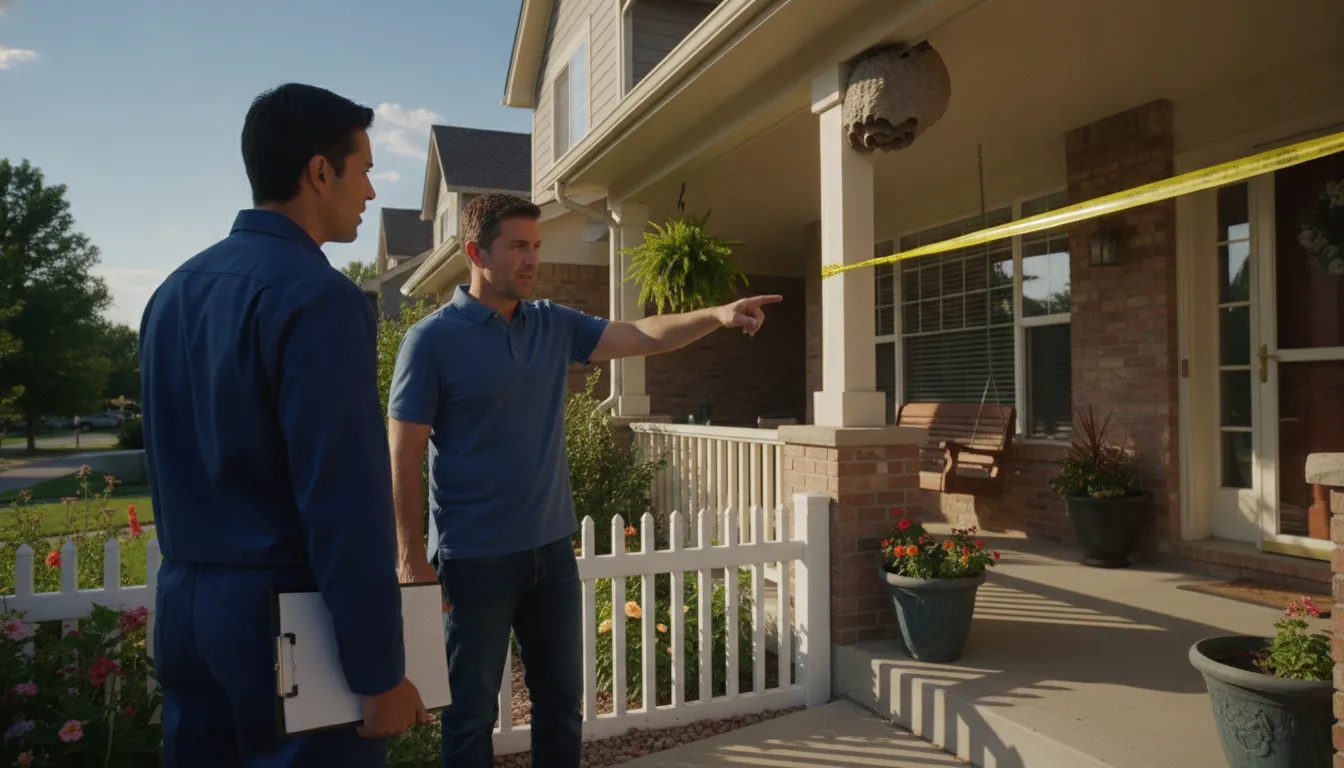
A useful estimate should explain what the technician found, what the service will do, and what happens after treatment. It should not be a vague promise to "take care of the wasps" or a price detached from the conditions at your property.
Inspection findings and access
The written scope should identify the pest when possible, such as paper wasps, yellowjackets, or mud daubers. These wasps have different nesting habits and treatment considerations. The technician should also document the nest location, its apparent size and activity, access conditions, and whether more than one nest or entry point is involved. A nest under an eave, inside a wall void, or high above a roofline may require a different plan than one in an exposed, reachable location.
Ask whether the inspection included nearby areas where wasps may be entering or nesting. A clear estimate connects the observed conditions to the recommended work. That transparency helps explain why wasp nest removal cost Colorado estimates can differ from one home to another without relying on unsupported pricing.
Treatment, removal, and household safety
The estimate should state the treatment method and whether physical nest removal is included, recommended, or planned for a later visit. Physical removal can be part of an Integrated Pest Management approach, along with targeted treatment and changes that reduce conditions supporting future activity. It should also explain any limitations, such as inaccessible voids or elevated locations.
Safety notes belong in the written plan. People and pets should be kept away from an active nest and treated areas according to the technician's instructions. The estimate should identify the products or approach generally, explain any preparation and re-entry guidance, and account for household concerns. Beeline uses EPA-approved products applied by state-licensed technicians, with treatment selected for the pest, property, and family situation. No professional should describe a wasp treatment as entirely risk-free or chemical-free.
Follow-up terms and credentials
Before approving work, confirm whether follow-up inspection, retreatment, nest removal, or prevention recommendations are included. The estimate should identify the service area, expected timing, conditions that would change the scope, and the applicable guarantee. Beeline offers free, no-obligation estimates or inspections and supports service with a 100% satisfaction guarantee and free re-treatment when a customer is not satisfied. Availability and response timing depend on the situation and schedule.
Beeline's inspection, targeted-treatment, and protection approach is designed to address the immediate nest while considering the conditions around it. The family-owned Colorado company has operated since 2009, and owner Jarom Walz brings 26 years of pest-management experience. You can review the company's professional pest control services before scheduling.
Call (303) 586-5231 for a free wasp inspection or estimate.
Is DIY Wasp Nest Removal Safe in a Denver Home?
Removing an active wasp nest yourself can expose you, your family, and your pets to multiple stings. The risk is higher when the nest is near a doorway, under eaves, inside a wall, in an attic, or above ground level. Colorado has several common wasp types, including paper wasps and yellowjackets, and their nesting behavior and response to disturbance can differ. If you cannot confidently identify the insect or reach the nest without climbing, treat it as a professional job.
Do not rely on a price search alone when deciding what to do. A low-cost approach that disturbs the colony can create a more urgent problem, especially inside a home. The Colorado State University Extension guide to nuisance wasps and bees and its guidance on the European paper wasp support careful identification and avoidance of active nests. Use these immediate steps instead:
- Keep people and pets away. Close off the immediate area without approaching the nest. Keep children from playing nearby, and move pets indoors or to another part of the property. If anyone has a known sting allergy, take extra precautions and have emergency medication available according to their medical plan.
- Do not disturb or seal an active nest. Do not poke it, knock it down, cover it, block an opening, or try to force insects into the house. Sealing an entry point while wasps are active can redirect them into wall or ceiling spaces. Avoid improvised tools and household products that may increase agitation or expose your household to unintended chemicals.
- Observe only from a safe distance. Note where the insects enter and leave, when activity is highest, and whether the nest appears exposed or enclosed. Do not get close enough to photograph it or handle debris. A distant observation can help a technician assess the location and possible type, but it is not a substitute for a professional inspection.
- Call a licensed professional for difficult nests. Arrange an inspection when the nest is elevated, hidden, indoors, near a high-traffic area, or otherwise difficult to reach. Professional treatment should account for pest biology, nest location, access, household concerns, and whether physical nest removal or follow-up protection is appropriate.
Beeline uses an inspection-first, targeted approach and state-licensed technicians. That helps separate an active nest problem from entry points or conditions that may attract future activity, without asking you to take unnecessary risks. Read more about safe wasp nest removal before choosing a response. For a no-obligation inspection or estimate in the Denver metro area, call (303) 586-5231.
How Can Denver Homeowners Prevent Another Wasp Nest?
Once an active nest has been addressed, prevention starts with making the area less inviting and easier to monitor. Walk around the home, garage, shed, deck, and fence line during routine yard maintenance. Look for sheltered corners, gaps, damp areas, and places where wasps have begun returning. Early activity is easier to address than a nest discovered after it has become a household hazard.
Remove food and shelter attractants
Keep outdoor food and drinks covered, clean up spills promptly, and use tightly sealed trash and recycling containers. Pet food should not remain outside for extended periods. These simple habits reduce accessible food around patios, porches, and outdoor gathering areas.
At the same time, inspect likely nesting locations. Eaves, roof edges, porch ceilings, wall openings, sheds, and other protected spaces can allow a nest to develop out of direct view. Seal suitable gaps only after confirming that no active nest is inside. Do not block an opening if wasps are still using it, because disturbing or trapping insects can create a safety problem inside the structure.
Manage moisture and landscaping
Repair leaking outdoor faucets, irrigation lines, hose connections, and gutters. Improve drainage where water collects near the foundation or beneath outdoor structures. Moisture control supports broader home maintenance and can make the property less attractive to nuisance pests.
Keep shrubs, vines, and tall vegetation trimmed back from doors, windows, rooflines, and exterior walls. This improves visibility during inspections and reduces concealed areas near places where people and pets spend time. Check landscaping, play areas, and patio furniture regularly, especially after periods of warm weather or increased outdoor use.
Monitor for returning activity
Watch for repeated wasp traffic at one location, insects entering a wall or roof gap, or fresh nest-building activity. Do not spray, knock down, or handle a suspected active nest as a test. Keep children and pets away from the area and arrange an inspection when activity returns. A professional can determine whether the issue is a new nest, residual activity, or another access point that needs attention.
For more seasonal guidance, review these Colorado wasp prevention tips alongside your regular home and landscape checklist.
Call Beeline Pest Control at 303-586-5231 for a free inspection or estimate.
Frequently Asked Questions
How much does it cost to pay someone to remove a wasp nest?
There is no single Colorado price. An accurate estimate depends on the wasp species, nest size, location, height, access, number of nests, treatment method, urgency, and whether follow-up or prevention is included. Ask for a written scope that explains what the visit covers instead of comparing prices without these details.
Does wasp nest removal include treating the nest?
It can, but services differ. A complete plan may include inspection, targeted treatment, physical nest removal when appropriate, and steps to reduce the chance of another nest. Treatment should be selected for the pest biology, property conditions, and household concerns such as children and pets.
What is the best time of year to remove a wasp nest?
Remove an active nest as soon as it creates a safety or access problem, rather than waiting for a particular month. Timing can affect activity and access, so a professional should assess the nest before treatment. Do not disturb an active nest while waiting for service.
Is it safe to remove a wasp nest yourself?
DIY removal can lead to stings, especially when a nest is hidden, elevated, or heavily active. Keep people and pets away, avoid blocking the nest entrance, and do not spray or knock down a nest from a ladder. Colorado State University Extension recommends caution around nuisance wasps and bees: read the safety guidance.
How do I get an accurate wasp removal estimate?
Request an inspection that identifies the species, nest location, access requirements, treatment approach, physical removal details, follow-up, and prevention recommendations. Beeline Pest Control provides free, no-obligation estimates or inspections, with service recommendations based on the property and situation.
Ready to Plan Safe Wasp Nest Removal?
An inspection can clarify where the nest is located, what treatment approach fits the situation, and which prevention steps may help reduce repeat activity. Beeline Pest Control can review your Denver-area home and explain the recommended next step without relying on a one-size-fits-all estimate. Call Beeline Pest Control at (303) 586-5231 to request a free inspection or estimate for wasp nest removal.
Get Your Free Aurora Pest Control Quote Today!
Ready to get rid of pests in your Aurora, Colorado home? Fill out our quick form below and our friendly team will call you back with a personalized, no-obligation quote. Reclaim your home from unwanted pests with Beeline Pest Control!
More Blogs
Some other blogs you might be interested in