Rodent Removal Highlands Ranch CO: Same-Day
Need rodent removal Highlands Ranch CO homeowners can trust? Learn the signs, safe next steps, timing, and professional treatment.
Finding droppings, gnaw marks, or scratching sounds in your Highlands Ranch home is a good reason to investigate. Do not wait for a rodent to become a bigger problem. Fall and winter can bring mice and rats indoors seeking warm shelter, and even a gap about the size of a dime may provide entry.
For rodent removal highlands ranch co homeowners can start by documenting signs, limiting contact with droppings or nesting material, and arranging a professional inspection. A trained technician can assess indoor and outdoor activity, identify entry points, and recommend targeted treatment and ongoing protection for the home.
Beeline Pest Control serves Colorado homeowners with company-employed, state-licensed technicians and professionally applied methods. Learn more about professional rodent control, then use the evidence in your home to understand how urgent the issue may be.
Call 303-586-5231 to request a rodent inspection or free estimate.
Why Rodents Become a Problem in Highlands Ranch Homes
Highlands Ranch homes can become attractive shelter when Colorado temperatures drop. Rodents commonly seek warm shelter in fall and winter, so a quiet attic, crawl space, garage, or wall cavity may provide the protection they need. The first sign may not be a sighting. Homeowners may instead notice scratching after dark, droppings in a hidden corner, or damage near stored food and household materials. Acting on those clues early can help keep a small access problem from becoming a larger indoor issue.
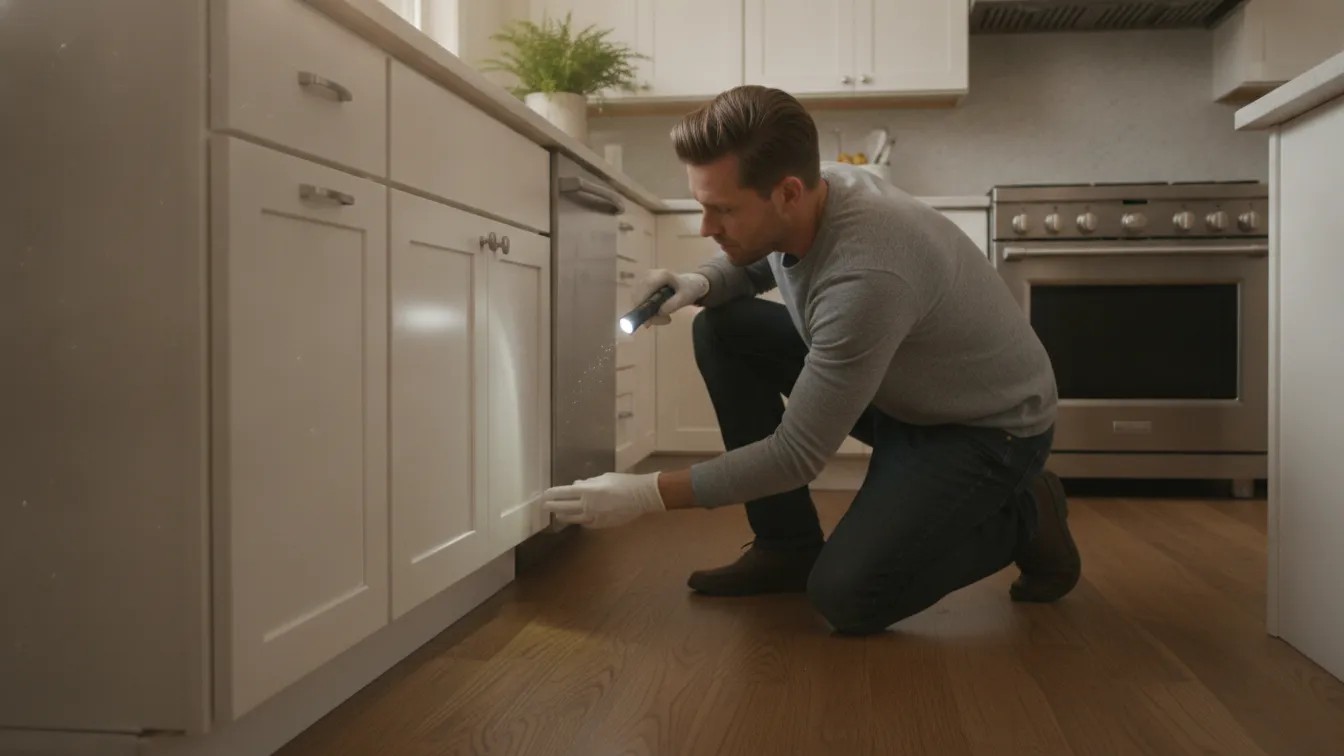
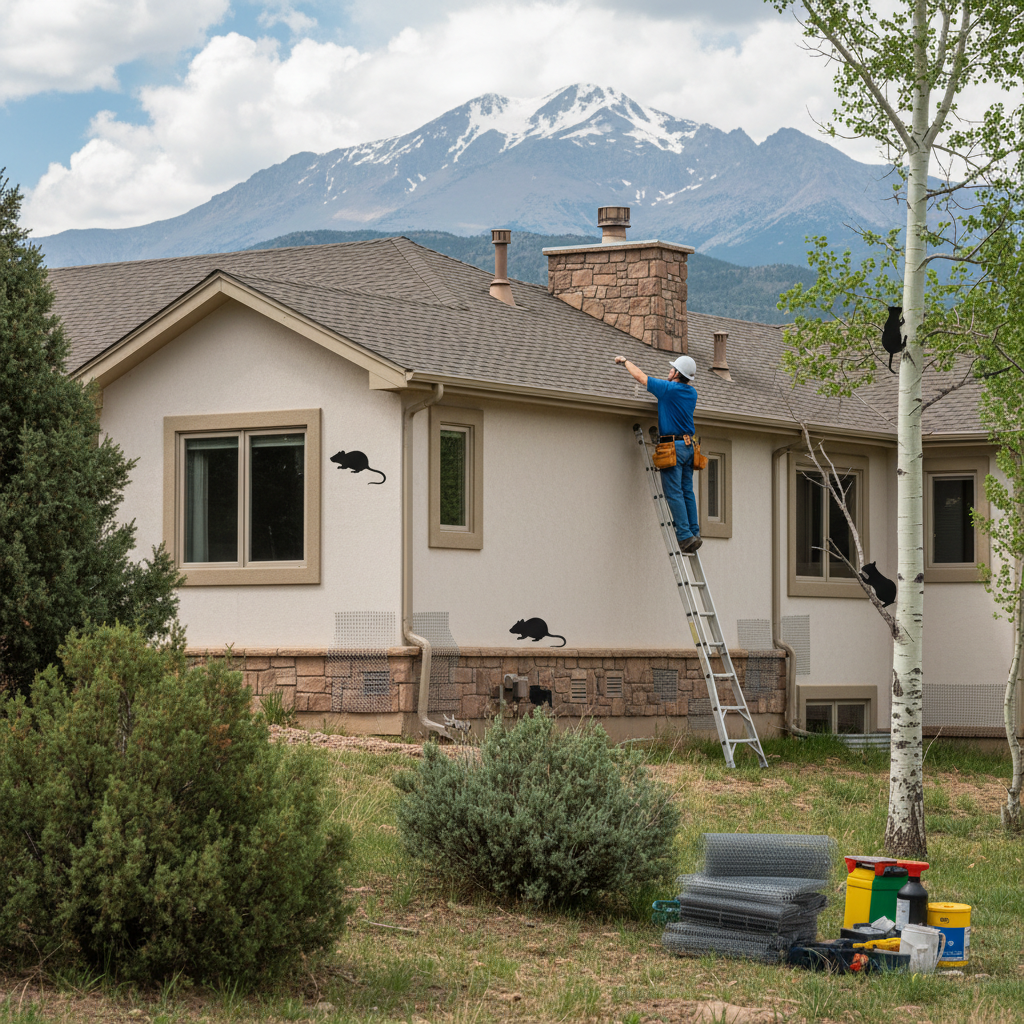
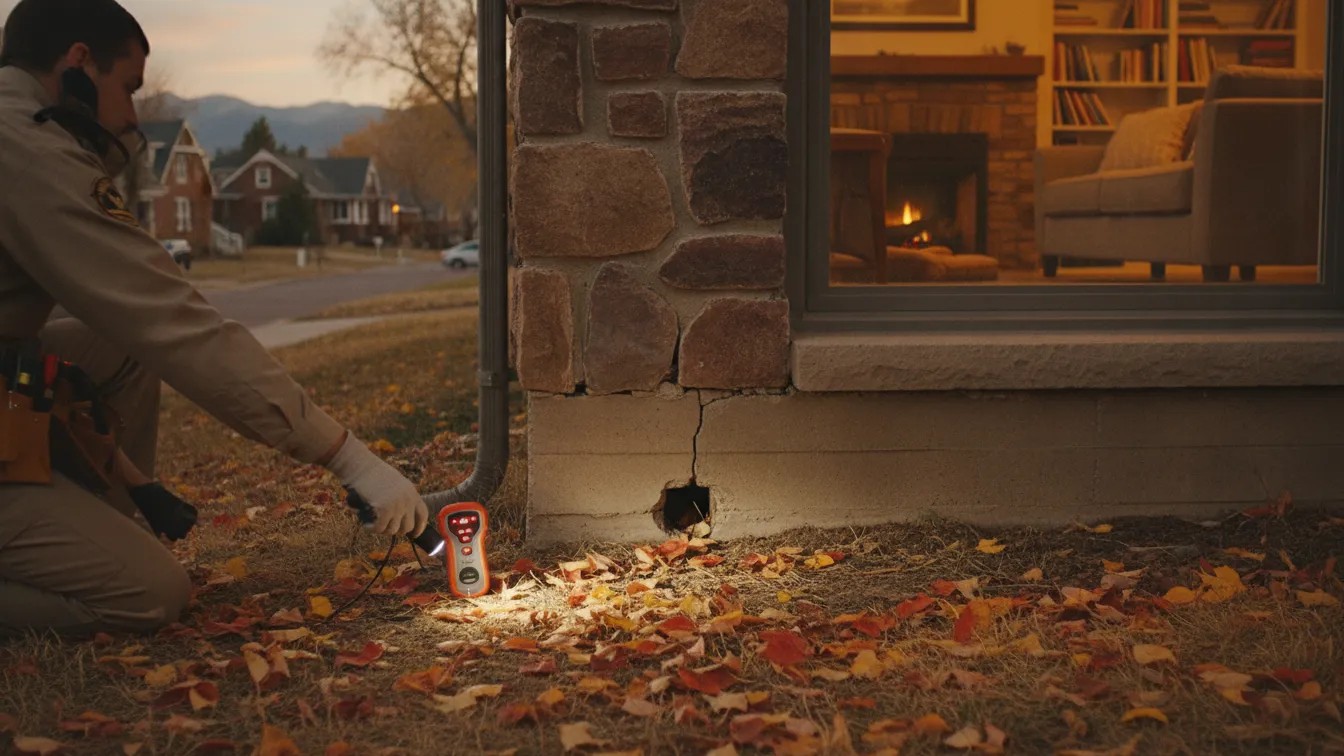
One reason rodents are difficult to keep out is the size of the opening they need. A mouse or rat may use a gap about the size of a dime, roughly one-quarter inch wide. Those openings can occur around utility lines, vents, garage doors, roof transitions, foundations, or other places where building materials meet. A gap that seems too small to matter during a routine walk around the property may still deserve attention. Especially when it connects the outside to a protected interior space.
Why does cold weather increase rodent pressure indoors?
As outdoor conditions become less comfortable, shelter-seeking rodents may investigate homes for warmth and protection. Highlands Ranch properties can offer several routes and hiding places, including attached garages, basements, wall voids, attics, and areas around stored belongings. Landscaping, firewood, outdoor storage, and accessible food or water can also make the area around a home more inviting. These conditions do not prove that a home has an infestation, but they explain why prevention and inspection are particularly important before and during colder months.
Rodent activity can affect both the condition of a home and the comfort of the people living in it. Rodents can contaminate areas with droppings and urine, then damage wiring, insulation, pipes, and other materials. Chewed wiring can create a fire hazard, while disturbed insulation or nesting material may lead to repairs and difficult cleanup. These concerns are practical reasons to investigate evidence rather than waiting for a rodent to appear in a living area.
Health precautions matter as well. A home with rodent activity should be approached carefully, particularly when waste or nesting material is present. Keep children and pets away from suspected activity areas, and avoid handling droppings or nests casually. For a closer look at available professional rodent control, a technician can assess interior and exterior conditions, identify likely entry points, and help distinguish an active concern from an old sign.
What Signs Mean You May Need Rodent Removal in Highlands Ranch?
Most homeowners do not see a mouse or rat first. They notice the evidence it leaves behind. In a Highlands Ranch home, signs may include small droppings in a cabinet or fresh gnaw marks near stored food. A nest tucked behind insulation, scratching after dark, or an unusual odor in a quiet part of the house also deserves attention. These clues do not prove that rodents are still present. The pattern, location, and freshness of the evidence matter.
The Centers for Disease Control and Prevention notes that the first signs of rodents usually appear before a homeowner sees one. Regular inspection of both the inside and outside of the home can help identify activity earlier. Beeline also identifies droppings, gnaw marks, nests, scratching sounds, and unusual odors as common evidence of rodents. Look in hidden areas, including cabinets, drawers, storage spaces, garages, attics, and utility areas.
- Droppings: Check along walls, inside cabinets, behind appliances, and near food or nesting areas. Droppings in hidden locations can be easy to overlook.
- Gnaw marks: Rodents gnaw to create access points and maintain their teeth. Marks may appear on food packaging, wood, insulation, or other materials.
- Nests: Shredded paper, fabric, insulation, or other gathered material may indicate a protected nesting location.
- Scratching sounds: Repeated movement or scratching in walls, ceilings, attics, or crawl spaces can point to activity that is out of sight.
- Unusual odors: A persistent, unfamiliar odor in a confined area can be another clue, especially when it appears alongside droppings or sounds.
How Can You Tell if Rodent Activity Is Still Active?
Fresh evidence appearing after an area has been safely cleaned is one of the clearest signs of active rodent presence. If droppings return, the activity has not ended. Gnaw marks require more context. A mark by itself may only show that rodents were in the area at some point. While gnaw marks found near droppings provide a stronger reason to investigate further. Do not assume an old-looking nest or single mark means the problem is over.
Document where you find each sign and whether it reappears. Avoid touching droppings, urine, saliva, or nesting material. Rodent evidence can contaminate a home, and disturbing waste or nesting material can create an exposure concern. When signs continue or appear in several areas, a professional inspection can assess interior and exterior activity, identify possible entry points, and determine whether removal is needed. Beeline's professional rodent control service covers residential mice and rat concerns while keeping the focus on practical, safe next steps.
What Should You Do Before a Rodent Professional Arrives?
Once you have scheduled an inspection, focus on making the home safer and preserving useful information for the technician. You do not need to investigate every hidden space or handle anything that may be contaminated. Rodent waste, urine, saliva, and nesting materials can expose people to illness, and you cannot tell whether a rodent carries disease simply by looking at it. The safest preparation is controlled, practical, and limited to what you can do without disturbing evidence.
- Remove accessible food and water. Put human and pet food in sealed containers, clean up crumbs and spills, secure trash, and avoid leaving pet bowls out longer than necessary. Address obvious standing water or easy moisture sources when you can do so without entering a contaminated area. Removing food and water reduces the conditions that support rodent activity and contact. It is one part of the broader approach of removing food, water, and shelter sources recommended by the Centers for Disease Control and Prevention.
- Reduce uncomplicated shelter opportunities. Put away loose cardboard, paper piles, fabric, and other clutter in open, uncontaminated areas. Do not reach into dark voids, crawlspaces, cabinets, or wall openings to retrieve materials. If you notice a possible exterior gap, make a note of its location rather than rushing to seal it while activity may still be present. Small openings can matter, but a professional can assess the entry point and recommend a suitable protection plan.
- Keep people and pets away from activity. Close off rooms or areas where you have seen rodents, droppings, urine, or nests when possible. Keep children and pets from touching or investigating those materials. Avoid handling live or dead rodents. Rodent diseases may spread through direct handling, bites, or contact with waste, and airborne particles can result when urine, droppings, or nesting materials are stirred up. Avoiding exposure is safer than trying to identify the animal yourself.
- Document what you have observed. Write down the room, approximate location, and date of each sighting or sound. Note scratching, unusual odors, droppings, gnaw marks, nesting material, or changes in activity. If you can take a photograph from a safe distance without moving anything, save it for the technician. Leave the surrounding area undisturbed so the professional can evaluate the evidence and determine whether activity appears current.
- Do not disturb contaminated materials. Do not sweep, vacuum, dry-brush, shake out, or otherwise stir rodent droppings, urine, or nesting material. Disturbing these materials can put contaminated particles into the air. The CDC advises that special precautions are needed when cleaning rodent waste, and safe cleanup is important for preventing illness. If cleanup cannot wait, follow current public-health guidance or ask the arriving professional what precautions are appropriate. Do not use unverified chemicals, homemade mixtures, or improvised cleanup methods.
- Skip unsafe DIY treatment. Do not handle traps, bait, dead rodents, or nesting sites without clear professional guidance. Avoid placing chemicals or products where children or pets could reach them. A licensed professional can evaluate the situation and choose appropriately targeted methods while considering the people and animals in the home. Give the technician a clear account of anything already moved, cleaned, or treated.
These steps help protect your household without turning a suspected rodent problem into a cleanup or exposure risk. When the technician arrives, share your notes and point out areas that were left untouched. That information can make the inspection more efficient and help guide safe next steps.
How Rodent Removal in Highlands Ranch, CO Protects Your Home
A professional visit should do more than address the rodent you happened to notice. It should help identify how mice or rats are using the property, reduce current activity, and make the home less inviting going forward. Beeline's process is built around three stages: a detailed inspection, targeted treatment, and ongoing protection. The same approach supports residential rodent control for both mice and rats.
That structured process matters in Highlands Ranch homes because rodents can use small, overlooked openings to get inside. An opening roughly one-quarter inch wide can be enough for entry. A technician therefore looks beyond the room where you heard scratching and evaluates the conditions that may be supporting activity throughout the property.
| Homeowner goal | Professional service stage |
|---|---|
| Understand where rodents are active | Inspection of interior and exterior areas, entry points, activity zones, and evidence of infestation |
| Reduce current mouse or rat activity | Targeted treatment using appropriate stations, traps, or bait stations in identified activity areas |
| Make the home harder to re-enter | Ongoing protection that can address openings, moisture, attractants, monitoring, and maintenance |
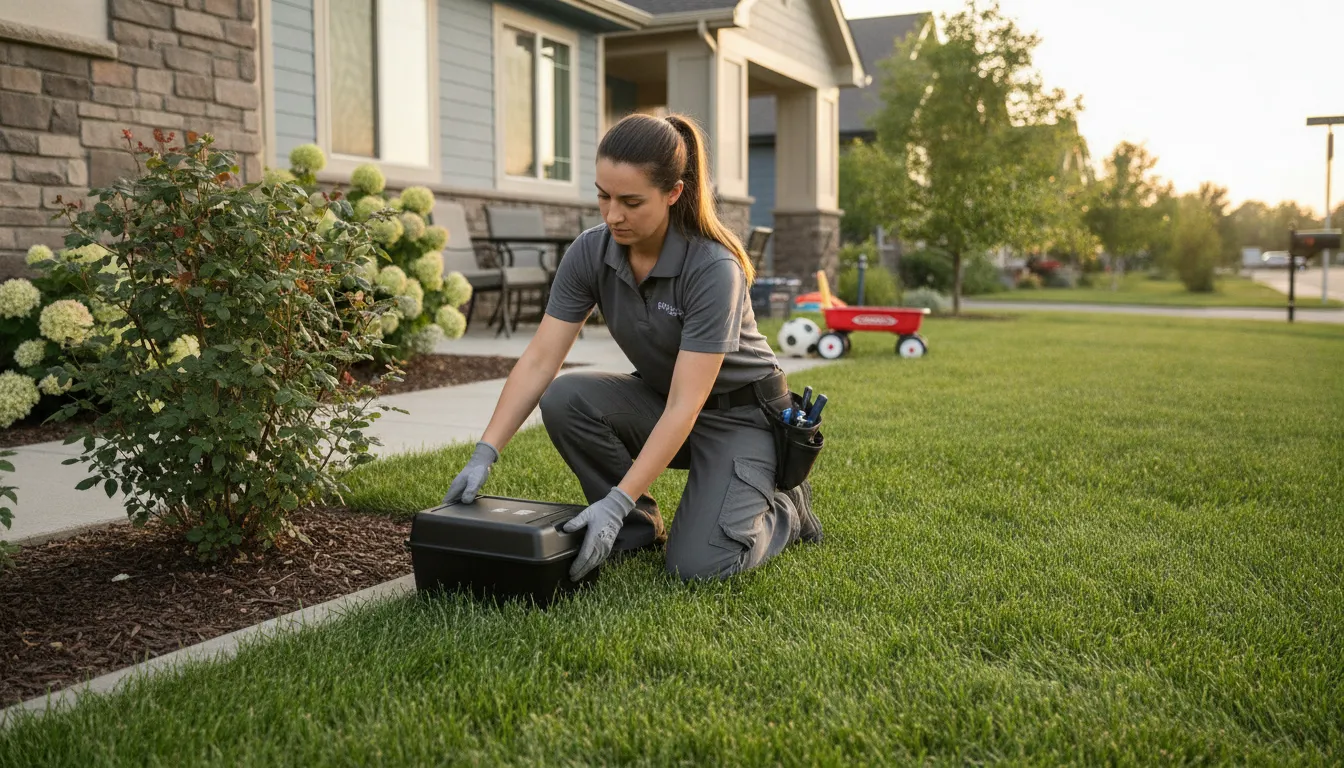
1. Inspection identifies the source of activity
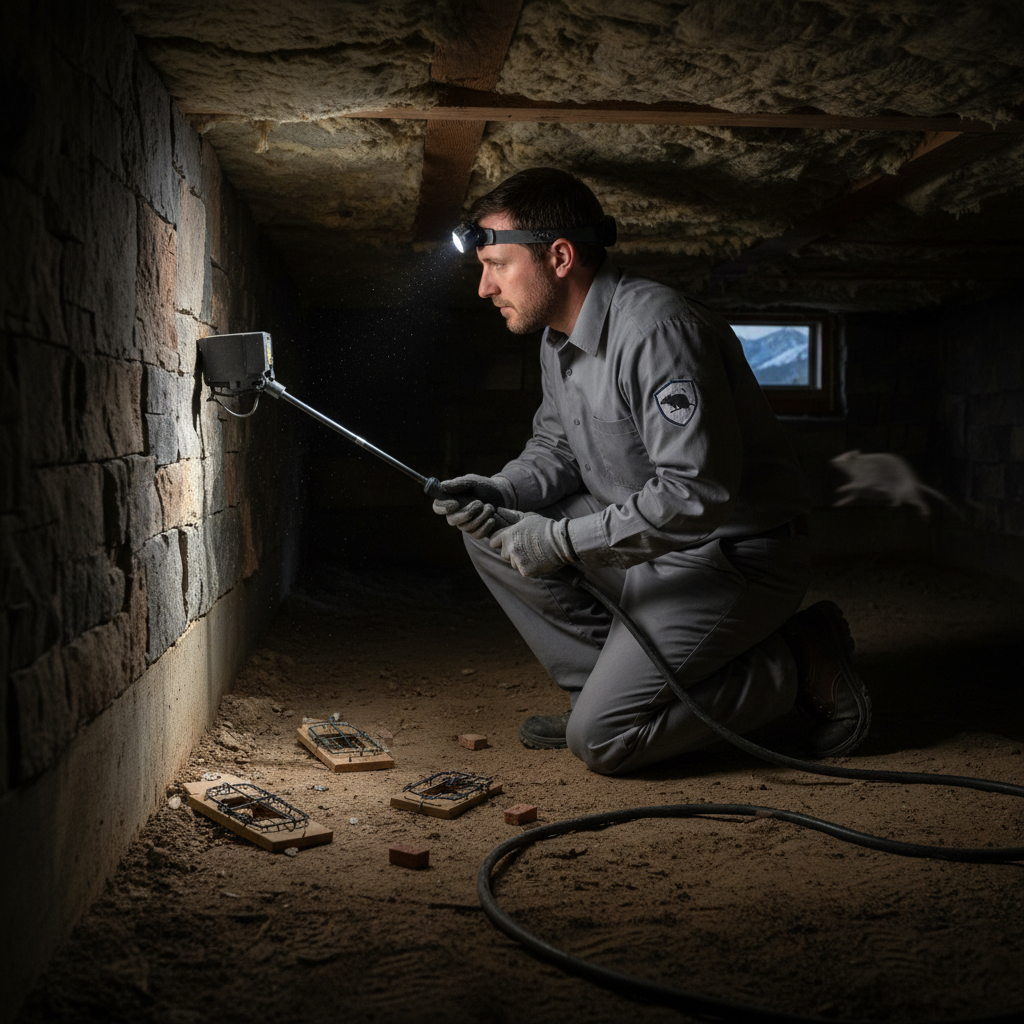
The first stage is a detailed look at the property. Inspection includes interior and exterior assessment, entry-point identification, activity-area checks, and an evaluation of the infestation. This may include reviewing evidence such as droppings, gnaw marks, nests, scratching sounds, or unusual odors. These clues help a technician distinguish a possible active problem from an old sign and determine where treatment should be focused.
An inspection also gives the homeowner a clearer explanation of what the technician found. Rather than treating every area the same way, the service plan can be based on the home's layout. Observed activity, access points, and the concerns you raise about children, pets, or particular rooms.
2. Targeted treatment addresses active areas
After the inspection, treatment is selected for the conditions found at the property. Depending on the situation, targeted treatment may include tamper-resistant exterior bait stations, interior traps or bait stations in active areas, and a protective perimeter repellent application. Product placement and method selection should be discussed clearly, especially when treatment is performed around family spaces or pets.
Beeline uses company-employed technicians rather than relying on an unfamiliar handoff. Its technicians use professional-grade, EPA-approved products and methods and are state-licensed. That combination supports consistent service while keeping the treatment plan focused on the actual rodent issue.
3. Ongoing protection reduces repeat problems
Removal and prevention work together. Ongoing protection may include sealing entry points, addressing moisture, removing attractants, seasonal monitoring, and an optional maintenance plan. These steps are especially useful when a home has conditions that could continue to attract rodents after the initial activity is reduced.
For a local, clearly explained plan, review Beeline's professional rodent control service or ask what the inspection and protection stages would involve for your Highlands Ranch home.
Call Beeline Pest Control at 303-586-5231 to discuss rodent removal for your home.
How Quickly Can Rodent Removal Be Scheduled?
When you hear scratching, find fresh droppings, or notice signs of rodents in a Highlands Ranch home, it is reasonable to want help quickly. Scheduling usually starts with a brief phone conversation so the service team can understand what you are seeing. How long it has been happening, and whether there may be an immediate safety or property concern.
For standard rodent removal requests, Beeline states that appointments are typically accommodated within 24 to 48 hours. Same-day or emergency service may be available when the situation is urgent, but availability depends on the circumstances and the service schedule. Same-day service should be requested rather than assumed.
What makes a rodent call urgent?
Let the scheduling team know if rodents are active inside living areas, if you have found extensive contamination. Or if you are concerned about damage near wiring, insulation, pipes, or other building materials. Also mention if a child or pet may have contacted a rodent, droppings, urine, saliva, or nesting material. These details help the team triage the request and recommend an appropriate next step without overstating what can be determined over the phone.
Seasonal timing can matter in Colorado. Rodents commonly seek warm shelter during fall and winter, so activity inside a home may become more noticeable when outdoor temperatures drop. Waiting can allow an isolated entry problem to become a larger, harder-to-manage issue. If you are seeing fresh evidence repeatedly, describe that pattern when you call.
Information to have ready when you schedule
A clear description helps the technician prepare for the visit. Before calling, make a short list:
- Where you saw droppings, gnaw marks, nests, scratching sounds, or unusual odors.
- When you first noticed the evidence and whether it continued after cleaning.
- Whether activity is in an attic, basement, garage, kitchen, wall, crawl space, or another area.
- Any visible openings, damaged materials, food sources, water sources, or nesting areas nearby.
- Whether children, pets, or anyone with special safety concerns lives in the home.
Beeline serves residential properties across the Denver metro area and Colorado Front Range. You can review the company's Front Range service areas, then confirm current Highlands Ranch availability and appointment timing when you contact the team.
A detailed inspection can help identify entry points, activity areas, and the right treatment and protection plan for your home.
How to Choose a Rodent Removal Company Near Highlands Ranch
When you compare providers, look beyond the first available appointment. A dependable rodent removal company should be able to explain what it will inspect, how treatment will be selected, and what will help keep rodents from returning. That conversation matters in Highlands Ranch, where a practical plan should address the home itself, not just the animal you happened to notice.
- Confirm licensing and training. Ask whether the technicians who will visit your home are state-licensed and whether the company uses its own service team. Beeline technicians are state-licensed and use professional-grade, EPA-approved products and methods. Those details do not replace communication, but they show that treatment is being handled within a professional framework.
- Expect a real inspection. A useful visit should include both the interior and exterior of the property. The technician should identify likely entry points, check areas of activity, and evaluate the extent of the infestation. Be cautious of a provider that recommends a treatment without first asking where you have seen droppings, heard scratching, or noticed damage.
- Ask how treatment will be targeted. The right approach depends on the location and evidence of activity. Professional service may include tamper-resistant exterior bait stations, interior traps or bait stations in active areas, and a protective perimeter repellent application. Ask where products or devices will be placed and how children, pets, and household routines will be considered. Treatments should be professionally applied, not described as risk-free or chemical-free.
- Look for protection after removal. Removing current activity is only part of the job. Ask whether the plan includes sealing entry points, addressing moisture, removing attractants, monitoring, or maintenance. Even a small opening can matter, since rodents may enter through a gap roughly one-quarter inch wide.
- Choose local accountability. A family-owned Colorado team with an established service area has a reason to protect its reputation with homeowners. Beeline was founded in 2009 and serves residential and commercial properties across the Denver metro area and Colorado Front Range. You can learn more about Beeline's family-owned Colorado team before scheduling.
- Get guarantees in writing. If a company advertises a satisfaction guarantee, re-treatment policy, or other protection, ask exactly what it covers, for how long, and what the homeowner must do. A published guarantee should be clear enough to review before work begins, rather than an assumption made from a sales conversation.
Finally, ask for a plain-language summary of the findings and next steps. A trustworthy provider should make it easier to understand the problem, the safety precautions, and the path from treatment to long-term protection.
A Practical Prevention Plan for Highlands Ranch Homeowners
Rodent prevention works best as a routine, not a one-time reaction. In Highlands Ranch, review your home before colder weather arrives and continue checking it as seasons change. Rodents commonly seek warm shelter in fall and winter, so small maintenance tasks can help reduce the opportunities for mice and rats to settle indoors.
Start with the three basics: food, water, and shelter. Store pantry goods and pet food in secure containers, clean up crumbs promptly, and keep trash closed. Check for dripping faucets, damp areas, or other accessible water sources. Outdoors, reduce clutter and materials that could provide cover near the foundation. Removing these resources helps make your property less inviting.
Next, inspect the exterior and interior for entry points. Rodents can enter through an opening roughly one-quarter inch wide, about the size of a dime. Look around doors, utility penetrations, vents, roofline transitions, foundation joints, and garage edges. Seal appropriate gaps with durable materials suited to the location, and make sure door sweeps and screens remain intact. If you find a potential opening but cannot tell whether it is active, note its location for a professional inspection rather than disturbing nearby nesting material.
Moisture control belongs in the same plan. Address leaks and persistent damp conditions, and keep attractants away from walls and access points. Ongoing protection may combine sealed entry points, moisture management, attractant removal, seasonal monitoring, and maintenance when appropriate. This layered approach is more dependable than focusing on a single gap or applying a temporary remedy.
Use a simple seasonal check: inspect the attic, crawlspace, garage, utility areas, and foundation perimeter for new droppings, gnaw marks, nests, scratching sounds, or unusual odors. A recurring sign, a newly discovered opening, or evidence that activity continues after cleanup is a reason to seek help. Professional rodent service uses inspection, targeted treatment, and ongoing protection. A technician can assess interior and exterior activity, identify access points, and recommend steps suited to your home. Learn more about rodent exclusion and keeping rodents out before deciding what needs attention.
Call Beeline Pest Control at 303-586-5231 to discuss rodent prevention or request an inspection.
Frequently Asked Questions
What signs suggest rodents are active in my home?
Look for fresh droppings, new gnaw marks, nests, scratching sounds, or unusual odors. Droppings that return after safe cleaning are a particularly useful clue because they indicate active rodent presence. Evidence may appear in cabinets, drawers, attics, garages, or other hidden areas before you ever see a mouse or rat. The CDC identifies droppings and gnaw marks as signs of rodent presence.
How should I clean up rodent droppings safely?
Avoid touching or sweeping dry waste, urine, or nesting material, since disturbing contaminated material can put particles into the air. Keep children and pets away from the area, and follow current public-health cleanup guidance or ask a qualified professional for help. People cannot determine whether a rodent carries disease simply by looking at it, so treat evidence as potentially contaminated. The CDC recommends special precautions when cleaning rodent waste.
Can rodents really get through a very small gap?
Yes. Rodents can enter through an opening about one-quarter inch wide, roughly the size of a dime. Check gaps around doors, vents, utility lines, foundations, and roof areas, then use durable materials suited to the location to seal them. A professional inspection can help distinguish an entry point from a harmless crack and identify less obvious access routes.
What happens during a professional rodent inspection?
A technician assesses the interior and exterior, looks for entry points and activity areas, and evaluates the extent of the infestation. The service may then use targeted treatment, followed by protection such as sealing openings, addressing moisture, removing attractants, and monitoring. Beeline serves residential properties for mice and rats with company-employed, state-licensed technicians.
How soon can rodent removal be scheduled in Highlands Ranch?
Standard service requests are typically accommodated within 24 to 48 hours, while same-day or emergency service may be available for urgent situations. Timing depends on the situation and current scheduling. When you call, describe the signs, where they appear, and any concern about children, pets, damaged wiring, or contamination so the visit can be triaged appropriately.
Ready to Address Rodent Concerns in Your Highlands Ranch Home?
A professional inspection can help clarify what is happening and identify practical next steps for your home. Contact Beeline Pest Control to request a rodent inspection or estimate for your Highlands Ranch property. Call Beeline Pest Control at 303-586-5231 to get started.
Get a Free Pest Control Quote in Aurora, CO
Facing pest problems in your Aurora home? Beeline Pest Control offers effective solutions. Fill out our simple form for a fast, free, and personalized quote. Our local experts will call you back to discuss how we can make your home pest-free!
More Blogs
Some other blogs you might be interested in