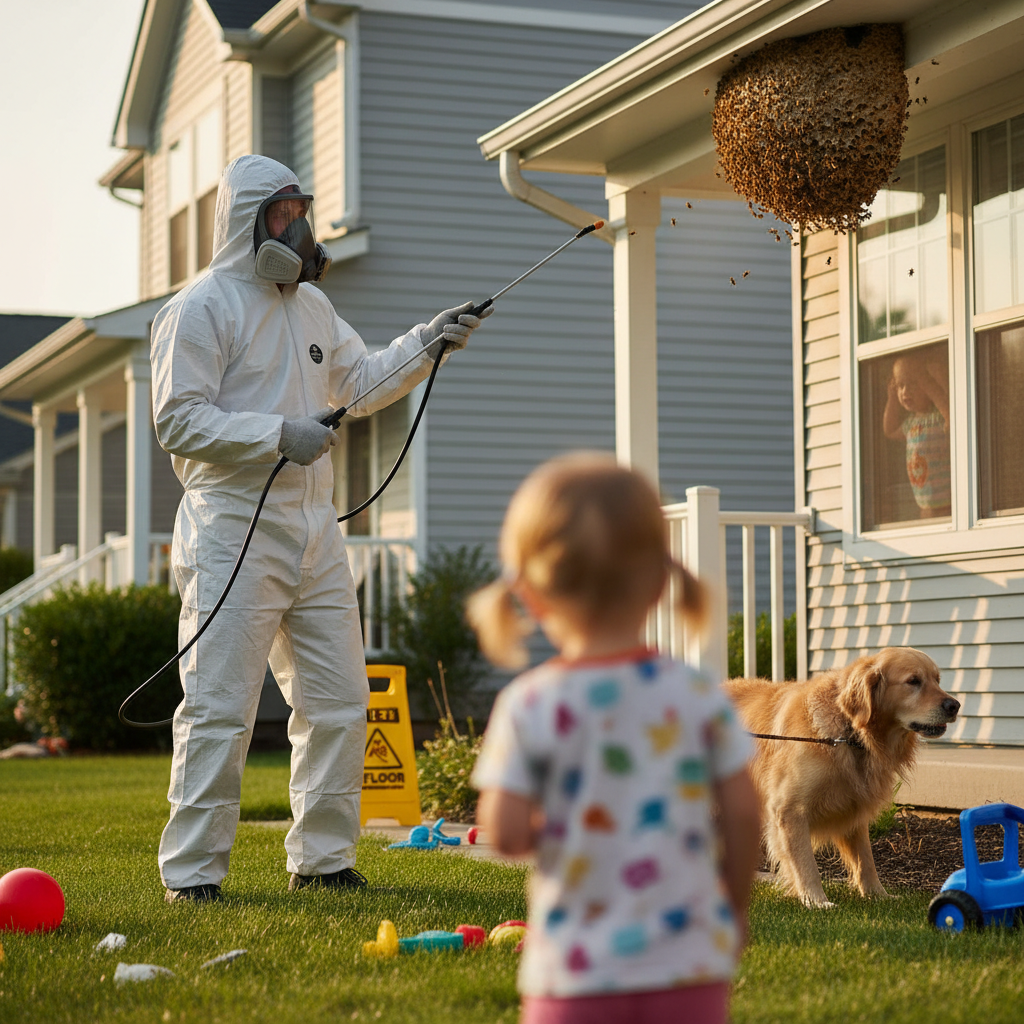
Is It Safe to Spray Wasps Near Kids and Pets?
Is it safe to spray wasps near kids and pets? Learn what parents should know about labels, drying time, re-entry, and safer professional treatment.
Is it safe to spray wasps near kids and pets? It can be safe when the product is approved for that location, applied exactly as its label directs, and children and animals stay out of the treated area until the label's re-entry instructions are met. A licensed professional can also identify the nest and reduce unnecessary exposure.
Call Beeline Pest Control at 303-586-5231 for family-focused wasp treatment guidance.
What is the short answer for parents?
Wasp spray is not automatically safe just because it is sold for home use. Safety depends on the product, dose, application site, ventilation, weather, and the label's re-entry directions. Keep children and pets away during application and until the treating professional or product label says the area is ready.
Parents often ask this question after spotting a nest near a door, play area, window, or patio. The concern is reasonable: a wasp treatment has two safety issues at once. The nest can pose a sting risk, while an insecticide can create risk if it is inhaled, touched, tracked indoors, or swallowed.
The safest decision is not to choose a spray by its front-label promise alone. Read the complete product label, identify where the product may legally be used, and follow the instructions for people, pets, food, toys, ventilation, and re-entry. The U.S. Environmental Protection Agency's pest control guidance recommends targeted applications, label compliance, and keeping children and pets away from treated areas.
What chemicals are used in professional wasp treatment?
Professional wasp treatments may use different registered insecticides and application methods depending on the species, nest location, and property. A responsible technician selects a product labeled for that use, applies only the needed amount, and explains precautions. The chemical name and EPA registration information should be available when a homeowner asks.
There is no single "wasp spray" formula. Products may include different active ingredients, carriers, and delivery methods. An aerosol used for a reachable exterior nest is not the same exposure scenario as a treatment in a wall void, attic, or ground nest. The application location matters as much as the product name.
- Registered use: The product label should allow the specific pest, surface, and application site.
- Targeted placement: A nest or crack-and-crevice application is different from spraying an entire room or play area.
- Limited amount: More product is not more effective and can increase exposure.
- Application conditions: Wind, rain, temperature, nearby windows, ventilation, and surface type can affect the treatment plan.
- Re-entry guidance: The label and technician should explain when people and animals may return.
An EPA registration is not a claim that a product is harmless. It means the product has a registered label that controls its permitted uses. The EPA says homeowners should use only pesticides approved for the intended location and should ask a pest professional for the product name and EPA registration number. Beeline Pest Control uses licensed technicians and a targeted inspection-and-treatment process, but the exact product and instructions should always be confirmed for the individual property.
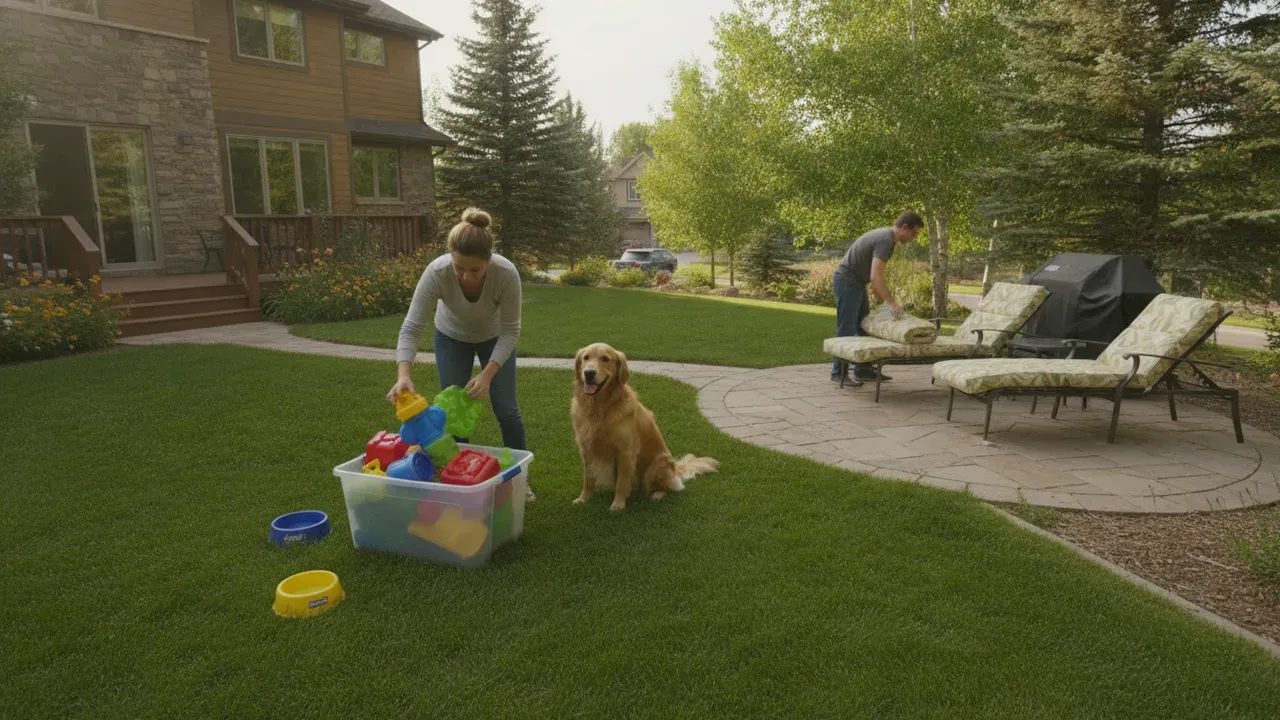
Move children's toys, pet bowls, and other items away before an outdoor treatment.
Is wasp spray safe for children and pets?
Wasp spray can be used safely around a family when children and pets are removed before application, exposed items are protected or moved, the product is used only as labeled, and re-entry directions are followed. Because children and animals may touch or lick surfaces, keeping them away until the area is ready is essential.
Children may be more vulnerable to pesticide exposure because of their developing bodies and frequent hand-to-mouth behavior. Pets can be exposed by inhaling mist, walking through a wet application, licking treated surfaces, or contacting contaminated toys, bedding, food bowls, or fur. The National Pesticide Information Center guidance on children and its pet pesticide fact sheet both emphasize following the label and keeping children and animals away during and after treatment.
For a planned professional treatment, parents should ask:
- Which product or active ingredient will be used?
- Is the application indoors, outdoors, or in a wall or roof void?
- Which surfaces, plants, toys, bowls, or furniture need to be moved or covered?
- How long must people and pets stay away, and is drying enough or is a longer interval required?
- Should windows, doors, or nearby air conditioning remain closed during application?
- What should we do if a child or pet touches a wet surface?
Avoid relying on phrases such as "natural," "chemical-free," or "pet-safe" without reading the actual label. Natural substances can still irritate skin, eyes, lungs, or the digestive system. Conversely, a professional treatment can be appropriate when it is selected and applied for the actual nest location, with exposure controls in place.
How should you prepare your home before wasp treatment?
Before a wasp treatment, remove children, pets, toys, food, water bowls, outdoor cushions, and other belongings from the application area. Close nearby windows and doors if instructed, tell the technician about fish or other animals, and ask which spaces must remain unoccupied during treatment and drying.
Preparation reduces the chance that a family member will contact a treated surface or bring residue indoors. Use this simple checklist, then follow any property-specific instructions from the technician:
- Bring children and pets inside or arrange for them to be away from the property before treatment begins.
- Move toys, play equipment, pet beds, bowls, leashes, and food away from the treatment zone.
- Close windows and doors near the nest if the treatment is outdoors and the technician recommends it.
- Tell the technician about children with respiratory sensitivities, pets, fish tanks, ponds, gardens, and pollinator areas.
- Do not stand near the nest to watch the application. Wasps may become defensive when disturbed.
- Ask for written or verbal re-entry instructions before the technician leaves.
For outdoor work, the National Pesticide Information Center recommends planning around the label, drying, weather, drift, and the location of play spaces and pet areas. The goal is not to make a blanket assumption about every product. It is to control the specific exposure routes present at your home.
How long should you keep pets away after treatment?
Keep pets away until the product label's re-entry direction is satisfied and treated surfaces are dry, unless the label requires a longer wait. A technician may give additional instructions based on the product, nest location, weather, and surface. Never use a generic "one hour" rule for every wasp treatment.
Drying time is often part of the answer, but it is not the only answer. Some labels require people and pets to stay out until sprays have dried. Others may specify ventilation, dispersal of mist or vapors, or a longer interval. Granules, dusts, and products applied in enclosed spaces may have different precautions.
Ask the technician to identify the treated areas and explain how to tell they are ready. Keep children from touching nearby railings, walls, decks, plants, or soil until you have received clearance. Keep pets from licking or digging in treated locations after re-entry, and replace bowls or toys only after they have been cleaned or moved according to the instructions.
If a product label and a verbal suggestion seem to conflict, follow the label and ask the professional to clarify. The label is the controlling safety document. The NPIC outdoor treatment guidance also recommends waiting for the area to dry and following product-specific re-entry directions.
What does Beeline Pest Control do to reduce family risk?
Beeline Pest Control starts with inspection, then matches the treatment to the pest and nest location instead of treating blindly. Licensed technicians can discuss children, pets, access points, and re-entry before application. The company serves Denver-area homes with a family-owned approach and a 100% satisfaction guarantee.
A safe service conversation should begin before any product is applied. Beeline Pest Control's three-step approach is designed to identify the problem, apply a targeted treatment, and support ongoing protection:
- Inspect: Locate active nests, entry points, and areas where children or pets could encounter activity.
- Treat: Use a method selected for the nest and property, with attention to people, animals, plants, and nearby living spaces.
- Protect: Discuss prevention, access points, and practical steps that can reduce future nesting pressure.
Beeline is family-owned and operated in Colorado, with owner Jarom Walz bringing 26 years of pest management experience. Its technicians are licensed through the Colorado Department of Agriculture. Those credentials do not replace product-label directions, but they give homeowners a knowledgeable professional to ask about the application, precautions, and re-entry plan.
For broader information about choosing removal methods, nest locations, and family considerations, see Beeline's Wasp and Bee Control in Colorado guide. If you are seeing an active nest, the Denver wasp nest removal guide explains why ladders and direct DIY spraying can create additional risks.
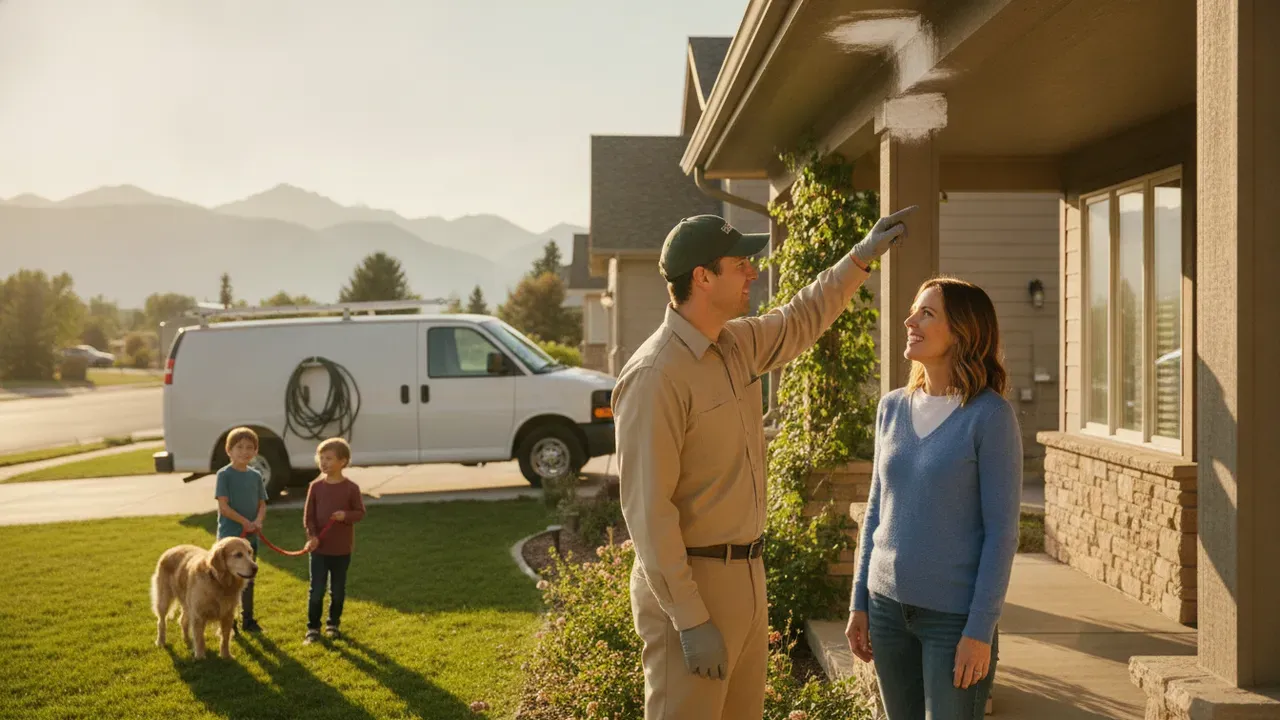
Ask the technician to identify treated areas and explain when children and pets may return.
What should you do if a child or pet contacts wasp spray?
If a child or pet contacts wasp spray, move them away from the area and follow the product label's first-aid directions. Do not guess about symptoms or induce vomiting unless instructed. Keep the product label or EPA registration information available, then contact Poison Control, a medical professional, or a veterinarian as appropriate.
For a person, rinse exposed skin or eyes as directed on the label and seek immediate medical help for breathing trouble, severe irritation, confusion, seizures, or other serious symptoms. For a pet, contact a veterinarian or animal poison resource promptly, especially after ingestion, a large exposure, or concerning behavior. Have the product name, active ingredient, approximate amount, route of exposure, and time available.
The Poison Control insecticide guidance explains that insecticides can cause harm through ingestion, skin or eye contact, and inhalation. It also recommends reading the label and seeking expert help when exposure occurs. If there is an emergency, call 911 or use the emergency service appropriate to your location.
Want a wasp treatment plan that accounts for your family and pets? Call Beeline Pest Control at 303-586-5231, or visit the services page to request a free estimate.
Frequently asked questions
Is wasp spray toxic after it dries?
Drying can reduce transfer from a wet surface, but it does not make every product risk-free. Follow the label's re-entry directions, keep children and pets from licking or disturbing treated surfaces, and ask the technician whether any additional precautions apply.
How long after spraying wasp spray is it safe for pets?
There is no universal wait time. Keep pets away until the product label and technician say re-entry is allowed, and until treated surfaces are dry when drying is part of the instructions. A longer interval may apply for some products or locations.
Is professional wasp treatment safer than spraying a nest yourself?
Professional treatment can reduce risk by identifying the nest, selecting a product labeled for the location, using protective equipment, and planning re-entry. It does not eliminate risk, so the homeowner should still follow all instructions and keep people and pets away as directed.
Can I spray wasps near a child's play area?
Do not spray while children are present, and do not allow them back until the label's re-entry requirements are met. Move toys and play equipment away first, then ask a professional whether the nest can be treated without contaminating those items.
What should I ask a pest control company before treating wasps?
Ask what product and application method will be used, where it will be applied, how the area should be prepared, how long children and pets must stay away, and what to do after accidental contact. Also ask how the company will address the nest rather than only spraying visible wasps.
Bottom line: Treat wasp spray as a pesticide, not as a harmless household shortcut. Keep children and pets away during application, follow the label and professional instructions, and choose targeted help when a nest is close to the places your family uses every day.
Call Beeline Pest Control at 303-586-5231 for family-focused wasp treatment guidance.
Get Your Free Denver Pest Control Quote from Beeline Today!
Tired of uninvited pests in your Denver metro home? Beeline Pest Control is ready to help! Fill out our quick form to receive a free, no-obligation quote tailored to your pest problem. We'll call you back to discuss effective solutions and help you get rid of pests for good. Get started on a pest-free Colorado home today!
More Blogs
Some other blogs you might be interested in