Termite Inspection Cost Denver
Curious about the price of a termite inspection in Denver? Discover what impacts the cost and why investing in professional detection is crucial for your home's safety. Beeline Pest Control provides clear, competitive pricing and thorough inspections to safeguard your biggest investment. Learn more about protecting your home from termites without breaking the bank.
Seeing discarded wings, mud tubes, or damaged wood can make any Denver homeowner wonder what comes next. An inspection is often the most useful first step because termite activity can remain hidden. The right response depends on the species, location, and visible evidence found at the property.
Denver homes face different construction styles, soil conditions, and access challenges. A crawl space, attached garage, finished basement, or detached structure can change what an inspector can evaluate. That is why a useful cost discussion begins with scope rather than a single number.
When researching termite inspection cost denver, expect the final quote to depend on inspection scope, property access, documentation needs, and whether treatment is separate. Beeline does not publish a fixed termite inspection price. Ask what the visit includes and whether a free estimate or inspection is available.
A thorough evaluation should give you more than a number. It should clarify what was inspected and whether signs point to termites or another issue. Here is how Denver homeowners can compare inspection costs and understand what they are booking.
Call Beeline Pest Control at 303-586-5231 to ask about a termite inspection or free estimate.
What Does a Termite Inspection Cost in Denver in 2026?
Answer: Third-party estimate sources can show wide variation, but those figures are directional benchmarks, not Beeline pricing. Your quote depends on scope, access, documentation, and whether treatment is separate.
Use those figures only for broad planning. A quick visual check is different from a detailed inspection of a home, garage, crawl space, or other accessible areas. The estimate source is not a local price sheet. It is not a promise of what a pest company will charge.
| Comparison point | What it may mean | Why it matters |
|---|---|---|
| Third-party benchmark | Published estimates can vary widely by provider and inspection scope. | Useful for orientation only. It is not a Beeline quote. |
| Inspection scope | Accessible interior and exterior areas, visible evidence, and entry or moisture conditions | A clear scope shows what the inspection did and did not evaluate. |
| Property size and access | Home size, additional structures, crawl spaces, basements, and restricted areas can change the work involved. | Limited access can limit findings. |
| Documentation needs | A homeowner assessment may differ from a report for a property transaction | Ask whether you need a general assessment or a wood-destroying-insect report. |
| Treatment discussion | Inspection and treatment are separate unless the provider clearly bundles them | The recommendation should identify the termite type and location first. |
Ask which areas and structures are included. Confirm whether you will receive written findings and whether treatment is quoted separately. A professional inspection is usually needed to confirm an infestation. Termite management depends on the type of termite and where it is found. Review this termite and bed bug control guide for Colorado context.
Beeline does not publish a fixed termite inspection price in the available customer information. Request a clear estimate and confirm the scope before approving service. Compare the value and documentation, not just the lowest number.
What Does a Professional Termite Inspection Include?
Homeowners often focus on the fee, but the inspection process is the larger value. A careful visit helps separate a confirmed concern from an assumption based on one insect or one damaged board. It also gives you a record of the areas checked and the limits of the visit.
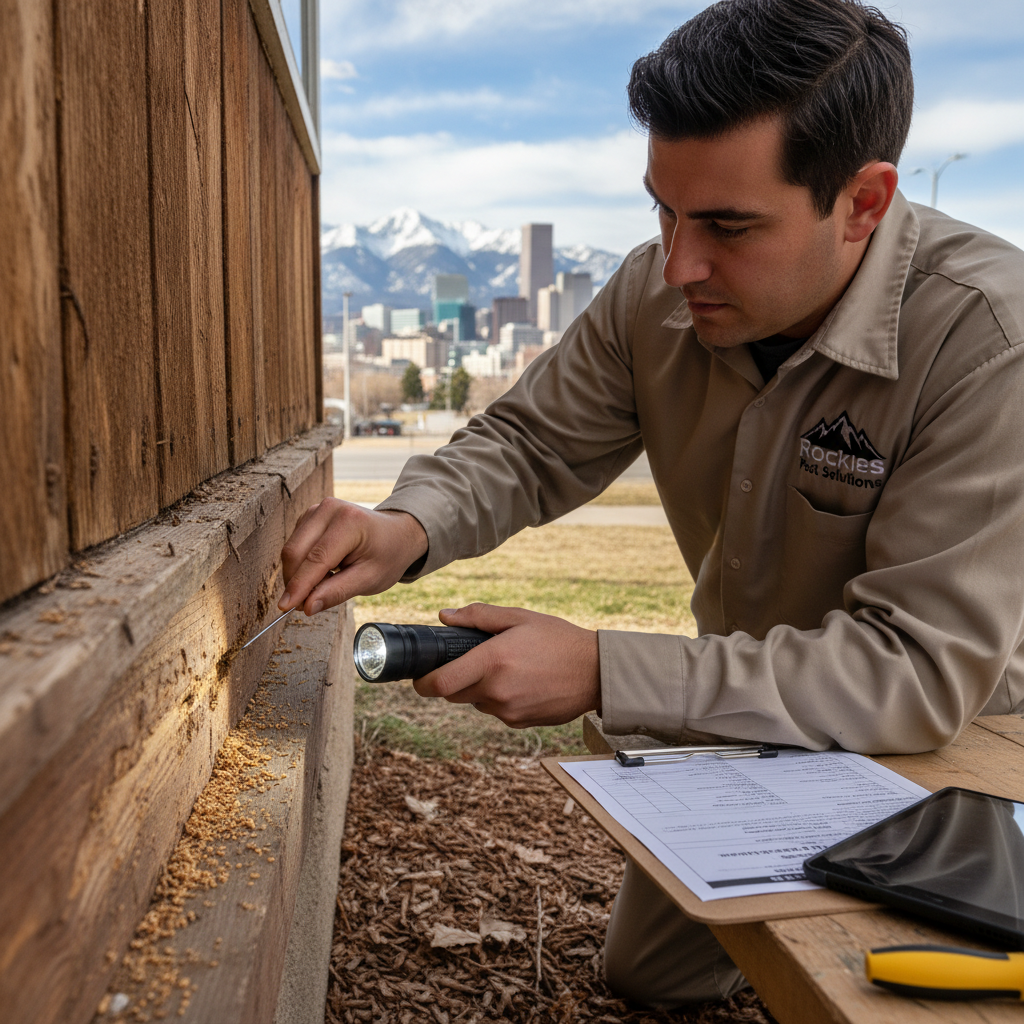
What does a professional termite inspection include? It reviews accessible interior and exterior areas for visible termite evidence, moisture and entry conditions, wood damage, and signs that help identify the likely termite type. The inspector documents the property and explains areas that could not be examined.
Interior and exterior areas
The inspection starts with parts of the structure that can be reached safely. It does not usually require removing finished materials. Inside, it may include exposed foundation areas, basements, crawl spaces, utility areas, garages, and accessible wood components.
Outside, the inspector looks around the foundation, porches, decks, attached structures, vents, drainage paths, and places where soil or wood may meet the building. The exact scope depends on the property, access, and inspection purpose.
A report should identify the structures included, such as the house, garage, or other buildings. See Beeline's termite and bed bug control guide for more Colorado context.
Evidence, moisture, and entry conditions
A professional looks for mud tubes, damaged or hollow-sounding exposed wood, discarded wings, live insects, and conditions that could support termite access. Colorado's common subterranean termites spend much of their lives underground or in mud tubes. The absence of visible insects does not rule out activity.
The inspector may note leaks, damp soil, poor drainage, foundation cracks, utility penetrations, wood-to-soil contact, and other moisture conditions. These observations help distinguish current activity from old damage or another wood-destroying insect.
Documentation and limits
Findings should record the inspection date, property address, structures examined, visible evidence, and relevant credentials when a formal report is required. The report is not an x-ray of the building. It is generally limited to visible evidence in the covered structures.
Move stored items away from walls when possible. Provide access to crawl spaces and relevant areas. If part of the structure cannot be reached, ask what remains unexamined and whether follow-up is appropriate. Beeline's pest control services approach begins with assessing the property and contributing conditions.
Free vs. Paid Termite Inspections: What Is the Difference?
The best option depends on why you need the inspection. A homeowner who wants to understand a new sign may need a different service than a buyer who needs transaction documentation. Tell the provider your goal before the appointment so the scope matches the decision you need to make.
Answer capsule: A free inspection or estimate may be a useful first step. The word "free" does not define the scope. A paid inspection may include formal documentation or broader access. Ask what will be examined, what you receive in writing, and whether treatment is separate.
What a free inspection may cover
Many pest companies use a free inspection or estimate to understand a concern, look for visible evidence, and recommend a next step. That can help when you notice discarded wings, mud tubes, damaged wood, or another sign.
Do not assume every free visit includes a formal wood-destroying-insect report. Ask whether the provider will inspect accessible areas, document evidence, identify contributing conditions, and explain what was not accessible. The UC IPM termite guidance offers additional identification context.
When paying may be appropriate
A paid inspection can make sense when you need documentation for a home purchase, refinance, insurance question, or another formal transaction. Requirements can vary by transaction and location.
The NPMA-33 form is required for wood-destroying insect reports on HUD- or VA-guaranteed property transactions, according to NPMA inspection-report guidelines. Ask whether the fee covers the house, garage, crawl space, or detached building.
Questions to ask before scheduling
- Is the visit free, paid, or free only when treatment is purchased?
- Which areas and structures are included?
- Will I receive written findings, photographs, or a transaction form?
- Is treatment separate from the inspection?
- What credentials does the inspector hold?
A transparent provider should explain the scope without pressure. Compare the documentation, process, and follow-up support, not only the initial fee. Beeline offers free estimates, but its customer information does not establish a universal termite inspection price.
How Long Does a Denver Termite Inspection Take?
How long does a Denver termite inspection take? There is no reliable one-size-fits-all duration. Time depends on property size, access, visible evidence, and whether the inspection is for general concerns or transaction documentation.
Planning ahead makes the appointment more useful. Termites can stay concealed in soil, mud tubes, or wood. Colorado State University notes that subterranean termites spend much of their lives underground or in mud tubes.
- Prepare the property. Identify where you saw swarmers, damaged wood, mud tubes, or discarded wings. Clear reasonable access to relevant interior and exterior areas.
- Allow the inspection. The visit considers visible evidence, entry conditions, moisture, wood-to-soil contact, and the structures in scope. Inaccessible areas should be listed as limitations.
- Review the report. Ask what was observed, where it was found, and whether evidence appears active or old. For qualifying HUD- or VA-guaranteed transactions, ask about the NPMA-33 form.
- Discuss follow-up. If termites are confirmed, ask which treatment or monitoring options address the evidence. Ask what preparation and follow-up are included.
When comparing termite inspection cost in Denver, ask what the appointment includes. Beeline serves Denver metro and the Front Range with an inspection-first approach. Request a clear estimate and scope before deciding.
What Happens If the Inspector Finds Termites?
A termite finding starts a decision process. It is not an automatic instruction to approve the first treatment offered. A professional should confirm the evidence, identify the likely termite type and location, and explain inspection limits. UC IPM explains why confirmation matters.
Confirm the evidence
Ask the inspector to show you mud tubes, damaged wood, discarded wings, or live insects where accessible. Termites can remain underground or inside mud tubes. The conclusion should distinguish active evidence from old damage or inviting conditions.
A written recommendation should identify areas inspected, structures included, visible findings, and relevant credentials. Inaccessible areas should be listed as limitations. Ask whether a transaction requires a specific report.
Review treatment and property conditions
The response depends on termite type and activity location. Possible professional approaches for subterranean termites include liquid barriers or bait systems. The recommendation should explain the treatment area, preparation, and monitoring.
Ask whether it addresses moisture or entry conditions and separate repairs. Treatment does not automatically repair damaged wood, drainage, or structural components. Prevention can include reducing wood-to-soil contact, removing waste wood, improving drainage, sealing relevant openings, and fixing leaks.
Document the plan
Before authorizing work, request a written summary of findings, treatment, areas covered, follow-up, and exclusions. Compare scope and service value. Obtain another estimate when the recommendation is unclear. See Beeline's termite and bed bug control guide.
Beeline serves residential customers across the Denver metro and Front Range. Its team can review evidence, explain next steps, and prepare an estimate.
Call Beeline Pest Control at 303-586-5231 to discuss a termite inspection or estimate.
Frequently Asked Questions
What does a termite inspection cost in Denver?
There is no reliable one-size-fits-all price. Cost can change with home size, access, documentation, and whether treatment is separate. Third-party Denver estimates are directional benchmarks, not a Beeline quote. Ask what the inspection includes before comparing estimates.
Is an annual termite inspection worth it?
It can help when a home has a history of termite activity, moisture issues, wood-to-soil contact, or other concerns. Frequency should match property risk and any protection plan. For general monitoring, UC IPM says inspections every three to five years can help.
Can I do my own termite inspection?
You can look for mud tubes, discarded wings, damaged wood, and moisture problems. A professional inspection is usually needed to confirm an infestation. Termites may remain hidden, so a clean visual check does not prove the home is termite-free.
What should I do if an inspection finds termites?
Ask for the evidence, affected areas, treatment recommendation, and prevention steps in writing. Compare the scope and service plan, not only the price. You do not need to agree to treatment immediately.
Ready to Schedule a Termite Inspection?
Do not wait for a large visible problem before asking questions. Early clarification can help you separate maintenance needs, old damage, and active pest concerns. It can also help you plan a treatment conversation based on evidence instead of guesswork.
A professional inspection can clarify what signs mean and which next steps fit your Denver-area home. Beeline Pest Control can help you review options without relying on a generic estimate. Call Beeline Pest Control at 303-586-5231 to schedule an inspection or request a free termite estimate.
Get Your Free Pest Control Quote in Aurora, CO!
Tired of unwanted pests in your Aurora home? Beeline Pest Control is here to help! Fill out our simple form below with your details, and one of our friendly local experts will call you back shortly with a personalized, no-obligation quote to make your home pest-free. Discover effective and affordable solutions from your trusted Aurora pest control pros.
More Blogs
Some other blogs you might be interested in