Mud Daubers Colorado Remove Them Safely
Mud daubers Colorado remove them safely: identify nests, decide when removal is needed, and know when Denver homeowners should call a professional.
Finding a smooth mud nest under a Denver-area eave can be unsettling. A mud dauber is not the same kind of wasp as a yellowjacket or hornet. These solitary wasps usually focus on building cells and hunting spiders, not defending a large social colony.
If you are wondering whether to remove them, mud daubers colorado remove them guidance is simple: leave an out-of-the-way nest alone when possible. But consider removal if it is near a doorway, regularly disturbed, or difficult to identify or safely reach. An inactive nest can often be removed during winter to mid-spring, while active or hard-to-access nests deserve more caution.
Understanding the wasp, its mud structure, and its behavior helps you decide whether observation, careful cleanup, or professional help makes the most sense for your home.
What Are Mud Daubers, and Do They Sting?
Mud daubers are solitary wasps that build small mud nests on buildings and other sheltered structures. Unlike yellowjackets and hornets, they do not live in a large social colony or defend a shared nest with a swarm of workers. In Colorado, the black-and-yellow mud dauber is found statewide. It has a long, narrow waist, an elongated body, and yellow markings across its otherwise black body and legs. Adults are usually about 25 to 30 millimeters long. Colorado State University identifies the black-and-yellow mud dauber as Sceliphron caementarium.
What does a mud dauber nest look like?
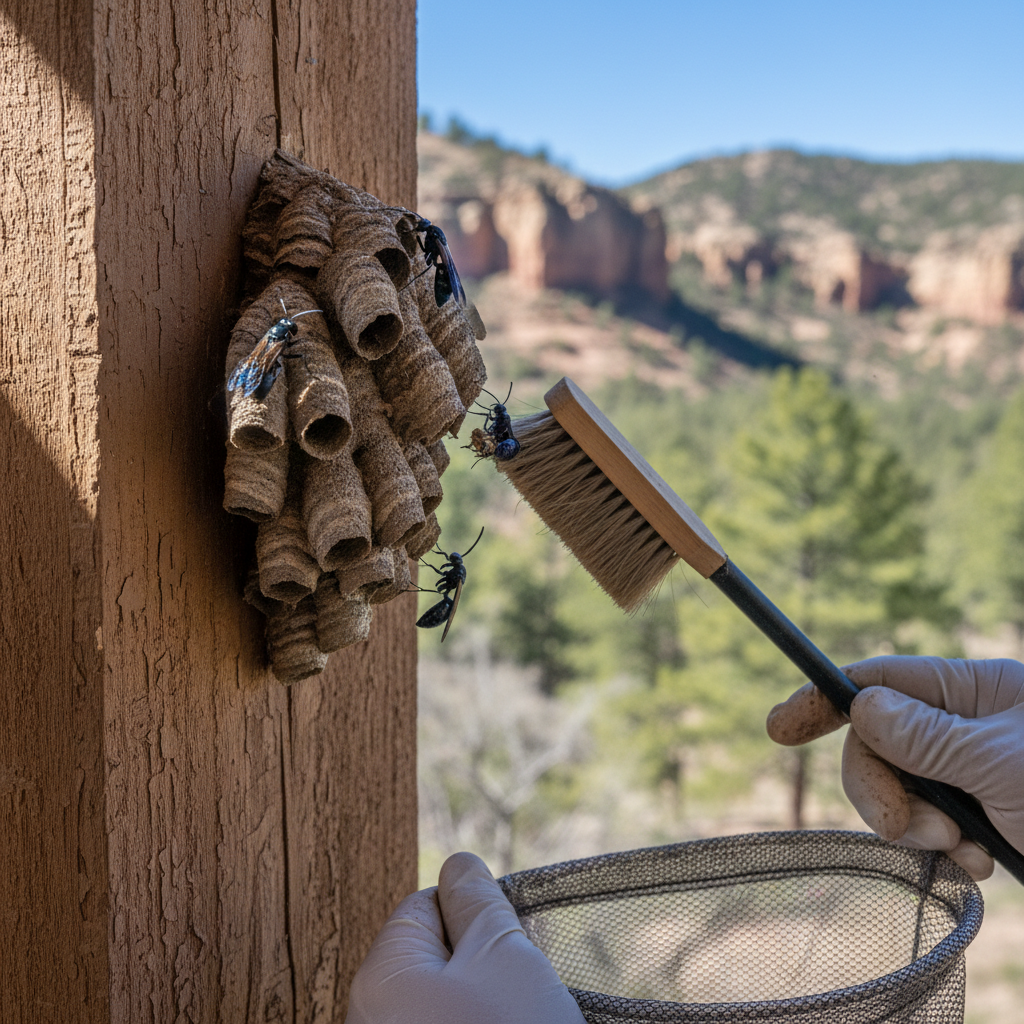
The nest is usually the easiest clue. A female collects small balls of mud and builds individual vertical cells, often in a dry, protected corner. Several cells may be covered with more mud, creating a smooth, tube-like structure about the size of a fist. Look beneath eaves, around porches, inside garages or sheds, and on sheltered walls or equipment. Nests may look rough when newly built, then become more solid and neatly plastered as the work continues.
Each cell is stocked with paralyzed spiders before the female seals it with a mud plug and lays an egg. The developing larva later feeds on those spiders. This behavior means mud daubers can reduce some spider activity around a property, although a nest in an undesirable location may still need attention. The Iowa State University reference on mud dauber wasps explains this solitary nesting and hunting cycle.
Do mud daubers sting people?
Yes, mud daubers can sting, but they are generally considered nonaggressive and are less defensive than many social wasps. They usually spend their time collecting mud, hunting spiders, or working at a nest rather than swarming around food and defending a colony. That does not make every close encounter safe. Colorado State University Extension advises keeping a respectful distance because a mud dauber may still defend its nest when closely approached.
Do not assume every narrow-waisted wasp is a mud dauber. Yellowjackets, hornets, and other social wasps behave differently, and misidentifying an active nest can lead to an unnecessary sting. If you see heavy activity, cannot identify the insect, or find a nest near a doorway or children's play area, avoid disturbing it until it can be inspected.
Call Beeline Pest Control at (303) 586-5231 for a free estimate or inspection.
Where Mud Daubers Build Nests in Colorado
On Denver and Front Range properties, mud dauber nests are usually tucked into places that stay dry and protected from direct weather. Colorado State University Extension notes that nests are generally found along the undersides of building eaves. While other extension guidance describes dry, sheltered corners and outbuildings as common locations. That makes the edges of a home more important to inspect than exposed sections of siding.
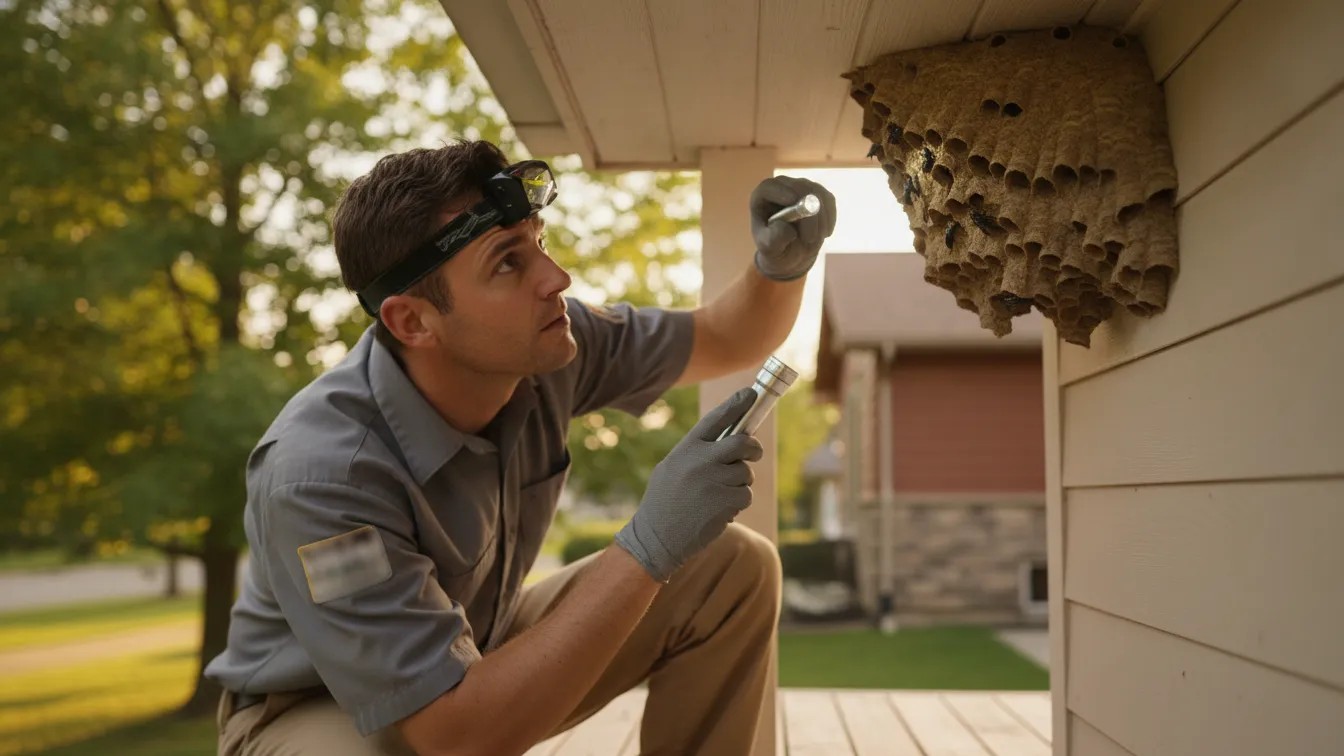
Look closely at these areas:
- Under eaves and wall overhangs: Check the shaded underside of roof edges, trim, and sheltered corners where rain and snow are less likely to wash the mud away.
- Porches and covered entries: Inspect behind or above porch features, especially around ceiling corners and other protected surfaces near an entry door.
- Garages and sheds: Mud daubers may use corners, rafters, equipment, and other surfaces inside or around outbuildings. Keep an eye on spaces that are dry but not regularly disturbed.
- Building walls and equipment: Nests can adhere directly to walls or the sides of equipment. A smooth, fist-sized mud structure or a group of vertical mud tubes is worth viewing from a safe distance.
In Colorado, mud daubers collect water and nearby soil to construct their nests. You may notice activity near a damp patch, puddle, garden irrigation area, or other water source, then see the finished nest in a sheltered spot elsewhere. The black-and-yellow mud dauber is found statewide, so this pattern can occur around homes from the Denver area to other parts of the state. For local context, Beeline serves residential properties across the Denver metro area and Colorado Front Range, including Boulder and Colorado Springs.
Seasonal activity can also help you interpret what you find. Colorado extension guidance describes larvae developing in early summer and adults from a later generation becoming active later in summer. A nest that appears quiet is not automatically safe to approach, however. Watch from a distance for wasps entering or leaving, and avoid standing directly below a nest while inspecting eaves or overhangs. If activity is heavy, the nest is near a doorway, or access requires a ladder, an inspection is safer than guessing whether you should mud daubers Colorado remove them.
Before disturbing any nest, confirm that it is actually a mud dauber nest and not another stinging-insect nest. When identification or access is uncertain, professional Colorado wasp and bee control can help determine the next step.
Should You Remove a Mud Dauber Nest?
Not always. Mud daubers are solitary wasps, and extension guidance recommends leaving an intact nest alone when it is not in an undesirable area. They also help reduce spider populations. Removal makes more sense when the nest is attached near a doorway, patio, play area, or another place where people regularly pass.
The key question is whether the nest is inactive and whether you can reach it safely. Colorado State University Extension recommends destroying an unwanted mud nest from winter through mid-spring, when it is generally inactive. That seasonal window is different from disturbing a nest while wasps are actively building, entering, or protecting it.
| Situation | Best next step | Why |
|---|---|---|
| Intact, inactive nest in an out-of-the-way location | Leave it alone | Leave it undisturbed when possible. Mud daubers prey on spiders. |
| Inactive nest in an unwanted location, reachable from the ground | Remove it carefully during winter to mid-spring | Colorado extension guidance identifies this period as an appropriate time to destroy an unwanted mud nest. |
| Active or uncertain nest, nest near an entryway, or nest that requires a ladder | Arrange a professional inspection | Guessing the species or working at height can create avoidable risk. An inspection helps determine the pest and the safest response. |
Do not treat every mud structure as harmless just because it looks small. Colorado State University Extension advises keeping a respectful distance because mud daubers can still defend a nest when closely approached. If you see regular wasp activity, cannot tell whether the nest is active. Or suspect the insects may be yellowjackets or hornets instead, stop and get an identification before attempting removal.
For a reachable inactive nest, wear hand and eye protection and avoid contact with your face. Do not use a ladder or reach over stairs, and do not disturb a nest beside a door while people or pets are moving through the area. If the location, timing, or identification is uncertain, professional guidance is the safer choice.
Beeline Pest Control can inspect the situation and recommend targeted treatment or prevention when needed, rather than assuming every nest requires the same response.
Call Beeline Pest Control at (303) 586-5231 for a free estimate or inspection.
How to Remove Mud Daubers in Colorado and When to Remove Them
If you are deciding whether to remove mud daubers in Colorado, start with identification and access, not with a spray. A calm, step-by-step check helps you avoid disturbing the wrong wasp or putting yourself in an unsafe position.
Confirm the insect from a safe distance
Look for a slender wasp with a narrow waist and possible yellow markings, along with a smooth mud nest attached to a sheltered surface. Mud daubers are solitary wasps, and their nests are commonly found under eaves or in other dry, protected areas. Colorado State University Extension advises keeping a respectful distance because a mud dauber can still defend its nest when approached too closely. If the insects appear stockier, highly active, or gather around the nest in numbers, do not assume they are mud daubers. Step back and arrange an inspection instead. Colorado State University Extension explains mud dauber identification and behavior.Decide whether removal is necessary
A nest in a quiet corner may not need immediate removal. Extension guidance notes that mud daubers can be beneficial predators of spiders, so leaving an out-of-the-way nest alone may be reasonable. Removal makes more sense when the nest is beside a frequently used doorway, inside a living area, near equipment, or likely to be contacted by children or pets. Consider the location and activity level before taking action.Wait for an inactive nest when appropriate
For an unwanted nest that is safely accessible. Colorado extension guidance identifies winter through mid-spring as the preferred period for destruction because the nest is more likely to be inactive. Timing does not remove every risk, so observe from a distance and do not treat a seasonal recommendation as proof that a nest is empty.Use basic protection for a low-risk, reachable nest
Only consider mechanical removal when the nest is at ground level or otherwise easily reachable without stretching, climbing, or reaching over your head. Wear gloves, eye protection, long sleeves, and sturdy footwear. Keep other people and pets away from the area. Remove loose nest material carefully, then place debris in a sealed container or bag. Do not mix or apply pesticides based on general online advice.Avoid ladders and active nests
Do not use a ladder to reach an eave, roofline, porch ceiling, or other elevated nest. Do not scrape, knock down, or handle a nest while wasps are actively entering or leaving it. A fall or defensive sting is not worth a DIY attempt, especially near an entryway or confined space.Stop when the situation is uncertain
Pause and request professional help if you cannot confidently identify the insect, activity is persistent, access is difficult. The nest is near a door or window, or anyone in the home has a serious sting concern. Beeline Pest Control begins with an inspection and uses licensed technicians to select targeted methods for the property and the pest. That approach is safer than guessing whether a nest is inactive or whether the insect is actually a mud dauber.
When to Call a Colorado Pest Professional
A single mud nest in a quiet, reachable spot may not require treatment. The decision changes when you cannot confidently identify the insect, the nest is active, or removing it would put someone at risk. Mud daubers are generally less defensive than social wasps, but Colorado guidance still recommends keeping a respectful distance because they can defend a nest when closely approached.
Choose an inspection when identification is uncertain
Not every narrow-waisted wasp is a mud dauber. Yellowjackets, hornets, and other stinging insects can require a different response, especially when several insects are using the same area. If you see steady traffic to a nest, hear activity inside a wall or soffit, or notice insects gathering around a doorway, avoid guessing. An inspection can confirm the pest, locate related nests, and identify conditions that may be encouraging repeat activity.
Do not take risks with access or household safety
Professional help is the better choice when a nest is high under an eave. Above a garage door, inside an attic or wall void, or reachable only with a ladder. The same applies when children, pets, or anyone with a known sting allergy uses the area. Keep people away from the nest rather than spraying or scraping it while standing in an unstable position. Repeated nesting also deserves attention, since removing one visible nest may not address protected locations or access points around the structure.
For Denver-area homeowners, Beeline Pest Control starts with a comprehensive inspection. Licensed technicians then select a targeted treatment or prevention plan based on the insect, nest location, property, and household concerns. The company is family-owned, has served Colorado since 2009, and uses EPA-approved products applied by state-licensed technicians. Service is backed by a documented 100% satisfaction guarantee with free re-treatment when a customer is not satisfied. You can also review Beeline's Denver-area pest control services before scheduling.
Call Beeline at (303) 586-5231 for a free estimate or inspection.
Mud Daubers vs. Wasps: Key Differences
Mud daubers are wasps, but their appearance and habits can look very different from the social wasps homeowners commonly notice around patios and homes. In Colorado, the black-and-yellow mud dauber has a long, narrow waist, an elongated body, and yellow markings across its body and legs. It is usually about 25 to 30 millimeters long. Colorado State University's species reference provides a useful identification guide.
Body and nest appearance
The nest is often the clearest clue. Mud daubers construct individual mud cells and cover them with mud, creating a smooth structure that may look like a small, rounded lump or a group of tubes. These nests are commonly placed in dry, sheltered areas such as building eaves, corners, garages, sheds, and other protected structures. Social wasps, including yellowjackets and some hornets, typically use a nest made from paper-like material rather than a hardened mud structure. Nest appearance can vary, so do not rely on one visual detail alone.
Behavior around the home
Mud daubers are solitary hunters. Adults collect spiders, paralyze them, and place them inside nest cells as food for developing young. They do not defend a large shared colony in the same way social wasps do. That difference often makes a mud dauber encounter less disruptive, although it does not make every close approach safe. Colorado State University Extension recommends keeping a respectful distance because a mud dauber can still sting when closely approached or handled. Social wasps may react more defensively when people come near an active nest, especially around an entryway, play area, or outdoor eating space.
Correct identification matters because the appropriate response depends on the insect, nest location, activity, and access. A single inactive mud nest may not require the same response as repeated traffic around a concealed nest or aggressive activity near a doorway. If you are unsure whether you are seeing mud daubers, yellowjackets, or hornets, avoid disturbing the nest and consider an inspection. Beeline's Colorado wasp and bee control service can help identify the problem and select a targeted approach for the property.
Frequently Asked Questions
Are mud daubers aggressive in Colorado?
Mud daubers are solitary wasps and are generally not aggressive toward people. They may sting if handled or trapped, so give them space and do not disturb an active nest. This behavior differs from the defensive behavior homeowners may see around social wasp nests. University extension guidance describes mud daubers as nonaggressive.
Should I destroy a mud dauber nest?
Not always. An isolated nest in a low-risk location can often be left alone, especially if nobody in the home needs to pass near it. Consider removal when the nest is attached near a doorway, play area, living space, or equipment, or when you cannot confidently identify the insect. An inspection is the safest choice when activity is heavy or the nest is difficult to reach.
How do I remove a mud dauber nest safely?
Only remove a nest you can reach from the ground and have confirmed is inactive. Wear gloves and eye protection, keep children and pets away, and gently scrape the dried mud from the surface before cleaning the area. Do not use a ladder, spray an active nest, or work where a fall or sting is possible. Colorado State University Extension recommends destroying an unwanted mud nest from winter through mid-Spring, when it is inactive: CSU Extension guidance.
How can I keep mud daubers from building nests again?
After removing an inactive nest, inspect sheltered areas such as eaves, garages, sheds, and wall corners for moisture or access conditions that support nest building. Keep nearby surfaces maintained and watch for new mud tubes during the warm season. If nests return repeatedly, a pest professional can identify contributing conditions and recommend targeted prevention rather than treating every wasp sighting the same way.
Ready to Handle a Mud Dauber Nest?
If you are unsure whether a nest is active, difficult to reach, or too close to a doorway, an inspection can help you choose a safer next step. Beeline Pest Control can assess the situation and recommend professional help suited to your Colorado home.
Get Your Free Pest Control Quote Today in Aurora, CO
Dealing with unwelcome pests? Beeline Pest Control is here to help! Fill out our quick form, and one of our local Aurora, Colorado experts will call you back with a personalized, no-obligation quote to protect your home.
More Blogs
Some other blogs you might be interested in