Wasp Control Lakewood Colorado: Homeowner Guide
Wasp control Lakewood Colorado homeowners can use: identify seasonal activity and nest locations, choose when to call a pro, and stay safer.
Wasps may nest near Lakewood homes. You might notice activity at a porch, roofline, or yard opening. A nest is not always easy to spot, and a passing insect alone does not confirm one. Wasp control Lakewood Colorado starts with a careful look from a safe distance. Note where wasps travel and whether the area is close to people or pets. Repeated activity at one opening deserves attention.
Call Beeline Pest Control at 303-586-5231 to discuss a wasp concern or request an estimate.
Colorado colonies begin in spring and grow through the warmer months. The best response can differ for a small, out-of-the-way nest and a colony beside an entry, play area, or outdoor seating. This guide explains when wasps are most noticeable, where nests may be found, and how Lakewood homeowners can choose a safer next step. Beeline serves Colorado Front Range homeowners who want a careful assessment and a clear next step.
When Is Wasp Season in Lakewood, Colorado?
In Lakewood, social wasp activity follows a spring-to-fall cycle: queens that survived winter start colonies in spring, nests grow through summer, and colonies are abandoned in fall. Colorado State University Extension notes that colonies are small early in the season and expand as workers are raised. By late summer, a colony may hold dozens or several hundred wasps, according to its social-wasp fact sheet.
The season is less about a single calendar date and more about changing activity around your home:
- Spring: A fertilized queen begins a new colony after surviving winter. One wasp passing through does not prove a nest is on the property.
- Summer: Colonies grow as more wasps are raised. Repeated flight to and from one spot is more useful to notice than an occasional insect crossing the yard, though it does not identify the species by itself.
- Late summer into fall: Some yellowjackets become more noticeable around garbage and outdoor food. CSU Extension says social colonies are abandoned in fall, and fertilized females disperse to find protected places to overwinter.
Late-season activity can feel sudden, but it may reflect colony growth or foraging near food rather than a nest appearing overnight. Yellowjackets are known to scavenge around garbage and outdoor food, while other wasps feed differently. A wasp near a patio could be passing through instead of entering a nest there.
Use repeated traffic to a single gap, eave, or ground opening as a reason to observe cautiously from a distance. Do not approach or disturb a suspected nest to confirm it. If activity increases near a doorway, play area, or another frequently used space, consider arranging an assessment. The amount of activity and the presence of a nest are not always obvious from a brief sighting.
Where Do Wasps Build Nests Around Lakewood Homes?
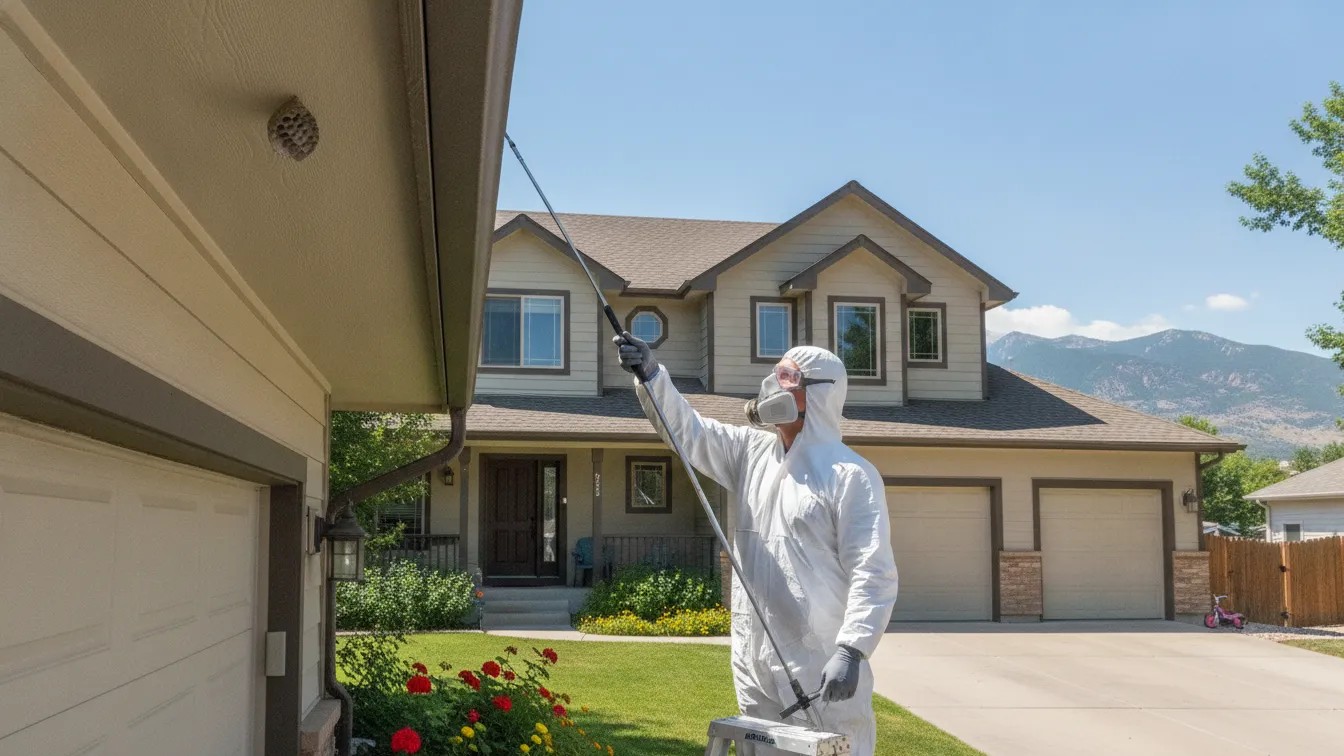
Wasps may nest in exposed spots such as porch ceilings and roof eaves, or in cavities that are hard to see from the ground. Colorado State University Extension notes that paper wasps often attach open-cell nests under building overhangs and that hornets can build larger nests in trees or shrubs (CSU Extension's guide to nuisance wasps). European paper wasps can use small cavities in buildings, metal gutters, poles, and outdoor grills. Yellowjackets are more likely to nest underground, though they may also use enclosed spaces such as crawl spaces or wall voids. Hornets may build larger paper nests in trees, shrubs, or under eaves.
A steady line of insects entering and leaving one spot can be a clue, but it does not tell you exactly where a colony sits. Ground-nesting yellowjackets can have an entrance some distance from the nest itself. Wasps disappearing into siding or a roofline may be using a cavity that is not visible from the outside. Do not climb, reach into a gap, dig, or block an opening to investigate. Watch from a distance and keep people and pets away from the area.
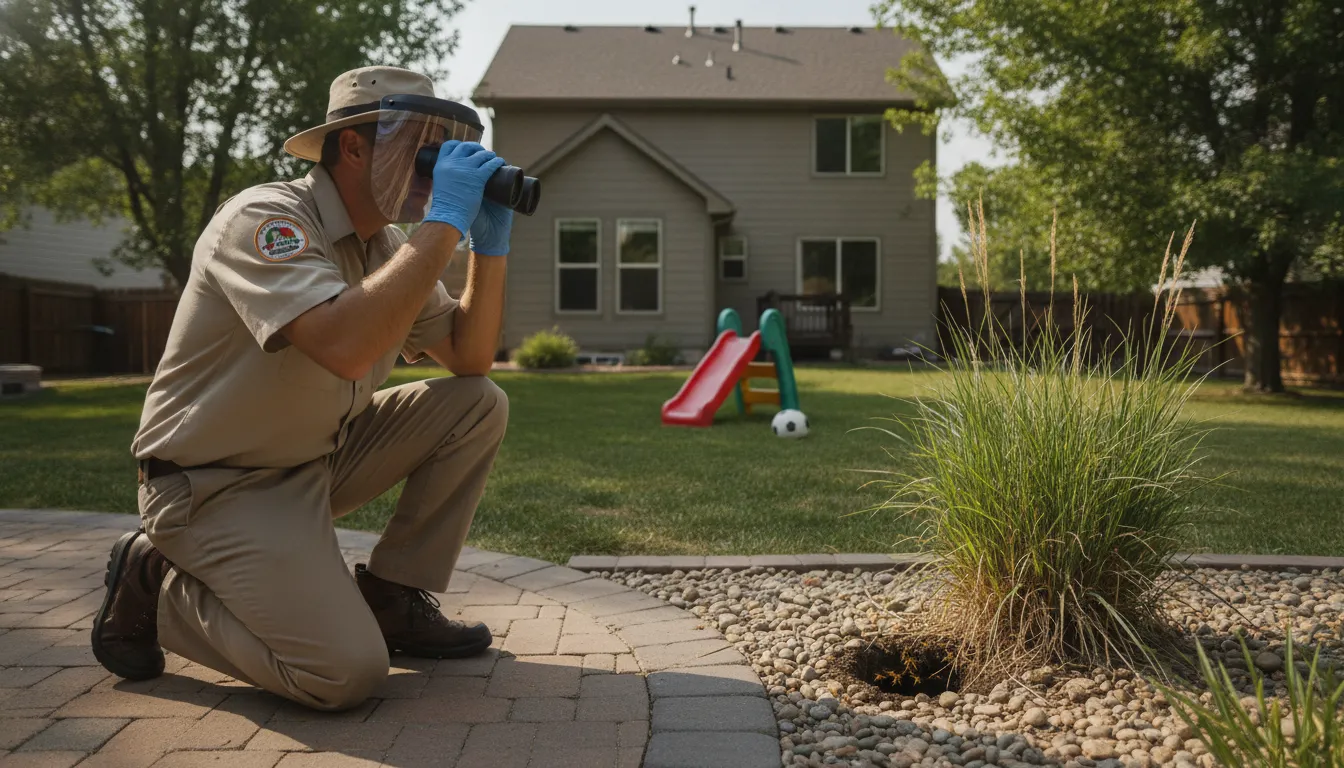
Location can suggest a nest type, but it is not enough to confirm the species. A single insect near a doorway might be foraging, while repeated traffic into one point may call for closer professional assessment. If activity is near a frequently used area, arrange an inspection rather than trying to expose the nest yourself. For professional options, see Beeline's stinging insect control service.
Should I Call Pest Control for a Wasp Nest?
Call a pest professional when a nest is near a doorway, patio, play area, or another place people or pets regularly use. Call when wasps enter a wall or the ground, or when a household member has a serious sting allergy. A quiet nest may be monitored from a safe distance if it can be avoided.
Use the nest's location and the household's ability to avoid it to guide your next step. CSU Extension notes that European paper wasp stings occur almost exclusively when nests are accidentally disturbed. It also says nests away from likely disturbance are usually best left in place (CSU Extension guidance). That does not mean every nest is harmless. Species and location matter, and concealed activity is harder to assess.
If the nest is isolated: Cautious observation may be reasonable when it is well away from entrances, outdoor seating, play areas, pets, and routine yard activity. Keep people and pets away. Do not approach to inspect the nest or test its activity. Reconsider monitoring if the location becomes hard to avoid or wasps begin appearing where the family spends time. Maryland Extension also recommends considering nest location and avoiding unnecessary disturbance (Maryland Extension guidance).
If the nest is near household activity: Contact a pest professional when wasps fly near a frequently used door, patio, walkway, or play space. Until the nest is assessed, keep people and pets away from the immediate area. Use another route or part of the yard if possible. Do not treat the situation as low risk if household members cannot reliably avoid the nest.
If the nest may be hidden or underground: Repeated traffic into a ground opening may indicate yellowjackets. Activity disappearing into siding or another structure can signal a concealed nest. CSU Extension notes that ground nests can be difficult to control because the colony may lie some distance from the visible entrance (CSU Extension's yellowjacket fact sheet). Do not block, spray into, or dig around an opening. Stay clear and arrange an inspection.
If someone may have a serious sting allergy: Keep that person away from the nest and contact a qualified pest professional. If a sting is followed by signs of a severe allergic reaction, seek emergency medical help. CDC guidance notes that stings can cause severe allergic reactions requiring immediate medical care (CDC stinging-insect safety facts).
In every situation, avoid disturbing an active nest. A professional can evaluate the likely pest, location, and nearby activity before recommending a next step. If the area cannot be avoided safely, arrange an assessment instead of trying a home remedy or pesticide treatment.
What to Expect from Wasp Control in Lakewood, Colorado
A professional visit starts with understanding what you are seeing and where activity is concentrated, not with assuming every wasp calls for the same response. Beeline is a family-owned Colorado pest-control company that has served homeowners since 2009. Its approach is to inspect the situation, select targeted treatment based on the pest and property, and discuss steps for ongoing protection.
During the inspection, a technician can assess visible wasp activity and the surrounding area, including whether the nest appears above ground or is associated with a concealed or ground-level opening. You do not need to approach or disturb a nest to prepare for the visit. From a safe distance, note where you see wasps entering or leaving and whether activity is near a doorway, play area, or another frequently used part of the property. Those details can help the technician understand the concern. The exact assessment depends on what is accessible and observable at your home.
After inspection, the technician can explain the recommended next step. Treatment is selected for the pest and property rather than applied as a one-size-fits-all service. Beeline says its state-licensed technicians use EPA-approved pesticides and prioritize targeted application. The technician can also explain precautions relevant to the work and the specific area being addressed. Do not assume a treatment or follow-up plan until the technician has assessed the site and confirmed what is appropriate.
Ongoing protection may include discussing conditions that could contribute to future wasp activity and what to watch for after service. A visit does not mean every wasp will disappear immediately, and follow-up needs can vary with the nest and location. Ask what changes to expect, when to report continued activity, and whether a return visit is appropriate. Beeline's 100% satisfaction guarantee includes free re-treatment if a customer is not satisfied; confirm service details directly with the company.
Lakewood is included in Beeline's broader Front Range service territory. Standard service requests are typically accommodated within 24 to 48 hours, but timing depends on scheduling and should be confirmed when you call. Same-day service may be available for emergency situations, including wasp nests, but it is not a guaranteed appointment window. Contact Beeline to describe the location and urgency, then confirm availability and the service plan before booking. The company's service-area page provides current coverage context.
How Can Lakewood Homeowners Reduce Wasp Activity?
Reducing food and shelter around the home can make a yard less inviting to foraging wasps. Colorado State University Extension notes that yellowjackets return to places with food and water. Keep outdoor food and drinks covered, use close-fitting lids on garbage containers, and do not leave pet food outside. Clear fallen fruit and standing water where practical.
Before spring, check for openings into hollow structures that could provide nesting access, such as open-ended poles or similar cavities. Seal suitable openings only when no insects are active there. Do not seal an opening where wasps are currently entering or exiting, since that could leave insects trapped in a structure or redirect their activity indoors.
Stay observant, not intrusive. If you keep seeing wasps at one location, note the flight path from a safe distance and avoid mowing, trimming, or reaching near a suspected nest. If activity keeps returning to one area, an inspection can help clarify whether a nest is present and what response makes sense.
Call Beeline Pest Control at 303-586-5231 to discuss a wasp nest concern.
Beeline can explain current options after hearing where you are seeing activity and how close the colony is to everyday spaces.
Call 303-586-5231 to ask about wasp control and current availability.
How Do Common Wasp Nest Situations Differ?
Nest location can offer clues, but it cannot confirm the species on its own. Use these general Colorado patterns to decide when to keep away and ask for help, not to plan a treatment.
| What you notice. | What it may indicate. | Safer next step. |
|---|---|---|
| Open paper nest beneath an overhang. | May be a paper wasp nest. | Keep distance and consider whether people regularly pass nearby. |
| Steady traffic into a small ground opening. | Could be a yellowjacket nest; the colony may sit away from the entrance. | Do not approach, block the opening, or mow over it. |
| Wasps entering a siding or wall gap. | A colony may be concealed inside a cavity. | Do not seal the opening while insects are active; request an assessment. |
| Nest well away from regular activity. | It may be possible to avoid the colony. | Maintain space and observe from a safe distance. |
Colorado State University Extension notes that ground-nesting yellowjacket colonies can be difficult to control because the nest may be some distance from the visible entrance. The colony may not be directly beneath the opening, so do not use the table to guess its location. If the area cannot be kept clear, seek professional guidance.
Frequently Asked Questions
Why are wasps more noticeable in Colorado later in summer?
Social wasp colonies begin in spring and grow through the warm months. Late in summer, yellowjackets may forage around outdoor food and garbage, so patios and trash areas can feel busier. Activity varies, and a wasp passing through does not prove a nest is close by.
Should I call pest control for wasps?
Call when repeated activity suggests a nest near people, pets, or a frequently used area, or when the nest is hidden or difficult to reach. Keep your distance and do not disturb it. A professional can inspect the area and discuss a suitable response.
What kills a wasp nest instantly?
There is no reliable instant fix a homeowner should try on an active nest. Spraying, sealing, or disturbing it may put you closer to defensive wasps and may not reach a hidden colony. Keep people away and seek professional guidance if it presents a concern.
Can I leave a wasp nest alone?
Sometimes. If the nest is away from regular activity and can be avoided. CSU Extension says it may be best to leave it until the colony is abandoned in fall. A nest beside an entrance, patio, or play area may need assessment sooner.
Get Help with a Wasp Nest in Lakewood
If wasps repeatedly use a spot near your home, Beeline Pest Control can help you understand what is happening and discuss a practical next step. The team serves Lakewood as part of its Front Range coverage. Same-day availability may be possible for urgent situations, but schedules vary.
When you call, describe where you are seeing activity and whether people or pets use the area. Beeline can explain current options and confirm whether service is available for your home. Ask the team to confirm current coverage and availability when you call.
Call Beeline Pest Control at 303-586-5231 to discuss a wasp nest or request an estimate.
Get Your Free Pest Control Quote in Aurora, CO
Ready to get rid of unwanted pests? Tell us a little about your problem and we'll call you back with a personalized, no-obligation quote for effective pest control services in Aurora, Colorado. Protect your home today!
More Blogs
Some other blogs you might be interested in