Colorado Carpenter Bee Removal: Your Essential Homeowner's Guide
Is your Colorado home under attack by carpenter bees? Learn how to identify, remove, and prevent these wood-boring pests with Beeline Pest Control's expert, homeowner-friendly advice.
Those smooth, round holes under a Denver deck or porch rail are more than a sign of passing bee activity. Carpenter bees excavate wood to create nesting tunnels, and they may return to the same openings over time. That makes early identification useful for protecting exposed wood without treating every bee as an emergency.
For a Denver metro home, the right response balances wood protection, household safety, and practical prevention. The first step is understanding which removal choices can solve the visible problem while avoiding additional damage to the structure.
[Request a free carpenter bee inspection from Beeline Pest Control: 303-586-5231](tel:3035865231)
How to Remove Carpenter Bees Without Creating More Damage
Learning how to remove carpenter bees safely starts with treating the wood, not simply reacting to the bees flying around it. A visible bee may be using an existing entrance, while the nest gallery continues deeper behind the opening. Carpenter bees excavate tunnels for nesting rather than eating wood, and repeated use can leave holes, stains, and weakened areas. The practical sequence is to confirm the activity, address accessible galleries with a treatment plan appropriate for the location, then repair and protect the wood.
Carpenter bee galleries can weaken wood but rarely cause severe damage when addressed appropriately. Still, repeatedly filling a hole without finding the active gallery can leave the underlying problem unresolved. Prevention is mainly about protecting exposed wood, especially with a sound finish such as paint or varnish, while recognizing that even treated wood can be attacked.
For help evaluating activity on a Denver-area home, review Beeline's professional pest control services. An inspection can help determine whether the priority is treatment, wood repair, prevention, or a combination of all three.
How Can You Tell Carpenter Bees From Bumble Bees?
Start with the bee's abdomen and the wood around it. Carpenter bees are large, robust bees commonly seen hovering near eaves, decks, and porch rails in spring. Their upper abdomen is mostly bare and shiny black, while the thorax may have yellow hairs. A bumble bee has a noticeably fuzzy abdomen, often with yellow markings, and typically nests in the ground rather than boring into exposed wood. The NC State Extension identification guide and Cornell's carpenter bee guide provide side-by-side identification details.
Look for a smooth, round hole
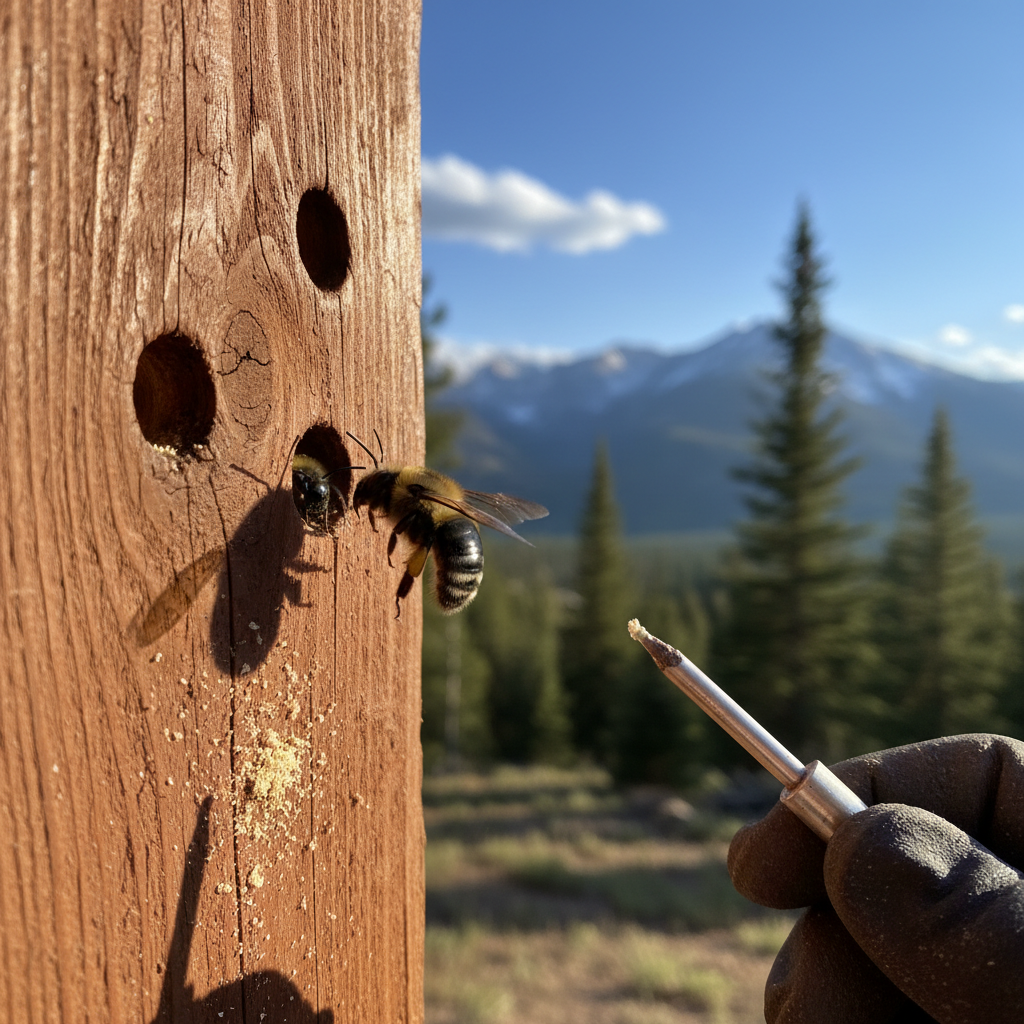
A carpenter bee nest usually begins with a smooth, round entrance drilled into the underside or side of exposed wood. The opening is commonly about three-eighths to one-half inch wide. Coarse sawdust beneath the hole can indicate recent excavation. Check deck joists, porch rails, eaves, fascia, and other unpainted or weathered wood, but do not probe the opening or put your hands near an active entrance.
Carpenter bees excavate tunnels for nesting rather than eating wood. They are solitary bees, so this is not the same type of worker-maintained colony formed by bumble bees or honey bees. Still, several females may use the same area, with each maintaining a separate gallery inside the wood. That pattern can make a small group appear more threatening than it is while creating a real repair concern.
Understand the difference between male and female bees
Male carpenter bees often hover and dart toward people near a nest. This behavior can look aggressive, but males do not have stingers. Females can sting, although they are generally reluctant unless threatened, trapped, or highly agitated. Keep children and pets away from active entrances, and avoid swatting at or handling the bees while trying to identify them.
Carpenter bees are spring pollinators, so identification should guide a measured response rather than automatic elimination. When nesting activity is damaging wood or returning to the same area, an inspection can help separate pollinator activity from a treatment issue. For broader seasonal guidance, see our guide to Colorado bee activity and safety.
Why Carpenter Bees Bore Into Denver-Area Wood
Carpenter bees look for exposed wood where they can excavate a protected nest. In Denver-area homes, that can include unfinished deck boards, porch rails, fence posts, eaves, fascia, siding, and the undersides of overhangs. Sound wood is a common target, although females may also use wood that has started to decay. They are not eating the wood. They are removing it to create tunnels for nesting.
A smooth, round entrance hole is often the first visible clue. Openings are commonly about three-eighths to one-half inch wide and may appear on the underside of a board. Coarse sawdust below the opening can indicate recent excavation. The tunnel first travels inward, then turns and follows the grain of the wood. Depending on the source and conditions, galleries commonly extend about six to ten inches, although some are longer. The North Carolina Cooperative Extension describes galleries that typically run six to seven inches and may exceed a foot: carpenter bee nesting details.
Carpenter bees are solitary, not colony-building bees with worker-maintained nests. Each female usually has her own gallery, even when several bees use the same entrance area. Inside, she creates separate chambers and provisions them with pollen and nectar for developing offspring. Because building a new gallery takes time and energy, females may refurbish or lengthen an old one. That repeated use matters more than a single hole. Over several years, connected tunnels can extend farther into a timber.
Woodpeckers can also make the damage look worse. They may enlarge openings while searching for bee larvae, leaving ragged holes around an otherwise neat entrance. This does not mean every carpenter bee site has severe structural damage. University of California IPM notes that galleries can weaken wood but rarely cause severe damage. Still, repeated activity, moisture exposure, and neglected repairs deserve attention, especially on load-bearing or difficult-to-inspect components.
[Call Beeline Pest Control at 303-586-5231 for a carpenter bee inspection.](tel:3035865231)
Beeline's local, owner-led approach starts with identifying where bees are entering, how the wood is being used, and whether repairs or prevention should follow treatment. That measured inspection helps protect the property without overstating the risk or treating every hole as a structural emergency.
What Should You Do About an Active Carpenter Bee Nest?
When carpenter bees are entering a hole in a deck, eave, porch, or other exposed wood, avoid rushing to seal the opening or spray whatever product is nearby. An active gallery may contain developing bees, and the safest response depends on the nest location, the condition of the wood, and who needs to access the area. Carpenter bee galleries can weaken wood, although severe structural damage is uncommon according to UC Integrated Pest Management.
Use the following sequence to protect people, limit additional damage, and address the nest rather than only the bees you can see.
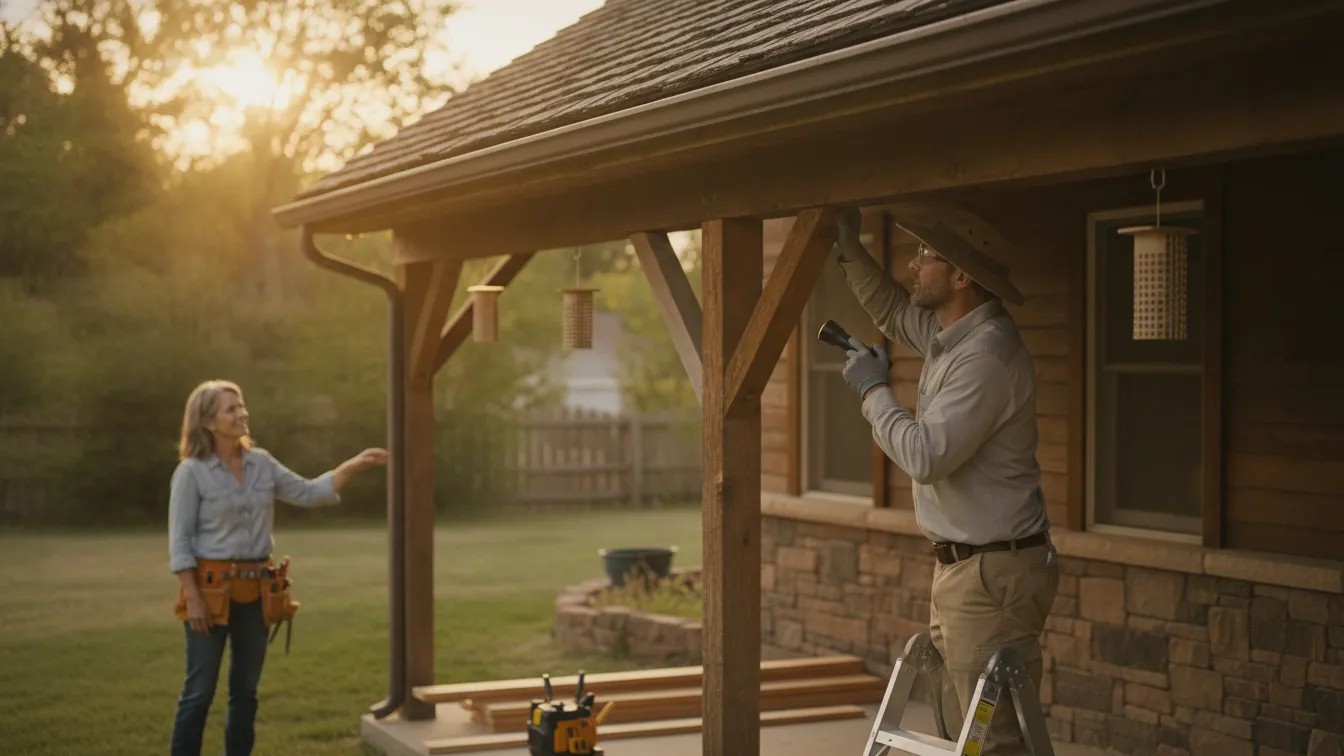
- Pause unsafe access. Keep children and pets away from the activity, and do not climb a ladder or reach into an opening to investigate. Male carpenter bees do not have stingers, but they can behave territorially. Females may sting if confined or highly agitated. If the nest is above a doorway, near a play area, or beside a frequently used walkway, create distance until it can be assessed safely.
- Inspect without disturbing the gallery. From the ground when possible, note the entrance location, visible bee activity, coarse sawdust, staining, and any soft or damaged wood. A round entrance may be about one-half inch wide. The tunnel commonly turns with the wood grain after entering, so the visible hole does not show the full extent of the gallery.
- Choose qualified treatment for the site. A trained professional can identify the pest, evaluate access and wood condition, and select a treatment approach appropriate for the home. Do not improvise a pesticide mixture, inject an unknown product into the hole, or assume a visible bee will disappear immediately after treatment. Product selection and application should follow the label and account for household safety, pets, nearby plants, and the location of the nest.
- Allow activity to resolve before closing the opening. Carpenter bees overwinter as adults, often in old tunnels. New adults can emerge later in the season, and one generation occurs each year. Sealing too early can trap activity inside the wood or leave an opening that later bees reuse. Your service professional can advise when the gallery is ready for the next step.
- Repair and seal the wood after treatment. Once the active nest is addressed, repair damaged areas and close suitable openings. Carpenter bees may reuse and enlarge old galleries, so simply killing visible adults does not correct the underlying access point. Finish exposed wood with an appropriate paint, varnish, or treatment when practical. These measures reduce preference, but they do not make wood immune to attack.
If the nest is inaccessible, activity keeps returning, or the wood is difficult to evaluate, request an inspection rather than taking risks with ladders or unplanned chemicals.
How Can You Prevent Carpenter Bees From Returning?
Prevention starts with making exposed wood less inviting and addressing the openings that already exist. Carpenter bees prefer some untreated or weathered surfaces, but no finish makes wood completely immune. Paint, varnish, and other wood treatments can reduce preference, while prompt repairs help prevent old galleries from becoming convenient nesting sites again.
Finish exposed wood and repair vulnerable areas
Apply a durable exterior paint or varnish to exposed decks, porch rails, eaves, fascia, siding, and other wooden surfaces, following the product instructions and preparing the surface correctly. Cedar, cypress, and redwood may still be attacked when left unpainted or stained, so do not rely on the species of wood alone. UC Integrated Pest Management identifies varnishing exposed wood as a primary prevention approach, but it should be treated as risk reduction rather than a guarantee.
After active bee activity has been properly addressed, have damaged wood evaluated and repaired. Seal or replace compromised sections when appropriate, and maintain the finish as it weathers. Carpenter bees often refurbish old galleries because creating a new tunnel takes time and energy. Closing the cycle of treatment, repair, and sealing is more useful than simply covering a visible hole while activity continues inside.
Monitor wood through the season
Inspect the undersides of boards, deck edges, porch ceilings, and sheltered eaves during spring and again later in the season. Look for new round openings, coarse sawdust beneath an entrance, staining, or bees repeatedly hovering near one location. A quiet hole is not necessarily an abandoned one. Carpenter bees may overwinter in old tunnels, and new adults can emerge later in the year before feeding and returning to shelter.
Keep a simple record of locations and changes, especially if the same area has shown activity in prior years. Repeated use can enlarge connected galleries over time. Prevention cannot promise that bees will never return, particularly where exposed wood and established galleries remain. If activity continues despite repairs and refinishing, an inspection can help distinguish an active nest from old cosmetic damage and identify the safest next step. Learn more about Denver home pest prevention tips and safe bee removal in Colorado.
[Request a professional inspection at 303-586-5231](tel:3035865231) or explore [professional pest control services](/services/) from Beeline Pest Control.
When Should You Call a Professional for Carpenter Bee Treatment?
Call a professional when carpenter bee activity is difficult to reach, keeps returning, or is accompanied by visible wood damage. A few bees near an exposed beam may not indicate severe structural trouble, but repeated nesting deserves a closer look. Carpenter bee galleries can weaken wood, although severe damage is uncommon, according to UC Integrated Pest Management.
Situations that deserve an inspection
- Nests are in inaccessible areas. Eaves, high fascia, roof overhangs, second-story trim, and the underside of a tall deck can require ladders or equipment. Avoid climbing or reaching into an active nesting area just to confirm a hole.
- Activity returns season after season. Carpenter bees may reuse and enlarge old tunnels. New adults emerge in late summer, then feed and overwinter, often in old tunnels. Repeated sightings around the same wood can signal an established nesting area rather than a one-time visitor.
- The wood shows more than one isolated hole. Look for several smooth, round openings, sawdust, stains, soft or damaged boards, or enlarged openings from other animals. A professional can distinguish surface damage from galleries hidden inside the wood.
- Someone in the household has a safety concern. Male carpenter bees do not have stingers, but they can act territorial near nest entrances. Females rarely sting unless threatened, trapped, or highly agitated. Families with children, pets, or anyone sensitive to stings should avoid disturbing the nest and ask for guidance.
What professional treatment should include
A responsible service should follow an inspect, treat, and protect model. First, the technician identifies the bee and locates accessible entry holes and affected wood. Treatment is then tailored to the site, with family and pet safety considered during planning. Finally, the technician can discuss repairs, sealing, monitoring, and protective finishes that may reduce future nesting. Paint and wood treatment lower preference but do not make wood immune to attack.
Beeline Pest Control is a family-owned, owner-operated company serving Denver and the Front Range. Its licensed professionals take a practical, safety-conscious approach rather than treating every bee as an emergency. For related guidance, read about safe bee removal in Colorado.
Frequently Asked Questions
How do you remove carpenter bees from wood?
Start by confirming that the smooth, round opening is active, then keep people away from the area while you plan the response. Removing visible bees alone does not address the gallery inside the wood. Treatment should be followed by repairing the opening and sealing or finishing exposed wood when appropriate. If the hole is high, difficult to reach, or activity continues, request an inspection rather than using a ladder or improvised chemicals.
Can carpenter bees damage a Denver-area home?
They can contribute to wood damage, especially when the same entrance is reused over time. Galleries can weaken wood, although severe structural damage is uncommon. Woodpeckers may also enlarge openings while searching for larvae. Inspect decks, porch rails, eaves, and other exposed wood, then address both active nesting and any weakened or deteriorated material. UC IPM explains carpenter bee management and damage.
What should you do if carpenter bees are entering an active hole?
Do not block or disturb the opening while bees are actively using it, and avoid trapping or handling the insects. Female carpenter bees can sting if threatened or confined, while males do not have stingers but may fly defensively near a nest. Keep children and pets clear, document the location from a safe distance, and arrange professional help when access or treatment safety is uncertain.
How can you prevent carpenter bees from returning?
Repair damaged wood and maintain a sound, well-finished surface. Paint or wood treatment can make exposed wood less attractive, but it does not make it immune to attack. Check previously used areas during spring activity and watch for fresh sawdust or new round openings. Prevention works best when paired with prompt inspection and repairs instead of relying on a single coating or trap.
Schedule a Carpenter Bee Inspection
Carpenter bee activity is easier to address when active galleries, exposed wood, and possible entry points are evaluated together. Beeline Pest Control can help you understand the situation and choose practical treatment and wood-protection steps for your Denver-area home. To request a free estimate or inspection, call 303-586-5231 and talk with our team about safe carpenter bee treatment options.
Get Your Free Pest Control Quote Today!
Dealing with unwanted pests in your Aurora home? Tell us about your pest problem and our friendly experts at Beeline Pest Control will call you back with a personalized, no-obligation quote. Reclaim your peace of mind with fast, effective, and local pest control service!
More Blogs
Some other blogs you might be interested in