Wasp Nest in Attic What to Do: Safe Removal Guide
Wasp nest in attic what to do: learn safe first steps, warning signs, DIY risks, professional removal, and prevention for Denver-area homes.
Finding wasps moving through your attic can turn a quiet household concern into an urgent safety question. Do not climb toward the nest, knock on nearby surfaces, block an entry hole, or spray into a concealed space. Keep children and pets away, and close nearby interior doors if wasps are entering the living area.
If you are wondering about a wasp nest in attic what to do, stay outside the affected area, observe activity only from a safe distance, and contact a licensed pest professional for an inspection. Difficulty breathing or swelling of the face or throat requires emergency medical care.
Attic nests may be hidden near insulation, roof framing, soffits, or vents. So the safest next step depends on where the wasps are entering and how accessible the space is. A careful first assessment helps you protect your household without driving the colony into the home.
Call Beeline Pest Control at 303-586-5231 for a free inspection or estimate.
What should you do first when you find a wasp nest in the attic?
Start by creating distance, not by trying to solve the nest yourself. Keep children, pets, and anyone with a known insect-sting allergy away from the attic access area and the rooms below it. Close the door to the attic or affected room if you can do so without approaching the nest. Also close nearby interior doors and windows if wasps are getting into the living space.
Do not disturb the nest or its entry point
Do not climb into the attic, knock on a wall, move insulation, or shine a light directly toward suspected activity. Avoid loud work near the area, including home repairs or maintenance that could shake the structure. A hidden nest can be difficult to see, and disturbing it may cause defensive activity in a confined space.
Do not block the exterior opening while the nest is active. Sealing a hole or covering a vent may redirect wasps into the attic, wall, ceiling, or rooms inside your home. Likewise, avoid spraying randomly into a gap, soffit, or wall cavity. A consumer spray may not reach the nest, and using any pesticide incorrectly can create additional risks. Treatment decisions should follow the product label and account for the location of the colony.
Observe only from a safe distance
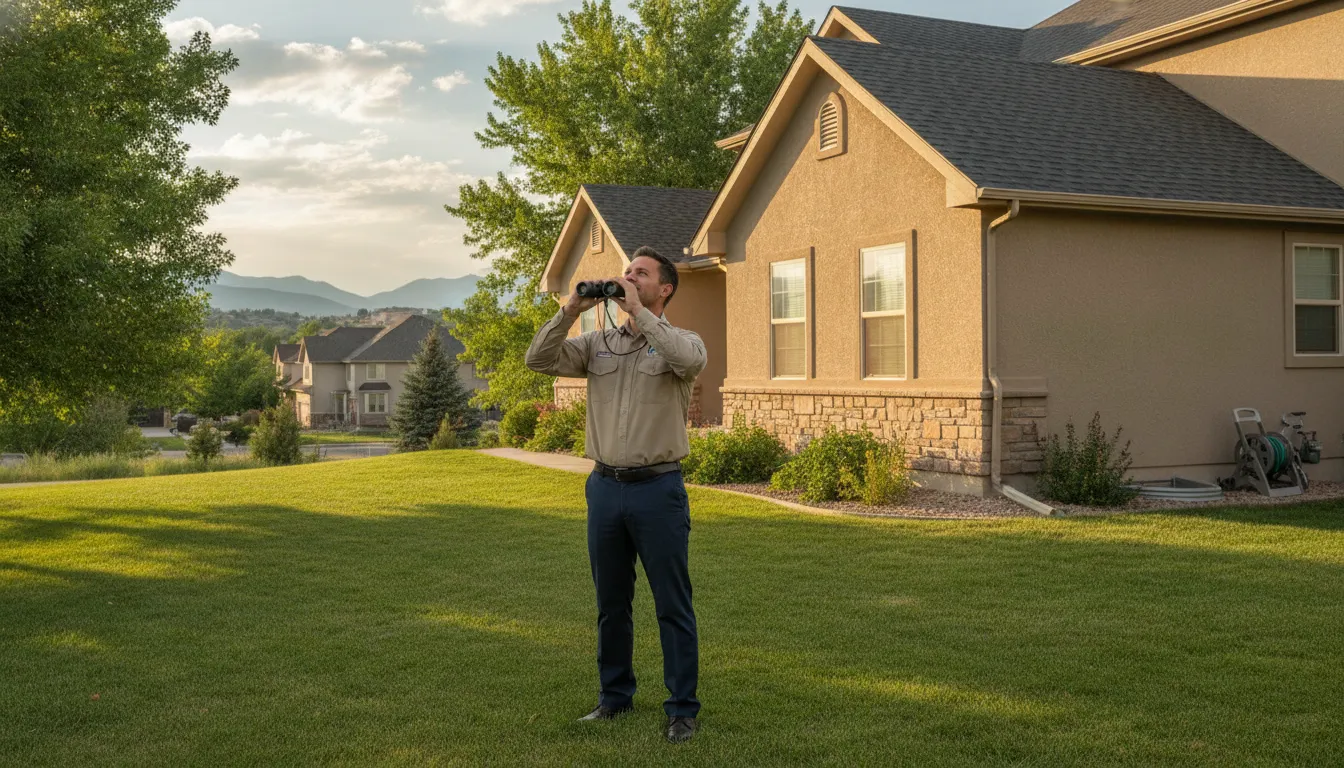
If you can do it without entering the attic or getting close to the activity, watch the outside of the home from a protected distance. Look for repeated wasp traffic near a soffit, vent, roofline, fascia, or other opening. Note when activity is most noticeable, and take a photo or short video only if you can do so without approaching the entry point. These details can help a professional determine where to inspect.
Know when the situation needs urgent help
Arrange a professional inspection promptly when the nest is inside an attic, wall void, ceiling, or roof space. When wasps are entering the home; when activity is increasing; or when access would require a ladder, crawling through insulation, or working near wiring. Professional help is especially important when someone in the household has a documented sting allergy. Beeline can provide same-day or emergency assistance when possible, depending on scheduling and the situation.
If anyone is stung and develops difficulty breathing, swelling of the face or throat, or other signs of a serious allergic reaction, seek emergency medical care immediately. General homeowner guidance cannot diagnose a reaction or replace instructions from an emergency medical provider. Once the household is safe, a licensed technician can inspect the nest, identify the access point, and recommend a targeted treatment plan.
How can you tell whether wasps are nesting in your attic?
Start by watching from a safe distance rather than entering the attic or moving toward a suspected nest. Repeated wasp traffic near a soffit, roofline gap, attic vent, chimney, or other opening can indicate that insects are using a concealed space. You may also notice wasps appearing inside near ceiling fixtures, wall openings, windows, or attic access points. A faint, steady buzzing from a wall or ceiling is another reason to arrange a careful inspection. Especially when the sound is close to an area where people spend time.
Look for activity, not a close-up nest inspection
From the ground, note where wasps enter and leave, the time of day activity is greatest, and whether the traffic is concentrated at one opening. Use binoculars or a phone camera only from a stable location. Do not climb a ladder, shine a light into a gap, reach into a crevice, tap the wall, or remove siding and vent covers. These actions can disturb insects that are protecting a nest, and an enclosed nest may be farther from the visible entrance than it appears.
Inside the home, keep children and pets away from the affected room and avoid opening the attic hatch if wasps are active around it. Do not seal an opening while insects may still be using it. Blocking an exterior entrance to a concealed nest can redirect wasps into the living space. Instead, record the location and call a qualified pest professional if activity is persistent. The nest cannot be seen safely, or anyone in the household may have a serious sting reaction.
Species identification changes the response
Not every wasp near an attic means the same thing. Colorado State University Extension notes that yellowjackets can sometimes nest in dark, enclosed building spaces, while paper wasps may use small cavities and other sheltered locations. Paper wasps are generally more slender, and some have long legs that trail during flight. Their open-cell nests differ from the enclosed paper envelope associated with yellowjackets and some hornets. Those distinctions are useful, but a distant observation is not enough for a confident identification.
For a closer look at the differences without disturbing the insects, use Beeline's guide to identify yellow jackets or paper wasps. Correct identification helps determine whether the nest is exposed or concealed, how accessible it is, and what treatment approach is appropriate. A professional inspection can assess those details while also checking nearby roofline openings and attic conditions. Colorado homeowners can review guidance from Colorado State University Extension and NC State Extension for additional species information.
Why do wasps build nests in attics and roof spaces?
Attics and roof spaces can offer several conditions a nesting wasp is looking for: shelter from wind and rain, a dry enclosed area, and limited disturbance. A small opening near a soffit, fascia, roof vent, gable vent, or flashing may provide access to a larger cavity that is easy to overlook from the ground. Once inside, wasps may build where the nest is protected from normal outdoor activity.
Colorado State University Extension notes that some nuisance wasps occasionally nest in dark, enclosed parts of buildings, including crawl spaces and wall voids. The same general pattern can apply to roof cavities and attics. Paper wasps may also use small cavities and areas around eaves or overhangs. Because different wasps choose different nest locations, activity near a roofline does not identify the species by itself. See our guide to identify yellow jackets or paper wasps before assuming what is present.
Small openings can create hidden access
Wasps do not need a large, obvious hole to reach a roof space. Gaps around vent screens, loose trim, damaged soffits, and utility penetrations can connect the exterior to an attic or wall cavity. From outside, you may notice repeated traffic disappearing beneath an eave or into a roofline gap rather than seeing the nest itself. Indoors, faint buzzing above a ceiling or near an attic may be the only clue.
Quiet spaces reduce accidental disturbance
An attic is often used less frequently than the living areas of a home. That relative quiet can allow a nest to remain concealed until wasp activity increases or someone enters the space for storage, inspection, or repair work. In Colorado, social wasp colonies begin anew each spring and expand during the warmer part of the season, according to CSU Extension. Seasonal activity can therefore become more noticeable as the colony develops, without requiring a precise nest-size estimate.
Prevention starts after active wasps have been properly addressed. A careful inspection can identify the entry point and conditions that made the roof space accessible. Do not seal an active opening, reach into insulation, or disturb a hidden nest. Those steps can redirect wasps into the home or provoke defensive behavior. Once the situation is safe, repair damaged screens, soffits, and trim, and close suitable entry gaps as part of a broader prevention plan.
Source: Colorado State University Extension guidance on nuisance wasps and bees.
DIY removal or professional help: Which is safer?
When deciding what to do about a wasp nest in an attic, the safest choice depends on access, visibility, and the people in your home. A small, clearly visible nest in an open outdoor location may be manageable for an experienced homeowner who can follow the product label exactly. An attic nest is different. It may sit behind insulation, near wiring or HVAC equipment, or close to an active entry point that makes the wasps defensive.
| Situation | DIY considerations | Why professional help may be safer |
|---|---|---|
| Concealed attic nest | Do not tear into insulation, walls, or ceiling areas to find it. Disturbing a hidden nest can trigger defensive activity. | A technician can inspect access points and identify the nest location before selecting a targeted treatment. |
| Ladder, insulation, or electrical access | Climbing or working around loose insulation, wiring, stored items, and HVAC equipment adds risks beyond the insects. | Professionals can assess the work area and avoid unsafe contact with electrical equipment or household systems. |
| Active entry point | Do not seal a hole while wasps are still using it. Blocking the route can redirect insects into living spaces. | Inspection and treatment can come before exclusion, reducing the chance of trapping active insects inside the structure. |
| Sting allergy or high-risk household | Do not attempt removal if anyone handling the project has a sting allergy, or if children and pets cannot stay away. | Arranging professional service keeps the household away from the active area while the problem is assessed. |
If you use a pesticide, read and follow every direction on that specific product label. The EPA-approved label states that using a product inconsistently with its labeling violates federal law and includes precautions for indoor attic applications, electrical equipment, pets, food, and re-entry. A label does not make an inaccessible nest safe to approach, and products are not interchangeable.
Call 303-586-5231 for a free attic wasp inspection.
Beeline Pest Control can inspect the nest location, identify access and entry points, and recommend a targeted plan. The family-owned team uses licensed technicians and an integrated approach that may include treatment, physical nest removal, and exclusion when appropriate. That is especially useful when you cannot see the nest clearly or cannot safely reach it without a ladder or contact with attic systems.
What happens during professional attic wasp removal?
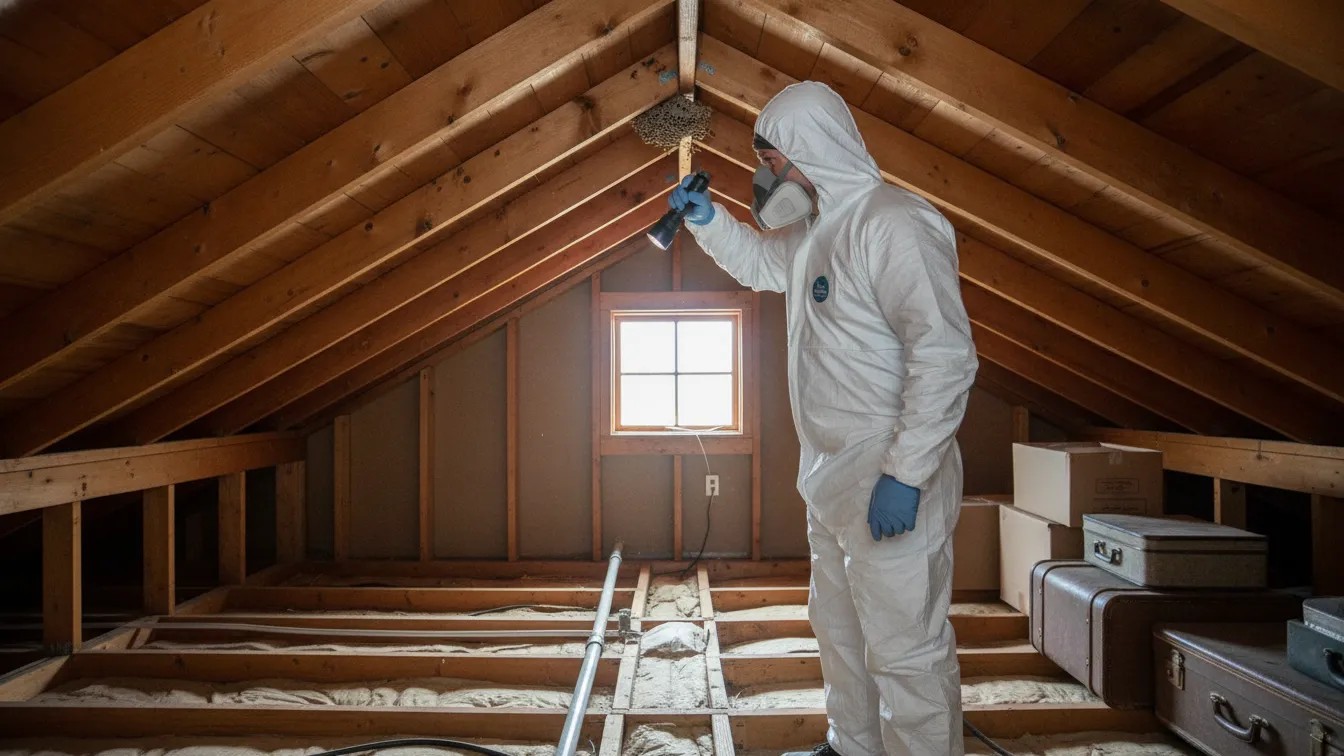
Professional removal starts with information, not a rush to spray. An attic nest may be hidden near a roofline, soffit, vent, or other opening. So the technician needs to understand where wasps are entering and how people and pets use the surrounding space. That assessment helps determine the safest practical response for the home.
- Inspect the attic and surrounding access points. The technician checks visible activity, entry and exit routes, the nest location if it can be safely seen, and conditions that may be supporting the problem. The inspection also considers whether the nest is close to living areas, storage, wiring, insulation, or a path that requires ladder or confined-space work.
- Identify the pest and assess the access challenge. Wasps, hornets, and bees can require different decisions, and activity around an attic does not always reveal the nest immediately. A professional evaluates the insect, the nest's location, and whether treatment can be applied without unnecessary disturbance.
- Choose a targeted treatment plan. Beeline uses an integrated pest management approach. Depending on the site and pest, that can combine a targeted EPA-approved product applied by a state-licensed technician with physical controls or careful nest removal. The treatment is selected for the pest biology, property conditions, and household concerns involving children, pets, and the environment. Safety remains a priority, but no pest treatment should be described as risk-free or chemical-free.
- Review follow-up and prevention. The technician explains what activity to watch for and whether a follow-up visit is appropriate. Once active treatment is complete, the plan may include addressing openings or other conditions that allowed access. Sealing an active entry point before the nest is managed can trap insects inside the structure, so exclusion decisions should be timed carefully.
Beeline is a family-owned Colorado company that has served homeowners since 2009. Owner Jarom Walz brings 26 years of pest-management experience, and Beeline's licensed technicians are trained in pesticide safety, pest biology, and environmental requirements. That local, owner-led accountability matters when the nest is concealed and the right response depends on the details of your home.
For a careful inspection and a plan tailored to your attic, visit Beeline's professional pest control services.
Call Beeline Pest Control at 303-586-5231 for help with an attic wasp nest.
How can you prevent another attic wasp nest?
After an active nest has been treated and the area is confirmed safe, prevention starts at the roofline. Walk the exterior from the ground when possible, looking for wasp traffic near soffits, fascia boards, roof edges, vents, and other sheltered openings. Wasps can use dark cavities and protected spaces around eaves and buildings, so a small gap can become an access point. Colorado State University Extension notes that some wasps nest in enclosed building areas, including wall voids and similar spaces: learn more about Colorado wasp nesting behavior.
Check the roofline and attic ventilation
Look for loose fascia, damaged soffit material, gaps around utility penetrations, and torn or missing vent screens. Repair or replace damaged screens with a suitable, secure mesh that still allows ventilation. Check that roof vents, gable vents, and other openings are protected without being blocked. Do not climb onto the roof or enter a tight attic area if wasps are still active, the access is unstable, or visibility is poor.
Seal openings only after activity is resolved
Do not immediately caulk, foam, or plug an opening while wasps may still be inside. Sealing an active exterior entrance can redirect wasps into wall or living spaces. Once treatment and follow-up inspection confirm that activity has stopped, repair the entry point and address conditions that made the space accessible. If the nest was concealed, a professional can help determine whether the visible gap leads to the nest or is only one part of the route.
Seasonal awareness also matters in Denver and across the Front Range. Check roofline openings before recurring warm-weather activity increases, then watch for renewed traffic around vents and eaves. Social-wasp colonies start anew each spring, and Colorado guidance explains that some species establish nests in small cavities or under overhangs. Prevention is more effective when it combines exclusion with inspection rather than relying on a spray alone.
When attic access requires a ladder, close approach, or work near an active nest, use a professional inspection instead of taking a risk. Beeline serves homeowners throughout its Denver-area service areas, with an inspection-first approach that can identify entry points and recommend appropriate exclusion after treatment.
Frequently Asked Questions
Should I spray a wasp nest in my attic myself?
Usually, no. Attic nests may be hidden in insulation, roof framing, or a wall void, and reaching them can require a ladder or work near wiring. Keep people and pets away, avoid disturbing the nest, and arrange an inspection before choosing a treatment.
Can I seal the hole where wasps are entering?
Do not seal an active entry point first. Blocking the opening can redirect wasps into your home. Have the nest treated and activity confirmed as resolved before completing exclusion repairs around the soffit, vent, fascia, or roofline.
How can I tell if wasps are nesting in the attic?
Watch from a safe distance for repeated wasp traffic near soffits, vents, roof edges, or gaps in siding. Buzzing above a ceiling or inside a wall can also indicate concealed activity. Do not climb into the attic to investigate closely if wasps are active.
When should I call a pest control professional?
Call for professional help when the nest is hidden, wasps are entering living areas. Activity is increasing, access requires a ladder, or someone in the household is sensitive to stings. A technician can identify the pest, locate access points, and select a targeted treatment plan.
What happens after an attic wasp nest is treated?
The next steps may include confirming that activity has stopped, removing nest material when appropriate, and correcting exterior entry points. A complete plan may also address damaged screens, gaps, or other conditions that could allow wasps to return.
Get started with safer attic wasp removal
A concealed nest can be difficult to assess safely from the ground, especially when wasps are entering through a roofline opening. Beeline Pest Control can help you decide on a practical next step for your Denver-area home. Call Beeline Pest Control at 303-586-5231 to discuss the nest and request help.
Get Your Free Pest Control Quote in Aurora, CO
Tired of pests in your Aurora, Colorado home? Beeline Pest Control is here to help! Fill out our quick form below to get a personalized, free quote. We'll call you back fast to discuss your pest problem and offer the best solution to make your home pest-free. Your journey to a comfortable, pest-free home starts with a simple click!
More Blogs
Some other blogs you might be interested in