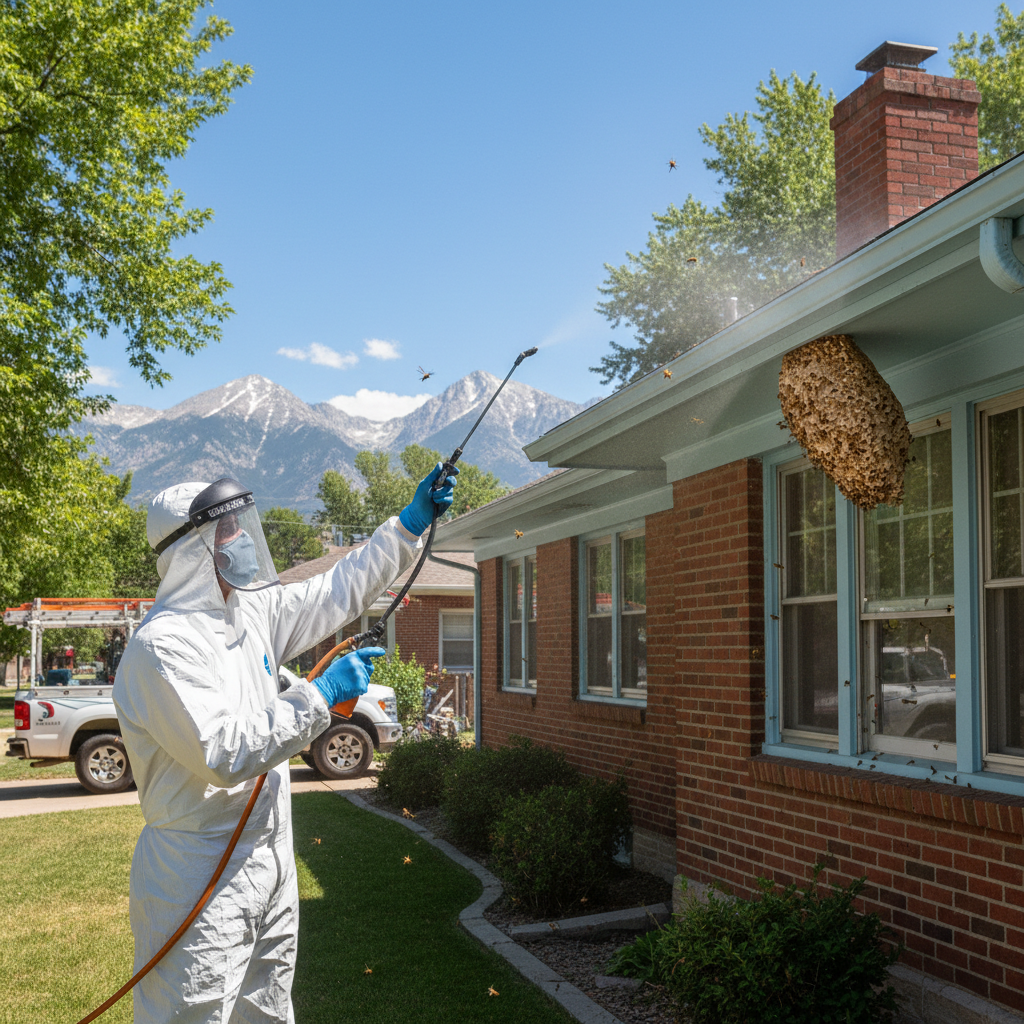
Denver Wasp Control: Fast, Local Wasp Removal for a Safer Home
Don't let wasps ruin your outdoor enjoyment in Denver! Beeline Pest Control offers quick, safe, and effective wasp removal services across Denver, CO. Learn how our local experts can eliminate stinging pests and protect your family and pets from painful stings today.
Need wasp control in Denver, Colorado? A few wasps around a patio can quickly become a nest near a doorway, play area, attic vent, or wall void. Colorado homeowners need a fast response that protects people and pets without guessing which spray or treatment will reach the colony. Beeline Pest Control provides local inspection and professional wasp removal for Denver-area homes, backed by a 100% satisfaction guarantee. For broader safety, cost, and bee-handling context, start with Beeline's Wasp and Bee Control in Colorado guide, then use this Denver-focused article for local nest locations and next steps.
Call Beeline Pest Control at (303) 586-5231 for fast Denver wasp help.
What is the safest way to handle a wasp nest in Denver? Keep children and pets away, avoid disturbing the nest, and contact a licensed pest professional to identify the wasp and nest location. Professional wasp control can address visible nests and hidden activity near eaves, wall voids, ground holes, and other hard-to-reach areas.
Why wasp activity increases around Denver homes
Denver's warm, dry summers create favorable conditions for wasps to forage, build nests, and defend their colonies. Activity is often most noticeable from late spring through the end of summer, then becomes more aggressive in late summer as food sources change and colonies reach peak size. A nest that was easy to overlook in June can become a safety concern in August or September.
Wasps are attracted to food, water, flowering plants, outdoor trash, and sheltered building features. Decks, fences, rooflines, sheds, and landscaping can all become part of the route between a nest and the places your family uses. Repeated traffic to one crack, overhang, or ground opening is more useful than counting individual insects. It can indicate that the colony is nearby.
Denver's Front Range weather also means homeowners may see activity in different parts of a property as the season changes. A nest can be exposed under an eave, concealed inside a wall, or built below ground. That is why treatment should begin with inspection rather than a surface-only spray.
Common wasps around Denver properties
Denver homeowners may encounter paper wasps, yellow jackets, and hornets. Their appearance and nesting habits differ, but every nest deserves caution when it is near a door, walkway, deck, child play area, or other high-traffic location.
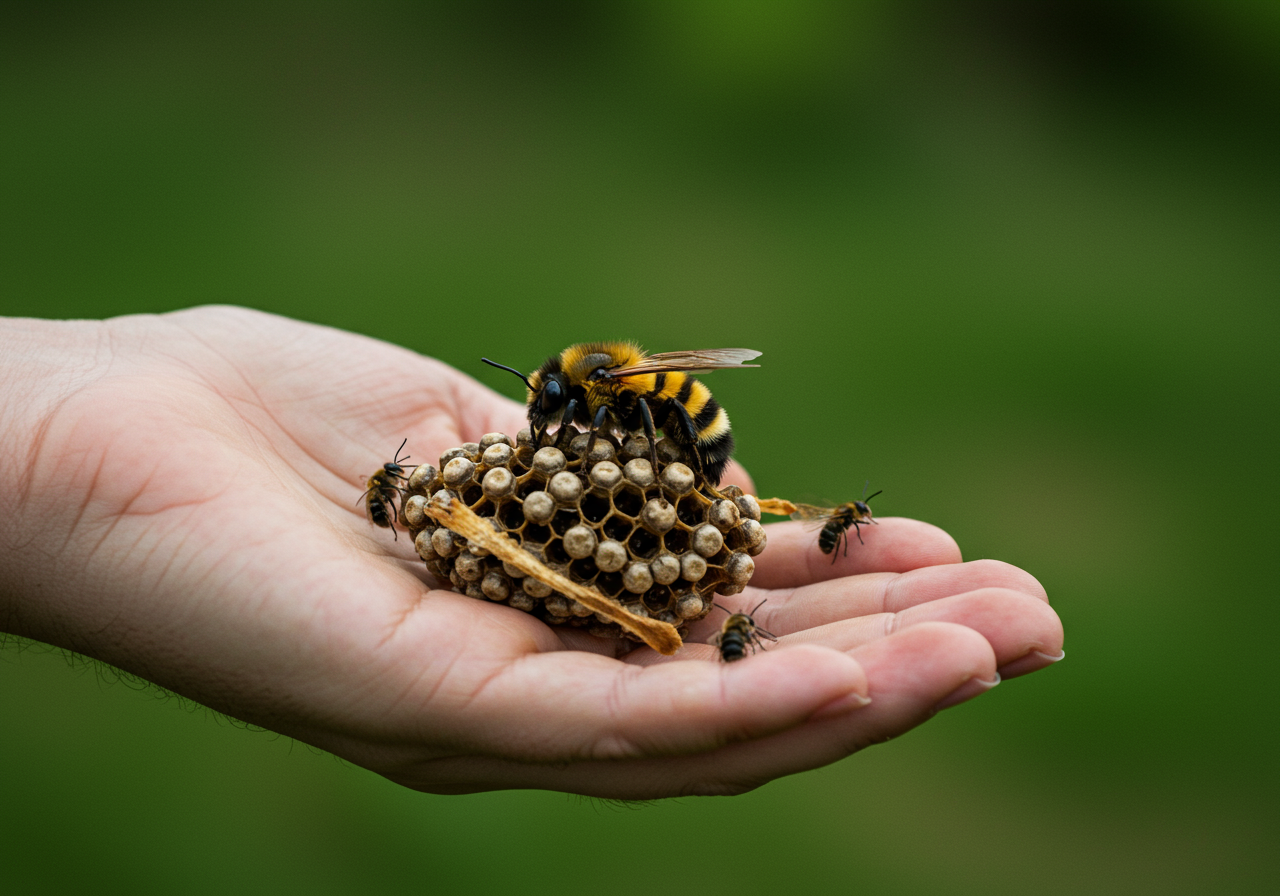
- Paper wasps often build open, umbrella-shaped nests beneath eaves, porch ceilings, railings, and deck overhangs. Their nests are usually easy to see, but reaching them with a ladder can make the situation more dangerous.
- Yellow jackets may nest underground, inside wall voids, beneath steps, or in other concealed spaces. A steady stream of wasps entering a small opening can be a more important warning sign than a nest you can see.
- Hornets may build larger enclosed nests in trees, under roof structures, or in protected areas around a home. Their size and defensive behavior make DIY disturbance especially risky.
For a closer look at the differences between two common Denver stinging insects, see Beeline's yellow jacket versus paper wasp guide. That article focuses on identification. This guide focuses on Denver-local control decisions, nest locations, and getting professional help.
Where wasps build nests around Denver homes
Wasps choose places that provide shelter from wind and weather while keeping the colony close to food. Check from a safe distance for repeated activity near these areas:
- Roof eaves, soffits, fascia, vents, and gutter lines
- Porch ceilings, deck undersides, railings, and fence corners
- Sheds, garages, attic openings, and exterior light fixtures
- Wall gaps, utility penetrations, siding, and cracks near windows
- Ground holes, landscape timbers, retaining walls, and abandoned rodent burrows
- Trash cans, compost areas, fruit trees, hummingbird feeders, and outdoor dining spaces
Do not seal an active opening or spray into a wall void on your own. Blocking the visible entrance can redirect wasps into the home, while disturbing a hidden colony can bring defensive insects into a living space. If you see wasps disappearing into a crack, note the location and keep people away until the source is inspected.
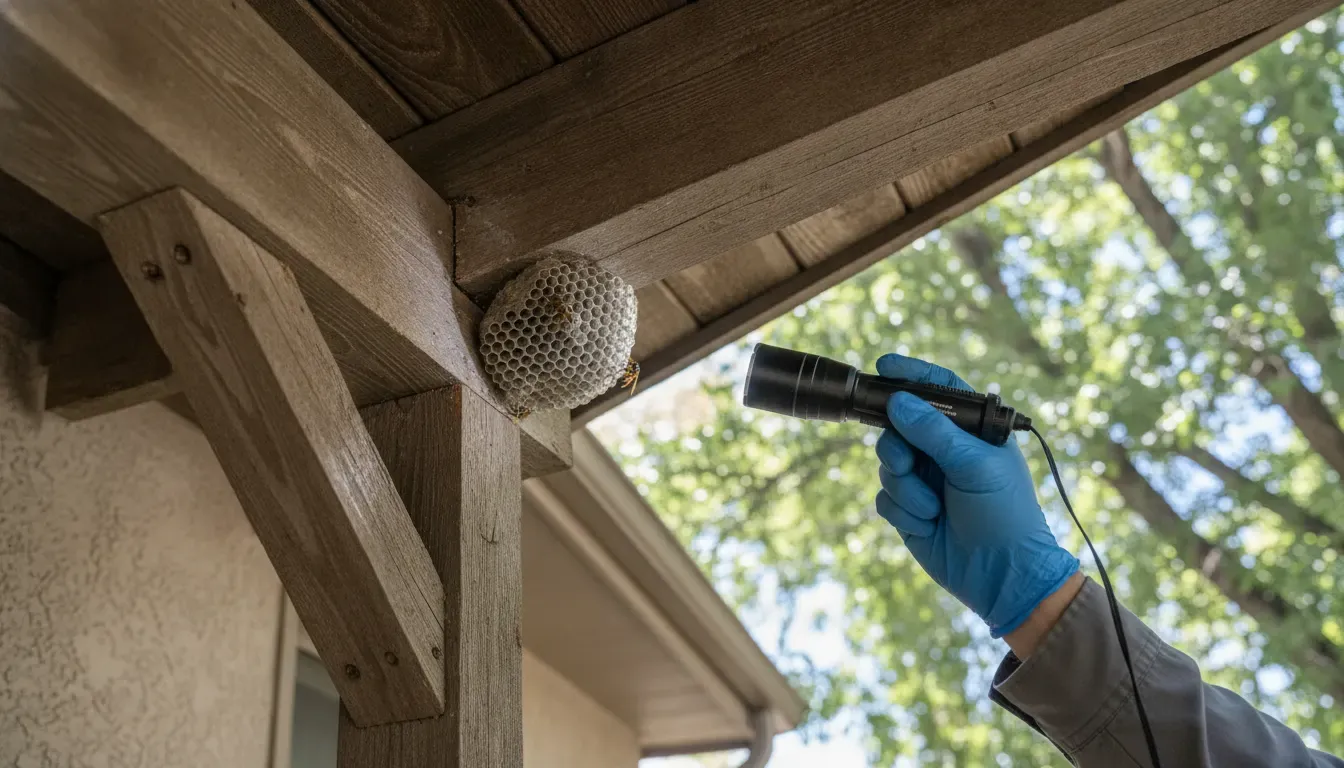
Wasps often place nests beneath protected eaves and porch structures.
Beeline's Denver wasp nest removal guide covers why hidden nests and ladders make DIY treatment a poor fit. A trained technician can inspect the structure, surrounding activity, and likely entry points before choosing a treatment approach.
What to do when you find a wasp nest
The first priority is distance. Move people and pets away from the area and keep doors and windows closed if wasps are close to the house. Do not knock down the nest, throw objects at it, use a ladder, or spray from close range. Store food and drinks indoors, cover outdoor trash, and pause yard work near the activity until the nest is evaluated.
If someone is stung, follow the person's normal medical plan. Anyone with signs of a severe allergic reaction, such as trouble breathing, swelling of the face or throat, dizziness, or widespread hives, needs immediate emergency medical attention. Pest control removes the source of the risk, but it is not a substitute for medical care.
When contacting a pest professional, share the nest location, the time of day activity is highest, whether wasps are entering a wall or ground opening, and whether anyone in the home has a known sting allergy. A photo taken from a safe distance can help with initial triage, but never approach the nest to get a better picture.
Need a professional inspection? Call (303) 586-5231 to schedule Denver wasp control with Beeline.
What Beeline's Denver wasp control includes
Beeline starts with an inspection of the reported activity and nearby nesting zones. The technician looks at the wasp pattern, nest type, access conditions, and proximity to people and pets. This helps separate a visible nest from activity that may be coming from a wall void, roofline, or underground colony.
The service plan is based on what the inspection finds. Depending on the location, treatment may involve targeted professional application, addressing the nest source, and guidance for reducing conditions that attract wasps. The goal is not simply to stop the insects visible at one moment. It is to address the colony and reduce the chance that the same area becomes a recurring problem.
Beeline is a family-owned Colorado company with licensed technicians and a personal approach to service. The company offers free estimates or inspections when applicable, same-day or emergency availability when possible, and a 100% satisfaction guarantee with free re-treatment when a customer is not satisfied. Review the broader Colorado wasp and bee control guide for the larger safety and service context, including why a suspected honey bee colony should be handled differently from a wasp nest.
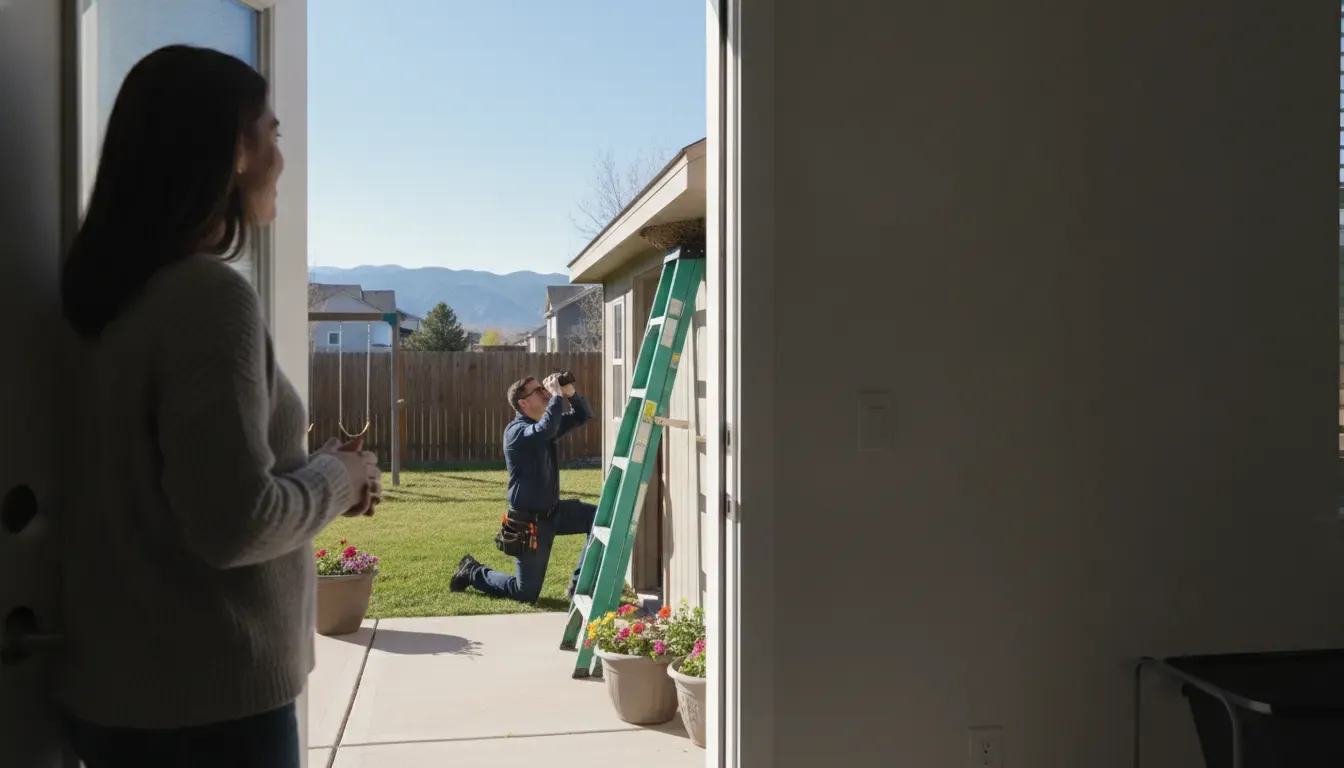
Keeping people away while a technician inspects the nest helps reduce sting risk.
What a Denver wasp inspection should answer
A useful inspection does more than confirm that wasps are present. It should help explain where they are nesting, how they are reaching the property, and which areas need to stay clear while treatment is planned. The technician may compare activity at the nest entrance with activity around nearby eaves, vents, siding, landscaping, and outdoor food sources.
Location changes the practical risk. A small paper-wasp nest above an unused shed may not create the same immediate concern as yellow jackets entering a wall beside a back door. A ground nest beside a play area, a roofline nest above a walkway, or an interior wall void may require a different access and safety plan. Share how the space is used so the technician can prioritize the areas that matter most to your household.
It also helps to ask what should happen after treatment. Some nests can be addressed during the initial service, while hidden activity or difficult access may require monitoring and a follow-up recommendation. Clear instructions about when to avoid the area, what activity is normal after treatment, and which signs justify another call can make the process safer and less stressful.
Preparing your Denver home for wasp treatment
Before the appointment, keep children and pets away from the reported activity and clear a safe path to the exterior areas the technician may need to inspect. Move patio meals, toys, and pet bowls indoors if they are close to the nest. Do not remove the nest, fill a hole, trim vegetation around it, or apply another product before the inspection, because those actions can increase exposure or make the source harder to assess.
Make a short note of when you see the most activity. Morning, afternoon, and evening patterns can help the technician understand how the insects are using the property. Mention recent DIY sprays, indoor sightings, stings, or changes in activity. These details do not replace an inspection, but they help the service team work from a clearer starting point.
After treatment, follow the technician's site-specific instructions. Keep people away from treated areas for the recommended period, do not disturb a nest that is still active, and call if activity moves into the home or remains concentrated at the original entry point. Avoid relying on a single visual check to decide that a hidden colony is gone.
How quickly can Beeline respond to a Denver wasp call?
Response time depends on the schedule, location, nest access, and urgency of the situation. Beeline serves Denver and surrounding Front Range communities, including areas within its service radius, and offers same-day or emergency availability when possible. When you call, explain whether the nest is near an entry door, children's play area, pets, or someone with a known allergy so the team can understand the risk.
Do not wait for the nest to become larger before asking for help. Early inspection can make it easier to locate the source, protect high-traffic areas, and plan treatment before a colony becomes more defensive. If wasp activity suddenly increases indoors or around one wall, ceiling, or ground opening, treat it as a reason to call rather than a reason to investigate more closely yourself.
How to reduce future wasp activity
Professional removal addresses the active problem, while simple property habits can make a home less attractive to foraging wasps:
- Keep outdoor food, drinks, and pet food covered when not in use.
- Rinse sticky drink containers and empty outdoor trash regularly.
- Clean up fallen fruit and keep compost containers closed.
- Repair torn screens and maintain door sweeps around entry points.
- Trim vegetation away from siding, rooflines, and frequently used walkways.
- Watch protected areas in spring for early nest construction, but do not disturb an active nest.
These steps cannot guarantee that wasps will never return. They can, however, reduce easy food sources and make new activity easier to notice. A professional can also point out building features or recurring conditions that deserve attention during an inspection.
Book local wasp control in Denver
A wasp nest near your home does not need to become a family emergency. Keep your distance, protect children and pets, and call a local professional who can identify the activity and recommend a safe next step. Beeline Pest Control serves Denver-area homeowners with fast, reliable pest solutions and a 100% satisfaction guarantee.
Call Beeline at (303) 586-5231 to request your Denver wasp control inspection.
You can also explore Beeline's residential pest control services or learn more about the family-owned team before you schedule.
Denver wasp control questions
Are wasps in Denver more aggressive in late summer?
They can be. Colonies are often larger later in the season, and changes in available food can increase encounters around homes, patios, trash, and outdoor meals. Avoid disturbing nests and arrange an inspection if activity is concentrated near a living area.
Should I spray a wasp nest myself?
DIY spraying can expose you to defensive wasps, especially when the nest is high, concealed, or close to a doorway. A licensed pest professional can identify the nest location and choose a treatment plan without requiring you to climb, open a wall, or approach the colony.
Can Beeline remove wasps from a wall or roofline?
Beeline can inspect hard-to-reach activity around wall voids, rooflines, eaves, and other exterior areas and recommend the appropriate service. Tell the team where you see wasps entering and how often the activity occurs so the inspection can focus on the likely source.
What if I am not sure whether the insect is a wasp or a honey bee?
Keep your distance and do not spray the colony. A professional can help identify the insect and explain the appropriate next step. Honey bee colonies may require relocation rather than wasp treatment, while wasps and yellow jackets are handled through a different control plan.
Aurora Pest Control: Get Your Free Quote Today!
Ready to reclaim your home from pests? Beeline Pest Control offers effective, family-friendly solutions right here in Aurora, Colorado. Fill out our quick form, and we'll swiftly get back to you with a personalized, no-obligation quote to make your property pest-free!
More Blogs
Some other blogs you might be interested in