Denver Mosquito Control: Your Pre-Season Checklist for a Bite-Free Summer
Prepare your home and yard for a peaceful season! Discover Beeline Pest Control's easy-to-follow pre-season checklist to prevent mosquitoes in Denver. Stop biting bugs before they start and enjoy your outdoor spaces without the annoyance. Get ahead of mosquito season with expert tips and effective solutions.
Denver yards can look quiet in early spring, but that is the right time to look for the small water sources that will matter later. Before patio furniture, planters, and outdoor play areas become busy, a short cleanup can make mosquito prevention more manageable.
Effective mosquito control in Denver starts in spring with a weekly water check: empty and scrub buckets. Saucers, toys, birdbaths, and other containers, then cover or discard anything that holds water. The CDC recommends this routine because mosquitoes lay eggs in or near standing water, and scrubbing helps remove eggs and larvae: CDC mosquito-control guidance.
Use this pre-season window to inspect the yard, protect entry points, and decide whether professional treatment belongs in your plan. Understanding why spring timing matters will help you prioritize each step before mosquito activity builds.
Why Spring Is the Best Time to Start Mosquito Control in Denver
Waiting until mosquitoes are already swarming can make yard time frustrating. Spring gives Denver homeowners a useful head start because the mosquito population is still building, not yet at its seasonal peak.
Colorado's mosquito season generally runs from June through September, with the highest activity in July and August. That timing makes late spring the practical window to inspect the property, correct breeding conditions. And plan treatment before outdoor gatherings and warm evening routines are in full swing. Seasonal timing guidance for Colorado supports this early-preparation approach.
Spring weather starts the breeding cycle
Mosquito activity begins when nighttime temperatures remain near 60 degrees Fahrenheit. In Denver and the surrounding Front Range, spring snowmelt and rainfall can also create temporary standing water during April and May. Those shallow puddles and water-holding containers give mosquito larvae a place to hatch before most homeowners notice a major adult population.
That is why a spring inspection should look beyond obvious ponds. Check buckets, toys, planters, birdbaths, clogged areas, and low spots where snowmelt or rain collects. Emptying water is helpful, but scrubbing containers matters too because mosquito eggs can remain attached to surfaces. Removing these early sources interrupts the cycle before newly emerged adults reproduce.
Early prevention is easier than mid-summer catch-up
Starting before peak season does not mean treating every yard the same way. It means identifying where mosquitoes can develop and rest, then choosing a proportionate plan. Homeowners can remove or cover water sources and keep checking them weekly. If a property has areas that cannot be drained or covered, a licensed professional can evaluate whether targeted treatment is appropriate.
West Nile virus risk to humans occurs primarily from June through early September, when mosquitoes are active, according to the Colorado Department of Public Health and Environment. This is not a reason to panic, but it is a sensible reason to prepare. A calm, early plan gives your family more options than reacting after the season is underway. For Denver homeowners, the goal is simple: use April and May to reduce breeding opportunities, then maintain the property as temperatures rise. Once the season arrives, our guide to keeping mosquitoes away all summer offers practical tips for the warmer months.
Your Pre-Season Mosquito Control Denver Checklist: Eliminate Standing Water First
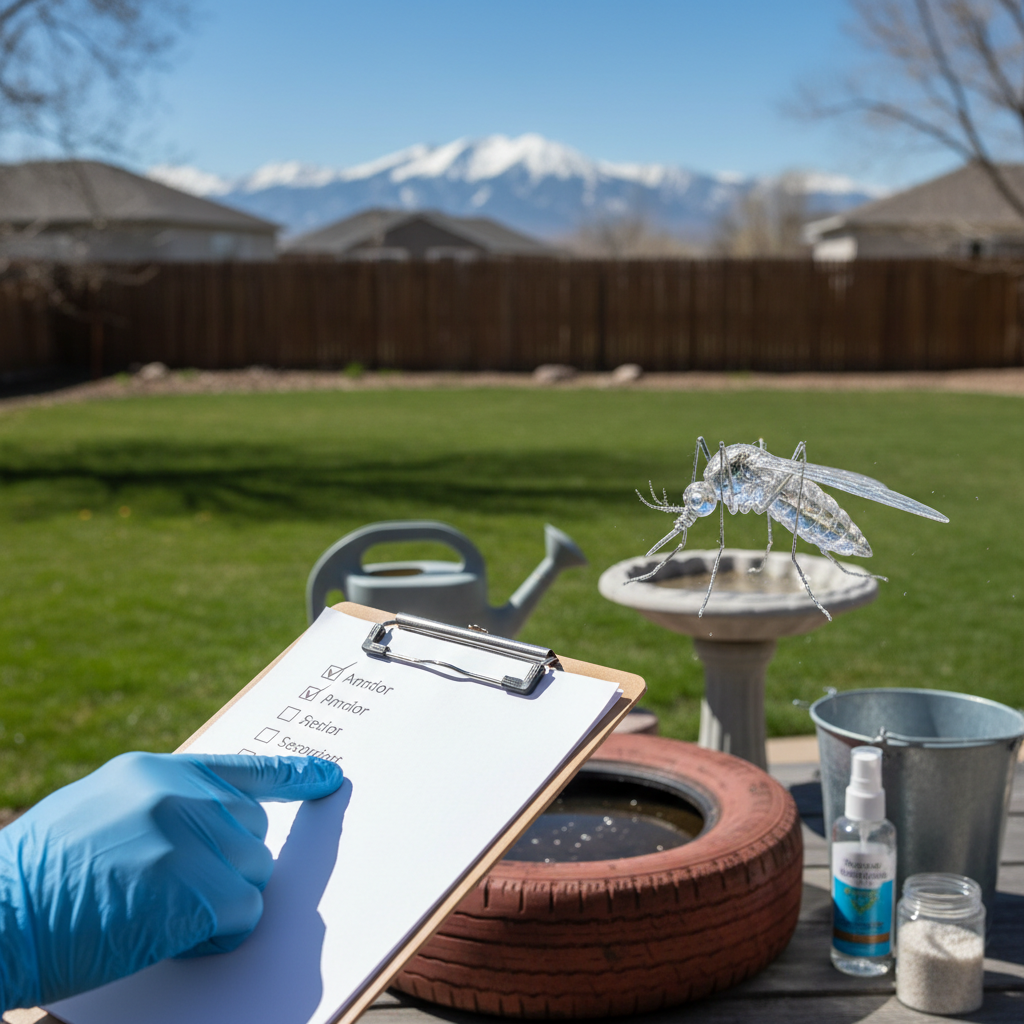
Before patio season begins, walk your property with one goal: leave mosquitoes as few places as possible to lay eggs. A small amount of water can collect in ordinary backyard items after spring rain or snowmelt. The CDC recommends checking water-holding items once a week, because mosquitoes lay eggs in or near standing water.
- Empty every container that can hold water. Tip out water from buckets, children's toys, planters, flowerpot saucers, birdbaths, trash containers, tires, and small pools. Check both the front and back yards, along with areas beneath decks and outdoor furniture. Do not assume a container is harmless because it holds only a shallow puddle.
- Scrub the inside before putting the item back. Emptying a container is not always enough. Scrubbing helps remove mosquito eggs or residue left on the sides, then freshen the item with clean water as appropriate. Make this a weekly habit during the warmer months, especially after rain.
- Turn over, cover, or discard water-holding items. Store buckets and toys upside down, move planters under cover, and remove damaged items that cannot be kept dry. Keep children's pools empty when they are not in use, or maintain them according to the manufacturer's instructions. The CDC's weekly guidance is to empty and scrub, turn over, cover, or throw out items that hold water.
- Secure rain barrels and cisterns. Tightly cover water storage containers so mosquitoes cannot get inside to lay eggs. If a lid cannot seal the opening, install wire mesh with holes smaller than an adult mosquito. Check the cover after windy weather and repair gaps promptly.
- Repeat the inspection every week. Put the check on your regular spring yard-care calendar. Pay attention after storms, irrigation, and thawing snow, when containers that looked dry can fill again. If you have a water feature or another large body of water that cannot be dumped or covered. Ask a qualified professional about appropriate treatment rather than applying a product casually.
Mosquito prevention works better when nearby properties take part, too. Talk with neighbors about neglected containers, shared alleys, and drainage areas. The CDC notes that homeowners, neighbors, and the wider community can all help reduce mosquitoes around homes and throughout the neighborhood. For persistent activity after you have removed breeding sites, a licensed local technician can help identify overlooked sources and recommend safe, professionally applied options.
Yard Prep That Removes Mosquito Resting and Breeding Spots
Once standing water is under control, look at the places where adult mosquitoes can shelter between feeding periods. The CDC notes that mosquitoes rest in dark, humid areas, including beneath patio furniture, inside carports, and in garages. Walk the property at midday, when these shaded areas are easiest to identify, and make them less inviting before outdoor activity increases.
Open up cool, damp hiding places
Trim back dense grass, weeds, and low vegetation around patios, play areas, fences, and the foundation. Mow regularly and remove piles of leaves or yard debris that hold moisture. Prune shrubs enough to improve airflow without stripping away useful landscaping. Move patio furniture, stored items, and containers so they are not creating tight, shaded pockets against the house.
Check the garage and carport as well. Keep garage doors closed when they are not in use, and avoid leaving doors propped open. If a dark corner stays damp after rain, find the cause rather than simply treating the symptom. A leaking hose connection, clogged downspout, or low area that drains slowly can keep the surrounding soil and vegetation moist.
Inspect trees, gutters, and drainage
Look for damaged branches and cavities in mature trees. Tree holes can collect rainwater, so fill them to prevent water from accumulating. Also clear leaves and sediment from gutters, then check that downspouts discharge water away from the home. After a storm or irrigation cycle, walk the yard and look for puddles, blocked drains, and low spots that remain wet.
These checks complement weekly removal of water-holding items. Emptying a container is not always enough, because scrubbing helps remove eggs left behind. For containers that must hold water, such as rain barrels, use a tight cover or fine wire mesh with openings smaller than an adult mosquito. See the CDC's mosquito control guidance for additional home-prevention steps.
Keep mosquitoes outside
Repair torn window screens and install screens on windows or doors that lack them. Check frames, sliding doors, and garage entry doors for gaps. This matters beyond avoiding bites: mosquitoes that enter a house from outdoors can begin laying eggs indoors, especially where water collects in or around household items. Fix leaks, empty indoor containers, and address damp areas promptly.
Good yard preparation reduces shelter and breeding opportunities, but it cannot correct every hidden source. If mosquitoes remain active after drainage, landscaping, and screen repairs, a licensed professional can help identify problem areas and recommend an appropriately targeted treatment.
When to Schedule Professional Yard Mosquito Treatment in Colorado
For Denver-area homeowners, the best time to arrange professional mosquito treatment is before the season reaches its busiest stretch. Colorado mosquito activity generally runs from June through September, with the strongest activity in July and August. A May or June start gives a treatment plan time to address the yard before outdoor gatherings and peak biting pressure become routine.
What a pre-season treatment should include
A useful service begins with an inspection, not a blanket application. The technician should walk the property, identify likely breeding and resting areas, and note conditions that can keep mosquitoes active. That includes checking shaded, damp parts of the yard, containers or other water-holding features, and areas along the perimeter where adult mosquitoes may rest.
When standing water cannot be drained, dumped, or covered, a professional may recommend an appropriate larvicide treatment. The CDC notes that larvicides can be used for large bodies of water that cannot be covered or emptied. Provided the water is not intended for drinking and product directions are followed. Treatment should be targeted to the property's conditions and applied according to the label, rather than used indiscriminately.
For active yard control, the service may also include a professionally applied barrier treatment around the yard perimeter and mosquito resting zones. Ask what areas will be treated, how the application is selected, and what preparation is needed for children, pets, and outdoor activities. Beeline Pest Control provides local, licensed service in the Denver metro area and offers free estimates for homeowners who want a property-specific plan.
Why one application is rarely the whole plan
Early-season treatment in May or June, followed by routine maintenance about every three to four weeks. Or roughly every 21 days, can reduce mosquito populations and exposure during the active season. The exact schedule depends on weather, vegetation, water sources, and pressure around the property. So a technician should adjust the plan rather than promise the same interval for every yard.
DIY vs professional mosquito control in Denver
| DIY Prevention | Professional Treatment | |
|---|---|---|
| Best for | Weekly maintenance, small yards, limited budgets | Larger lots, persistent pressure, hands-off control |
| Breeding-site control | Empty and scrub containers weekly, cover rain barrels | Technician inspects the whole property and finds hidden sources |
| Outdoor coverage | Repellents and personal protection only | Barrier application around the yard perimeter and resting zones |
| Water features | Drain, cover, or use dunks on small sources | Targeted larvicide for water that cannot be drained or covered |
| Time commitment | Ongoing weekly effort through the season | Scheduled visits roughly every 3-4 weeks |
| When to choose it | As the foundation of any plan | When DIY alone is not reducing pressure before or during peak season |
Both approaches work together. The CDC notes that a professional may also treat areas inside the home when screens and cleaning are not enough. Denver families get the best results by keeping up the weekly routine and letting a licensed technician handle the sources that DIY effort cannot reach.
DIY prevention still matters. Empty and scrub water-holding items weekly, keep screens in good repair, and remove conditions that allow mosquitoes to reproduce. If mosquitoes continue getting indoors after screens and cleaning have been addressed, the CDC recommends considering professional treatment for indoor areas. Combining consistent homeowner maintenance with targeted professional service gives Denver families more control than relying on either approach alone. For broader help, explore Beeline's full residential pest services.
Understanding West Nile Virus Risk in Denver
West Nile virus is a real part of Colorado's mosquito season, but it is not a reason to avoid your yard or panic over every bite. Colorado has reported West Nile virus cases every year since 2002. The risk to people is primarily concentrated from June through early September, when mosquito activity is highest. Understanding that seasonal pattern helps Denver-area families take sensible precautions at the right time.
When West Nile risk is highest
In Colorado, the Culex tarsalis mosquito and local bird species, including corvids, robins, and jays, are central to the virus's local transmission cycle. Activity typically peaks in July and August, then declines after the first frost. People who work outdoors or spend significant time outside have more opportunities for exposure, especially during the peak summer period. Source: Colorado Public Radio's Colorado mosquito and West Nile outlook.
What infection usually means
Most people infected with West Nile virus do not become sick. In rare cases, however, infection can lead to a serious brain infection such as meningitis or encephalitis. Severe illness is a greater concern for older adults, and most deaths occur in people over 50. That combination of low odds and potentially serious consequences is why practical prevention is worthwhile without turning mosquito control into a source of fear. The Colorado Department of Public Health and Environment explains West Nile health risks in more detail.
Simple ways to reduce exposure
- Use an EPA-registered repellent containing DEET, picaridin, IR3535, or an eligible oil of lemon eucalyptus product. CDPHE identifies these ingredients as providing the best personal protection.
- Wear long sleeves and pants when practical, particularly during outdoor work or extended evening activities.
- Keep window and door screens in good repair, and reduce mosquito habitat around the property by removing standing water.
These steps work alongside professional mosquito control. A local treatment plan can address outdoor resting areas and help reduce nuisance mosquito pressure, while personal protection remains important whenever you spend time outside.
Frequently Asked Questions
When does mosquito season start in Denver?
Activity typically begins in spring after snowmelt and rainfall create standing water, especially when nighttime temperatures remain near 60 degrees Fahrenheit. Colorado's broader mosquito season generally runs from June through September, with the highest activity in July and August, so spring cleanup gives homeowners a head start. Colorado seasonal timing can vary with weather.
When should I schedule professional mosquito treatment?
May or June is a practical starting point for pre-season treatment in the Denver area, before mosquito activity reaches its summer peak. A professional can inspect the property, identify breeding and resting areas, and recommend a maintenance schedule based on the yard, weather, and mosquito pressure. One Colorado pest-control source describes early-season treatment in May-June with maintenance about every 21 days, but your technician should determine the appropriate interval.
How do I stop mosquitoes from breeding in standing water?
Once a week, empty and scrub water-holding items such as buckets, planters, toys, birdbaths, and flowerpot saucers. Turn over or discard items that cannot be used, and tightly cover rain barrels or cisterns. Scrubbing matters because emptying a container alone may leave eggs attached to its sides. The CDC home mosquito guidance recommends these steps.
What can my family do to reduce mosquito bites?
Repair window and door screens, keep garage doors closed, and reduce shaded, humid resting areas around patios and outbuildings. When outdoors, use an EPA-registered repellent according to its label. The Colorado Department of Public Health and Environment lists DEET, picaridin, IR3535, and certain oil of lemon eucalyptus products among the best-protection options: CDPHE repellent guidance.
Ready to Schedule Your Pre-Season Mosquito Treatment?
A little planning before mosquito season can help you enjoy your Denver-area yard with fewer interruptions once warm weather arrives. Schedule your pre-season mosquito prevention treatment by calling 303-586-5231. Beeline Pest Control can help you choose a practical next step for your property, with straightforward guidance from a local team that serves Denver metro and Front Range communities.
Get Your Free Pest Control Quote - Aurora, CO
Ready to get rid of pests? Tell us about your pest problem in Aurora, Colorado, and our friendly Beeline Pest Control team will call you back with a personalized, no-obligation quote. Start your journey to a pest-free home today!
More Blogs
Some other blogs you might be interested in