
Beeline Pest Control's Denver Guide: Seasonal Ant & Spider Protection for Your Home
Protect your Denver home from unwanted ants and spiders all year long. Beeline Pest Control offers simple, effective solutions and seasonal tips to keep your family comfortable and your home pest-free. Learn how to stop seasonal invasions now!
Schedule a free pest control estimate today by calling 303-586-5231. Ants in the kitchen and spiders in the basement are not always separate problems. In Denver, changing temperatures, dry conditions, and easy access to food, water, and shelter can bring several pests into the same home over the course of a season. Knowing what you are seeing helps you choose a response that protects your family and avoids treating the wrong problem.
Ant spider seasonal pest control denver starts with identifying the pest, locating how it is entering, and addressing the conditions attracting it. Depending on the species and severity, effective control may combine targeted treatment, exclusion, sanitation, moisture reduction, and follow-up prevention.
Ants and spiders also interact in ways that can make activity seem unpredictable. Understanding why both appear around Denver homes is the first step toward choosing practical treatment options and preventing repeat visits.
Ant Spider Seasonal Pest Control Denver: Why Both Pests Appear Together
Denver's high-altitude climate creates a pest pattern that can shift quickly from one week to the next. The area gets more than 300 days of sunshine each year, but that does not mean steady conditions. Warm afternoons can be followed by sharp nighttime freezes, and repeated freeze-thaw cycles change where insects find food, moisture, and shelter.
Sun, warmth, and sudden temperature changes
As spring temperatures rise, ants become active outdoors and begin searching for dependable food and water. Small gaps around foundations, windows, doors, and utility lines can give them a path indoors. Dry summer weather can make kitchens, bathrooms, crawl spaces, and other moist areas especially attractive when outdoor resources are limited.
Spiders respond to the same seasonal shifts, although they are usually following a different opportunity. Warmer conditions increase insect activity, giving spiders more prey around landscaping, porch lights, garages, basements, and other sheltered areas. When cooler weather arrives, both prey and predators may move toward protected spaces, which can make indoor sightings more noticeable.
Why ants and spiders often appear together
Ants and spiders are connected through a simple predator-prey relationship. Ants are potential food for some spiders, along with the smaller insects that gather near the same sources of moisture and shelter. When ant activity increases around a home, it can create better hunting conditions for spiders. More spider activity can also signal that the area is supporting a steady supply of insects, rather than being a random one-time intrusion.
That does not mean spiders will eliminate an ant problem. Different species use different nesting sites, food sources, and entry points. Treating only the visible spider webs may leave the conditions that attract ants untouched. Likewise, removing ants without addressing lights, clutter, cracks, or other insect-friendly conditions can leave spiders with plenty of prey.
Denver homeowners may also notice this seasonal pattern alongside other outdoor pests. Understanding these seasonal pest threats helps you plan prevention before changing weather pushes more activity toward the house. Sealing likely entry points, reducing moisture, keeping vegetation away from the foundation, and arranging a professional inspection can address the connected causes instead of chasing isolated sightings.
What Ant Species Invade Colorado Homes?
Identifying the ant is the first step toward lasting control. Ants are social insects with specialized castes, so the ants you see inside may be workers searching for food while the colony remains elsewhere. In fact, most indoor ants are foragers from outdoor colonies. However, pavement ants and carpenter ants can also establish nests inside buildings, which makes the species and nesting site important to determine before treatment.
[Image: Close-up comparison of carpenter ants and pavement ants on wood showing size and color differences]
Carpenter ants
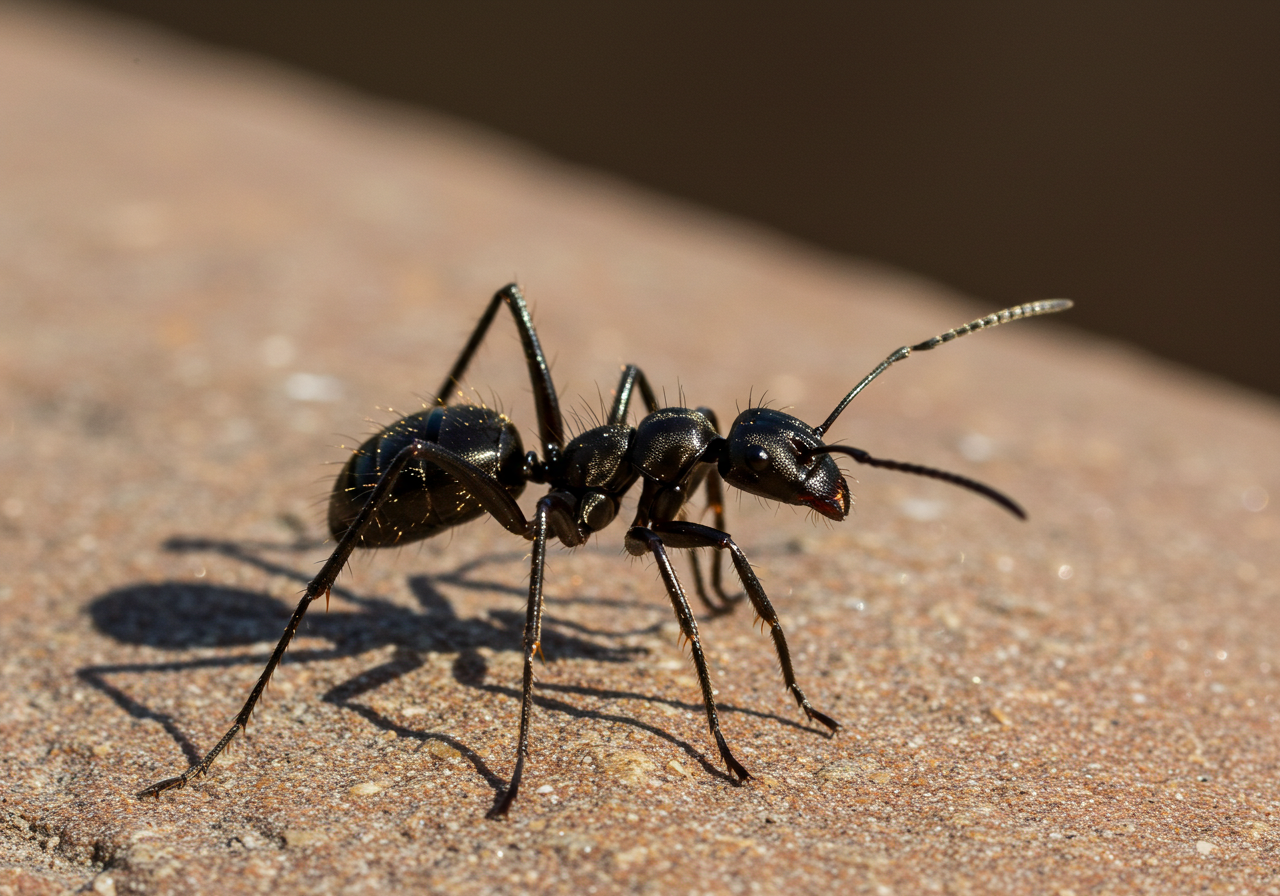
Carpenter ants are typically among the larger ants found around Colorado homes and are often black or dark in color. They do not eat wood, but they may excavate damp, softened, or damaged wood to create nesting galleries. Common nesting locations include wall voids, roof edges, window areas, and wood near plumbing or moisture problems. Outdoor nests may be located in stumps, firewood, landscaping timbers, or trees close to the house.
Signs of activity can include large ants inside, repeated trails near windows or plumbing, and small piles of sawdust-like material, known as frass, below an opening. Rustling sounds in a wall may also indicate activity, although this sign is not always present. Carpenter ants entering a home should prompt an inspection for both the colony and the moisture condition that may be supporting it.
Pavement ants
Pavement ants are small, dark brown to black ants that commonly travel in visible trails. They often nest beneath sidewalks, driveways, patios, foundation slabs, and stones. Because they can nest inside buildings, colonies may also be found under flooring, in wall spaces, or near insulation and foundation edges.
Look for steady lines of small ants along baseboards, window frames, garage edges, or cracks where the foundation meets another surface. Pavement ants may enter through small foundation cracks and other narrow gaps while following food or moisture.
Odorous house ants
Odorous house ants are small, usually brown to black ants that can move quickly along established trails. They commonly nest outdoors beneath mulch, stones, logs, and other protected areas, but may enter through gaps around doors, windows, utility lines, and foundations. Indoors, activity is often concentrated near kitchens, bathrooms, pet dishes, and other places where food or moisture is available.
Crushing one can produce a noticeable odor, but trail behavior is usually the more useful field clue. Species identification matters because an indoor trail may represent temporary foraging or a colony nesting within the structure. Treating only the visible ants can miss the source and allow activity to return.
Which Spiders Are Most Common in Colorado Homes?
Spiders can turn up indoors even when a home is clean and well maintained. In Colorado, many indoor sightings involve harmless species that are looking for shelter, moisture, or small insects to eat. Spiders are beneficial predators and provide natural pest control outdoors, but most homeowners understandably prefer to keep them out of living spaces.
Remember that spiders are not insects. They have eight legs and two main body regions, while insects have six legs and three body regions. That distinction can help you identify what you are seeing before deciding whether it needs professional attention.
Funnel web spiders
Funnel web spiders build flat, sheet-like webs with a narrow retreat at one end. They may be found around basements, garages, window wells, and other quiet areas where insects are available. Their webs can look messy or dense, but the spider is usually focused on catching prey rather than approaching people.
Cobweb spiders
Cobweb spiders create irregular, tangled webs in corners, under furniture, along ceilings, and in other low-traffic areas. Their webs often collect dust, making them easy to notice even when the spider itself is hidden. Regular vacuuming can remove webs, but repeated activity may indicate that insects are entering the home and providing a steady food source.
Cellar spiders and sac spiders
Cellar spiders are commonly associated with cool, dim areas such as basements, crawl spaces, and utility rooms. Their long legs can make them appear more alarming than they are. Sac spiders may wander across walls or ceilings rather than staying in a prominent web. Sealing gaps and reducing indoor insect activity can help limit both types.
[Image: Cobweb and spider in a Colorado basement window corner]
Some spiders wander indoors in early fall as outdoor temperatures change. A single spider does not necessarily signal an infestation. However, frequent sightings, numerous webs, or activity in bedrooms and other occupied areas can justify an inspection to identify entry points and address the insects attracting them.
Black widows and brown recluses receive a great deal of attention, but they are less common indoors in Colorado than the ordinary house spiders described above. Avoid handling any spider you cannot identify. If you are concerned about a bite or repeated sightings of a potentially medically important species. Contact a qualified pest professional for guidance rather than relying on a guess.
What Are the Signs of an Ant or Spider Infestation?
Seeing one insect does not always mean your home has an established infestation. A pattern of activity, however, is worth investigating. Start by identifying what you are seeing, where it appears, and whether the signs repeat. Correct identification is the critical first step in integrated pest management because treatment depends on the pest's behavior and nesting site.
Clues that point to ants
Ant trails are one of the clearest signs. Workers often follow the same route along baseboards, windowsills, countertops, or cracks in the foundation. Follow the trail if you can. It may lead to food, moisture, an entry point, or a nest. Look for visible nests in soil, wall voids, window frames, or damp wood. Carpenter ants can also leave behind frass, a coarse sawdust-like material pushed from galleries. Frass near a wall, window, or damaged wood deserves closer attention.
Do not assume that a small number of visible ants represents the size of the colony. Ant colonies are made up mostly of worker ants, so the ants you notice may be foraging away from the nest. You may also see winged ants during seasonal activity, which can indicate a mature colony nearby. If trails return after cleaning, baiting, or sealing an obvious entry point, professional inspection is usually the better next step.
Sign. | Ants. | Spiders. | Most common evidence. | Visible trails and foragers along baseboards or counters. | Webs in corners, windows, eaves, and storage areas. | Nesting signs. | Soil mounds, frass (sawdust from carpenter ants), or winged swarmers. | Egg sacs, shed skins, and clustered webs. | Entry points. | Foundation cracks, gaps around pipes and windows, door thresholds. | Same points, plus open vents, unscreened windows, and gaps under doors. | What attracts them. | Food crumbs, sugary spills, pet food, moisture. | Insects drawn to lights, clutter, sheltered areas. | DIY first step. | Sanitation plus baiting near trails. | Web removal plus clutter reduction plus sealing gaps.
Clues that point to spiders
Fresh webs in corners, around windows, beneath eaves, or in quiet storage areas can indicate regular spider activity. Repeated webs, several spiders in the same area, shed skins, and egg sacs are stronger signs that spiders are using the space consistently. Vacuuming webs and reducing clutter may help when activity is occasional. Check nearby lights, doors, and windows for flying insects that provide a food source.
When webs and egg sacs keep returning, or when you cannot confidently identify the spider, contact a licensed pest professional. Ants and spiders may require different corrections, and broad spraying can miss the nest or the conditions attracting them. A professional can identify the pest, locate entry points and harborage, and recommend a targeted plan.
How to Get Rid of Ants: Effective Control and Prevention Steps
Effective ant control starts with the colony, not just the ants you see indoors. Most indoor ants are foragers that entered from an outdoor colony, so wiping away visible trails may provide only temporary relief. Use this sequence to identify the source, remove attractants, and stop ants from finding a route back inside.
Inspection: Follow ant trails to identify entry points, moisture, food sources, and possible nesting areas. Check windows, doors, plumbing penetrations, foundation cracks, wall voids, crawl spaces, and areas around appliances. Look outdoors along the foundation, beneath mulch, and near plants for colony activity. This helps distinguish a recurring colony problem from a few accidental invaders.
Sanitation: Remove the food and water that make a home attractive to foraging ants. Wipe counters and floors, clean spills promptly, store sweets and pet food in sealed containers, and empty indoor trash regularly. Repair leaks and dry damp areas. Reduce moisture in crawl spaces, where persistent humidity can support pest activity.
Exclusion: Seal cracks and gaps around the foundation, windows, doors, utility lines, and pipes. Replace damaged weatherstripping and make sure screens fit tightly. Trim vegetation that touches the structure and address outdoor conditions that create hidden routes into the home. Exclusion works best when paired with sanitation, because sealing an opening does not remove nearby attractants.
Baiting: Use an appropriate slow-acting ant bait rather than relying only on a fast-contact spray. Foragers can carry slow-acting bait back to the colony, making this approach more useful for addressing the source. Place bait where label directions allow, keep it away from children and pets, and avoid spraying over or around bait stations.
Professional treatment: Call a licensed pest professional when trails continue, ants appear in multiple rooms, or the colony location is unclear. A professional can identify the ant type, locate contributing conditions, and choose a treatment plan that addresses outdoor colonies and indoor entry points. Follow-up may include targeted treatment, monitoring, and recommendations for moisture control or repairs. Professional help is especially valuable when DIY products have not solved the problem or when treatment must be carefully managed around a family or pets.
How to Get Rid of Spiders: Prevention and Control Tips
The most effective way to manage spiders is to make your home less inviting and block the routes they use to get inside. In Denver homes, a combination of regular cleanup, exclusion, and targeted treatment can help keep spiders out of bedrooms, basements, garages, and other living spaces.
Remove webs and reduce hiding places
Remove webs from corners, ceilings, window frames, porches, and eaves with a vacuum or broom. Pay attention to quiet areas that are rarely disturbed. Dispose of egg sacs carefully rather than leaving them nearby, where newly hatched spiders may disperse.
Reduce clutter in basements, garages, storage rooms, and crawl spaces. Stacked boxes, unused equipment, firewood, and dense storage create sheltered areas for spiders and the insects they feed on.
Limit the insects that attract spiders
Outdoor lights can attract flying insects, which may draw spiders toward doors, windows, and exterior walls. Turn off unnecessary lights at night, use motion sensors or timers, and consider warm, less insect-attracting bulbs for essential fixtures.
Seal entry points around the home
Exclusion is the most important step in long-term spider prevention. Inspect screens, window frames, door sweeps, thresholds, utility penetrations, foundation cracks, and gaps around pipes. Repair damaged screens, replace worn weatherstripping, and seal small openings with an appropriate caulk or sealant.
When professional treatment makes sense
Spiders are beneficial outdoors because they help control other insects, so the goal is not to eliminate them from the environment. If activity continues after cleanup and exclusion, a licensed pest professional can identify conditions around the property and apply a targeted perimeter treatment. Ask for an inspection that addresses both spiders and the insects supporting them, rather than relying on repeated indoor spraying alone.
What Does a Denver Seasonal Pest Control Calendar Look Like?
Denver homeowners can stay ahead of infestations by matching prevention to the pests that become active each season. A practical calendar helps you inspect vulnerable areas, close entry points, and schedule treatment before a small pest problem spreads.
As temperatures rise, ants leave winter shelter to forage for food and water. Spider egg sacs may also hatch, increasing activity around foundations, garages, basements, and landscaping. Spring is the right time to inspect screens, door sweeps, foundation gaps, and utility penetrations. Start exclusion work early, before pests establish routes into the home.
Warm weather brings the year's highest level of outdoor pest activity. Ants, spiders, wasps, and other insects may move between landscaping and the structure as they search for food, moisture, and nesting sites. Regular perimeter treatments can help reduce pressure around doors, windows, eaves, and the foundation. If stinging insects are active around a deck, play area, or entryway, review this guide to seasonal pest control and arrange professional help rather than disturbing a nest.
Cooling temperatures push spiders indoors, where wandering activity is often most noticeable in basements, garages, and corners near windows. Ants may also seek warmth, while rodents look for sheltered spaces before winter. Replace damaged screens, seal cracks around the foundation, and close gaps around pipes, vents, and garage doors.
Some pests remain sheltered in wall voids, attics, crawl spaces, and other protected areas during winter. Ant activity indoors can continue when colonies are located inside walls or other warm sections of the structure. Continue checking for trails, droppings, damaged screens, and gaps around utility lines.
Seasonally timed inspections and treatments do not replace good sanitation or exclusion, but they can prevent conditions from turning into a larger infestation. If you are seeing recurring activity or cannot locate the entry point, a professional inspection can identify the source and recommend a safe, targeted next step.
Frequently Asked Questions
How can I tell whether ants or spiders are causing the problem?
Ants are usually identified by trails, nests, or small piles of soil near entry points. Spiders are more often noticed through webs, egg sacs, or repeated sightings in quiet areas such as garages, basements, and window corners. Because several species can look alike, a clear photo and details about where and when you see activity can help guide the right treatment.
Is professional treatment safer than treating seasonal pests myself?
Professional treatment can reduce guesswork because licensed technicians select products and application methods for the pest, location, and household conditions. Tell the technician about children, pets, gardens, and any sensitive areas before service. Follow all re-entry and ventilation instructions on the service documentation, and never combine household pesticides unless the label specifically allows it.
How much does ant, spider, or seasonal pest control cost in Denver?
Pricing depends on the pest, infestation size, property conditions, treatment frequency, and whether exclusion or follow-up work is needed. A reliable estimate should explain what is included rather than promise one universal price. Ask whether the inspection, initial treatment, retreatment, and prevention recommendations are part of the quoted service.
What can Denver homeowners do between treatments?
Seal gaps around doors, windows, utility lines, and the foundation. Repair screens, reduce moisture, keep food in sealed containers, and remove standing water or clutter near the home. Trim vegetation away from exterior walls and address leaking faucets or irrigation. These steps reduce shelter and entry routes, but they may not resolve an established infestation by themselves.
Author: Jarom Walz, Owner, Beeline Pest Control. Licensed and insured by the Colorado Department of Agriculture.
Schedule Your Free Pest Control Estimate
Clear identification is the first step toward choosing an effective approach for ants, spiders, or seasonal pests around your Denver home. To discuss treatment options and prevention, call Beeline Pest Control at 303-586-5231 to schedule a free pest control estimate for ant or spider treatment.
Get Your Free Pest Control Quote – Beeline Pest Control Aurora, CO
Ready to reclaim your home from unwanted pests? Beeline Pest Control in Aurora, Colorado, makes it easy to get effective solutions. Simply fill out this short form with your details, and our local pest experts will call you back quickly with a personalized, no-obligation quote. Discover affordable and reliable pest control services designed to protect your home and family. Take the first step towards a pest-free living space today!
More Blogs
Some other blogs you might be interested in