
Spider Infestation: Colorado Homeowner Guide
Learn when repeated spiders may signal an infestation, what Denver homeowners should inspect, and how to reduce activity or choose professional help.
Seeing a spider indoors can be unsettling, but one sighting does not automatically mean you have a spider infestation. For Denver-area homeowners, the key is whether spiders keep appearing, whether webs or egg sacs are accumulating, and whether the conditions that support them are widespread. A careful check can help you decide whether simple prevention is enough or a professional inspection makes sense.
Call Beeline Pest Control to discuss a free inspection
When does a spider problem become an infestation?
When is it likely an infestation? There is no universal spider count. Repeated sightings in the same or multiple areas, webs that reappear after cleaning, and egg sacs together suggest activity is established nearby rather than a single stray spider.
A spider problem is more likely to be ongoing when activity is repeated, concentrated in several areas, or accompanied by multiple webs and egg sacs. A single spider that wandered inside is usually a different situation from recurring sightings in a basement, garage, or window wells.
House layout, season, spider type, and access to prey all matter. Instead of counting every spider, look for patterns over time. Are new webs appearing after you remove old ones? Are sightings happening in multiple rooms? Do you see egg sacs or regular prey insects? Those clues are more useful than one isolated encounter.
Think in terms of evidence, not a precise threshold. A homeowner who sees one spider near an open door may simply have had an accidental entry. A homeowner who finds fresh webs in several undisturbed storage areas over repeated checks has a stronger reason to investigate access points and harborages.
What signs should you check around your home?
Inspect calm, undisturbed places where spiders can build webs and find other insects. In Colorado homes, that may include basement corners, crawl spaces, garages, storage areas, window wells, and the edges of utility penetrations. Use a flashlight and avoid reaching into dark gaps by hand.
- Repeated sightings: You notice spiders in the same area or several rooms over multiple days or weeks.
- Fresh webs: Webs return after cleaning, especially in corners, around windows, or near stored items.
- Egg sacs: Small silk sacs can suggest spiders are reproducing nearby. Do not handle them barehanded.
- Prey insects: Spiders feed on other insects, so recurring prey activity may help explain why spiders stay.
- Entry and shelter: Gaps, clutter, and undisturbed storage can provide routes inside and places to hide.
One clue alone may not prove an infestation. A dusty web can be old, and a spider may enter through an open door or window. Note the location and date of sightings for a week or two. A short record can show whether activity is fading, staying in one sheltered area, or spreading.
Make a simple room-by-room log. Record the date, exact location, whether the web looked fresh, and whether you saw a spider or egg sac. Take a photo from a safe distance if identification may matter. Do not handle an unknown spider or move heavy objects without checking around them first.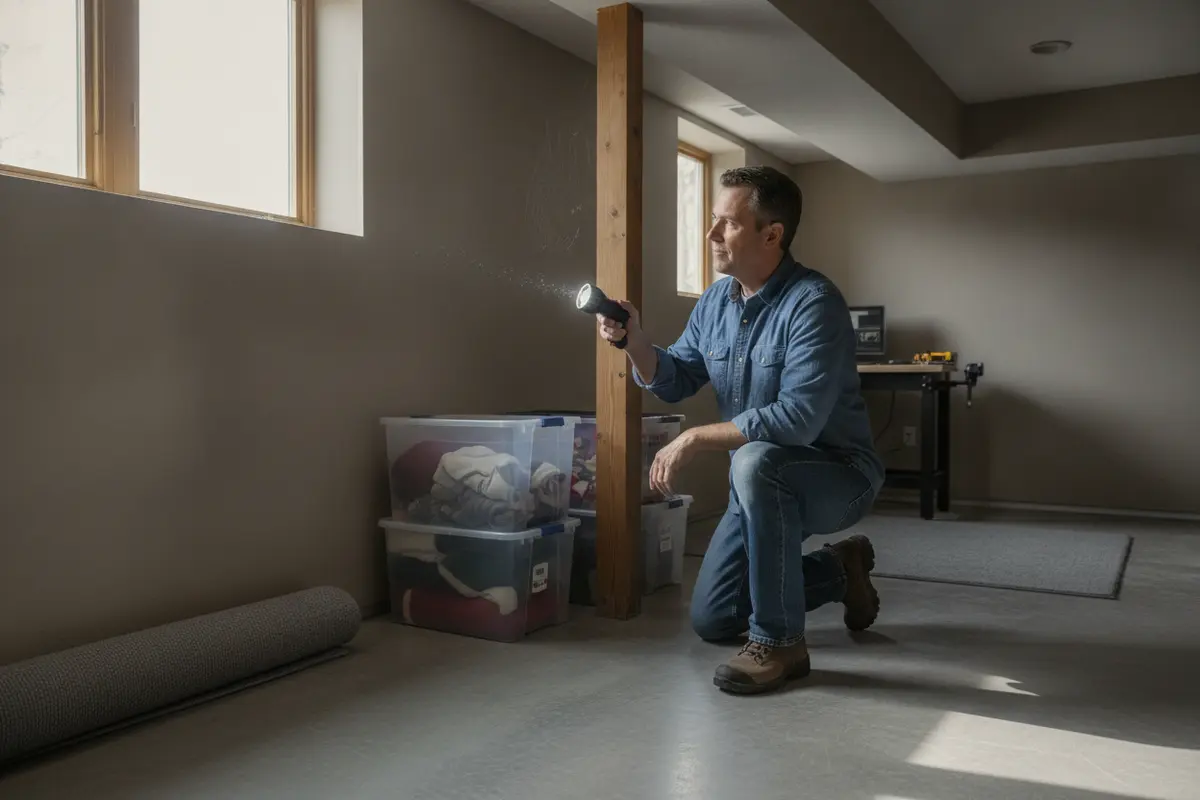
Why do spiders keep showing up indoors?
Spiders may enter seeking shelter, and they tend to stay where there is food and a suitable place to hide or build webs. Exterior lights can attract insects that become prey near doors and windows. Gaps around pipes, vents, doors, and window frames can provide access. Inside, boxes, firewood, and rarely moved items offer quiet spaces.
Seasonal changes can also shift where spiders are noticed. Activity can become more apparent when outdoor conditions change or when homeowners move stored items. More sightings do not necessarily mean the house has suddenly become unsafe. Focus on reducing entry points and conditions that support insects and spiders.
It helps to distinguish a seasonal pulse from a sustained indoor pattern. When temperatures or outdoor conditions shift, spiders may be more noticeable at doors, windows, garages, or stored belongings. A short-lived increase around one access point may ease once you repair a screen, improve a door seal, or move firewood and boxes away from the house. By contrast, sightings that continue in several interior rooms over repeated checks call for a closer look at the home's entry routes and sheltered spaces.
Walk the exterior perimeter slowly and note where the indoor observations are concentrated. Check whether weather stripping meets the door threshold, whether screens fit their frames, and whether visible gaps surround pipes or cables. Look for clutter or debris near the foundation and for outdoor lights that keep insects close to entrances. Do not seal ventilation openings or alter equipment designed to move air. If a gap is not clearly safe to close, ask a qualified professional rather than blocking it.
Indoors, focus on the transition from outdoors to storage and living areas. When bringing in boxes, firewood, or seasonal equipment, inspect the item and set it down in a well-lit area before carrying it deeper into the home. Move stored items carefully, one at a time, rather than placing a hand into a dark pile. Keep frequently used pathways and corners accessible so you can spot new webs and clean without disturbing hidden spaces.
Consider the chain of conditions rather than treating each spider as a separate problem. A porch light may draw insects toward an entrance; a damaged screen gives them a way indoors; a quiet corner provides shelter. Finding where those conditions overlap can make prevention more effective than repeatedly removing visible spiders alone.
How can you tell seasonal activity from a continuing problem?
Occasional spiders often appear singly, with little evidence of repeated web building. A continuing issue is more likely when sightings persist despite routine cleaning, webs recur in several areas, or egg sacs appear. Compare the pattern rather than reacting to one spider.
| What you notice | What it may suggest | Practical next step |
|---|---|---|
| One spider near a door or window | A stray entry or seasonal movement | Remove it safely, check nearby gaps, and monitor. |
| Webs return in one quiet corner | A sheltered spot with access to prey | Clean the area, reduce clutter, and inspect nearby openings. |
| Repeated sightings in multiple rooms | Ongoing access or conditions supporting activity | Track locations and look for entry points and insect activity. |
| Several webs or egg sacs in storage areas | Possible established activity nearby | Avoid handling sacs and consider an inspection. |
When you compare observations, use the same locations each time and note whether the area was disturbed or cleaned. A web returning after a thorough cleanup is more informative than an old web noticed for the first time. Likewise, one spider found while bringing in firewood may have a clear explanation that does not indicate a broader indoor pattern.
Use a repeatable check rather than searching the entire house once and drawing a conclusion. Choose a few likely spots, such as the basement utility corner, garage threshold, and a window well. Look at each spot on the same day of the week for two weeks. Remove visible webs during the first check, then record whether new silk appears, whether a spider is present, and whether the area has been disturbed by storage or cleaning. This gives you a useful before-and-after comparison.
Interpret each clue in context. A web in a garage may reflect a quiet, insect-rich area and may not mean spiders are active in living spaces. Several new webs in separate rooms, especially after you clean them, deserve closer attention. An egg sac is a reason to avoid handling the material and to note its location; it does not by itself tell you how many spiders are present or whether they have spread. Similarly, seeing a spider near an exterior door after it has been opened is different from repeatedly finding spiders deep in a closet.
Keep your notes practical. A simple table in a notebook or phone can include date, room, exact spot, evidence, and action taken. Mark whether a door or window was left open, whether boxes were moved, and whether you vacuumed the area. These details help separate a one-time disturbance from recurring activity. If you take a photo, include enough surrounding area to show the location, but do not move items or put your hands near the spider to get a closer image.
At the end of the monitoring period, ask three questions: Is activity becoming less frequent, staying limited to one place, or appearing in more places? Are webs returning after removal? Are there signs of insects that could serve as prey? A declining or isolated pattern supports continued housekeeping and entry-point checks. A persistent or expanding pattern is a stronger reason to ask for an inspection and share the log.
What can homeowners do to reduce spider activity?
Start with straightforward steps that make the home less inviting and reduce access. Work from the outside in, and avoid disturbing unknown spiders or sacs with bare hands.
- Remove webs and vacuum carefully. Pay attention to corners, window wells, and behind stored items. Empty the vacuum outdoors.
- Reduce clutter. Store belongings in closed containers and keep items slightly off floors where practical. This makes inspection and cleaning easier.
- Seal accessible gaps. Check door sweeps, screens, and openings around pipes or cables. Repair damaged screens and seal suitable cracks.
- Manage outdoor lighting. Where practical, use lighting that attracts fewer insects and keep lights away from frequently opened entryways.
- Address other insects. Persistent prey activity can help sustain spiders. Keep food sealed, clean crumbs, and address moisture or insect sources.
- Use caution with products. Follow every label direction, keep children and pets away as directed, and avoid spraying unknown products into hidden spaces.
Make prevention specific to the evidence. If activity clusters near a window well, inspect its screen, debris, and nearby foundation gaps. If it is concentrated in a garage, reduce stacked cardboard and check seals at the door. If webs return around a utility entry, close an accessible gap with an appropriate material, but do not block vents or openings designed for airflow.
These measures can reduce favorable conditions, but they may not resolve a source hidden in a wall void, crawl space, or inaccessible storage area. Avoid broad, repeated pesticide applications without identifying the issue. The U.S. Environmental Protection Agency advises users to follow pesticide label directions; the label specifies where and how a product may be used. Read the EPA guidance on pesticide labels before using a product, and do not apply it in a way the label does not permit.
If you are unsure what spider you found, do not pick it up. A clear photo from a safe distance can help with identification. Keep children and pets away from the area until you have safely removed or contained the spider, and seek medical advice if someone has a concerning reaction after a suspected bite.
Call Beeline Pest Control for a helpful next step
When should you consider professional spider control?
Consider an inspection when sightings continue, spread across the home, or return quickly after cleanup. Professional help can also make sense when webs or egg sacs are in inaccessible spaces, when the spider cannot be confidently identified, or when household members have heightened concern about bites. A technician can inspect likely harborages, discuss findings, and explain treatment choices.
Before an inspection, gather your notes and point out where you have seen activity. Mention whether sightings are concentrated in one room, whether webs reappear, and whether you have noticed other insects. This gives the professional a clearer starting point than a general report that spiders are present.
Beeline Pest Control serves Denver and Front Range communities, including Boulder and Colorado Springs. Its technicians can assess spider activity and related pest conditions, then explain practical next steps. Learn more about spider control in Aurora, browse pest control services, read about Beeline Pest Control, or find Denver pest control service.
Which treatment option fits the situation?
The right response depends on where activity is found, how often spiders appear, and what conditions support them. Treatment is not one-size-fits-all. A professional can explain whether targeted service, exclusion work, or continued monitoring is appropriate for the home.
| Approach | Best suited for | What it involves |
|---|---|---|
| Home prevention and monitoring | Occasional sightings with no recurring pattern | Web removal, decluttering, gap checks, and tracking activity. |
| Targeted professional inspection | Repeated sightings or uncertain source | Review of activity areas, access points, and related insect conditions. |
| Professional treatment plan | Persistent activity or difficult-to-reach harborages | Site-specific recommendations and product use according to label directions. |
An inspection does not mean every home needs treatment. It can help clarify whether there is a persistent source, whether conditions can be corrected, and what options make sense. Ask what areas were inspected, what evidence was found, and which preventive steps you can handle yourself. Good decisions depend on the home's pattern, not on fear of a single sighting.
Before booking, organize what you already know. Share the dates and locations in your log, mention the spots where webs returned, and point out any egg sacs without touching them. Tell the inspector which areas you have cleaned and whether activity returned afterward. If you saw other insects, describe where and when; that may help explain why a spider is staying in a particular area. Photos taken from a safe distance can provide context, but they do not replace an on-site look when the source is hidden.
During the visit, ask the professional to distinguish observed evidence from possible causes. A useful discussion should identify which areas were checked, whether likely entry points or prey activity were noticed, and what can be changed through housekeeping or exclusion. Ask how any proposed treatment would be targeted, what preparation is needed, and what label precautions apply to people and pets. You can also ask what signs to monitor afterward and when a follow-up conversation would be appropriate.
Consider the scale of the response. If sightings are isolated and there is no evidence of recurring activity, monitoring and basic prevention may be reasonable. If a consistent pattern persists, an inspection can help identify its source before selecting a treatment. If activity appears to come from an inaccessible crawl space or void, avoid exploratory demolition or reaching into the space; let a trained professional assess it safely. The goal is a proportionate plan tied to evidence, not an automatic application every time a spider is seen.
Request a free estimate for spider control
Frequently asked questions
How many spiders indicate an infestation?
There is no fixed number. Repeated sightings, webs that return, multiple activity areas, and egg sacs together are more meaningful than a single spider.
Can spiders live in walls or crawl spaces?
Some spiders use quiet, sheltered spaces, including areas homeowners rarely access. If activity seems to come from a wall void or crawl space, avoid reaching inside and consider an inspection.
Should I spray every spider I see?
Not necessarily. First identify the pattern and reduce webs, clutter, entry gaps, and prey insects. If using any pesticide, follow the product label exactly and keep people and pets away as directed.
Are spiders more common in Colorado in certain seasons?
Homeowners may notice changes with seasonal weather and shifting outdoor conditions. A seasonal increase can be temporary, but repeated indoor activity still merits checking entry points and sheltered areas.
Get a clear next step for spider activity
Most spider sightings are manageable, and one spider does not establish an infestation. Keep track of repeated activity, reduce shelter and entry opportunities, and ask for an inspection if webs, egg sacs, or sightings persist. A calm, targeted approach helps you choose the next step without unnecessary worry.
Get Your Free Pest Control Quote for Your Aurora Home
Ready to reclaim your Aurora home from pests? Fill out our quick form and a friendly Beeline Pest Control expert will call you back with a free, no-obligation quote. Discover effective solutions tailored for your peace of mind.
More Blogs
Some other blogs you might be interested in