Wasp Removal in Boulder, CO: Local Nest Service
Dealing with a wasp nest in Boulder, CO? Beeline Pest Control provides professional, safe, and effective wasp removal services for homes and yards. Learn how our local experts can protect your family from stinging pests and help you reclaim your outdoor living areas. Discover the best solutions for wasp control right here!
If you need wasp removal in Boulder, CO, a nest near a doorway, deck, attic vent, or play area is more than a nuisance. It can make normal outdoor time stressful and create a sting risk for children, pets, and anyone who accidentally disturbs the colony. Beeline Pest Control helps Boulder-area homeowners identify the pest, locate the nest, and choose a safe removal plan.
Call Beeline Pest Control at 303-586-5231 or request a free estimate for local wasp nest help.
Why wasps become a bigger problem in Boulder during summer
Wasp activity usually increases through the warm months as social colonies grow and workers search for food. In Boulder, outdoor meals, trash containers, gardens, decks, and sheltered parts of a home can bring people close to active wasps. A nest that seemed small in spring can become a serious concern by late summer.
Colorado State University Extension explains that Colorado wasps are especially noticeable late in the season around outdoor food and garbage. The western yellowjacket is a major nuisance species because it scavenges, while paper wasps and hornets generally defend their nests when disturbed. That difference matters when deciding whether a few flying insects indicate a nearby nest or an active colony that needs attention.
Boulder homeowners often spend more time outside during the same period when colonies are most established. Wasps may be drawn to a picnic table, an open drink, ripe fruit, a garbage area, or food scraps. Their presence does not always prove that a nest is on your property, but repeated traffic to one location is a useful clue.
Do not swat at wasps, block a nest opening, or spray an active nest from a ladder. Those actions can disturb the colony and put you closer to stinging insects. Move people and pets indoors, keep doors and windows closed near the activity, and arrange an inspection if the insects are concentrated near a living area.
Where do wasps build nests around Boulder homes?
Common wasp nest locations include roof eaves, porch ceilings, wall voids, attic vents, gutters, trees, shrubs, ground holes, and gaps beneath decks or sheds. The species and nest location determine how difficult the removal may be, so visual confirmation from a safe distance is better than guessing.
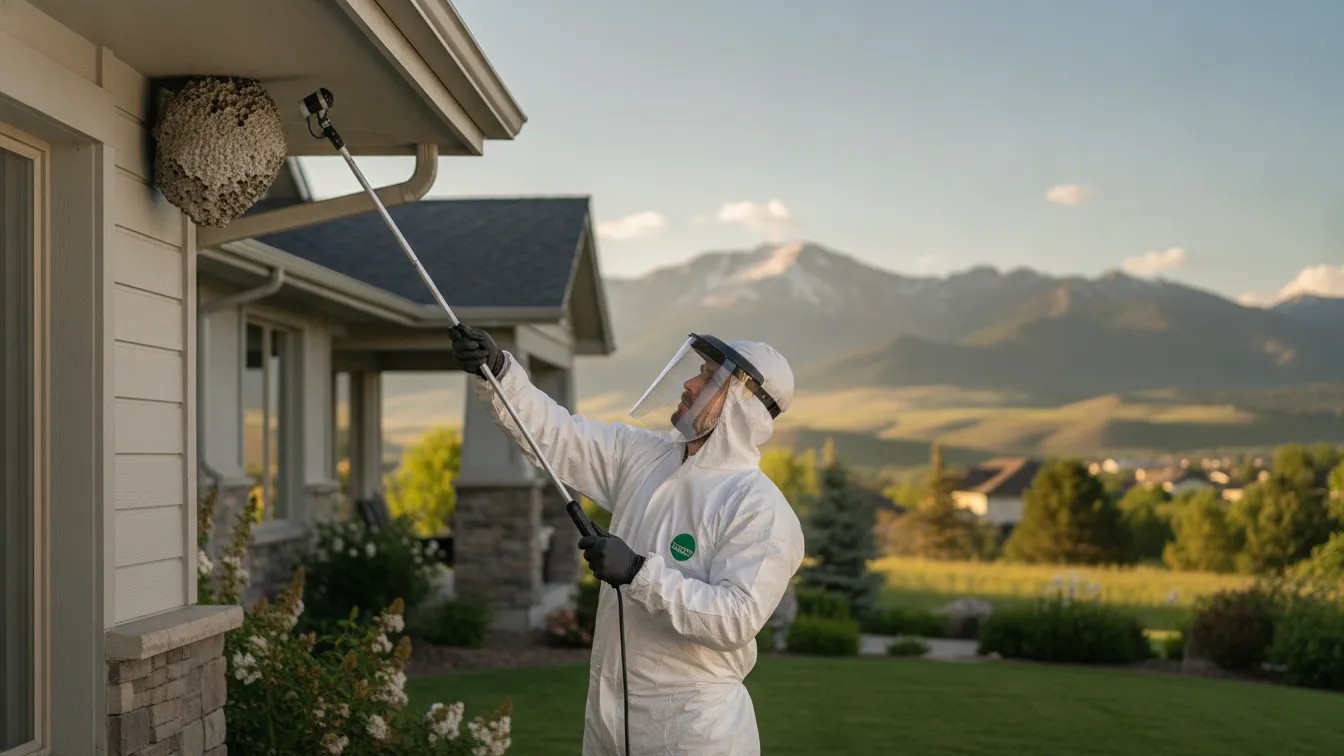
Different wasps use different parts of a property. Paper wasps may attach an open, umbrella-shaped nest beneath an overhang, porch roof, or eave. Bald-faced hornets can build a larger enclosed paper nest in a tree or around a structure. Yellowjackets often use ground-level cavities, but they may also enter wall voids, crawl spaces, or other sheltered openings.
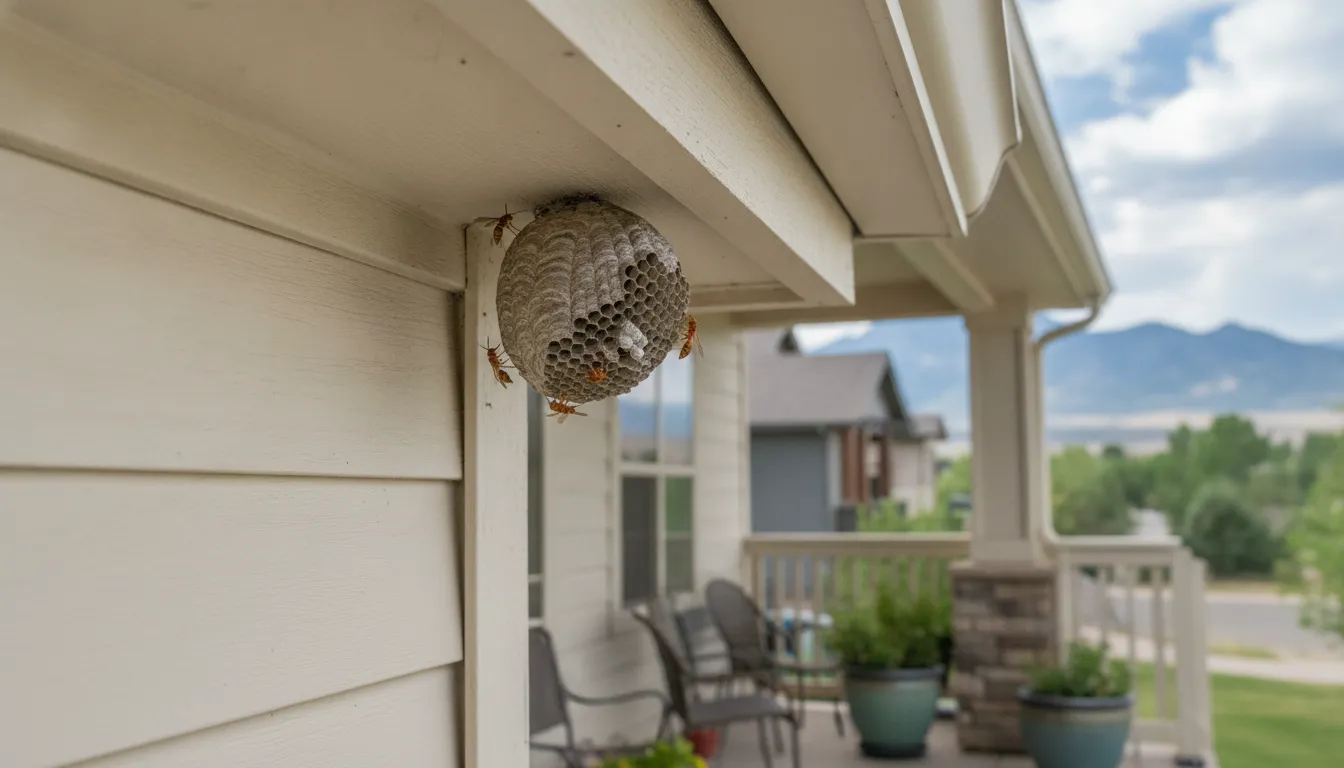
Look from the ground for steady flight traffic rather than getting close to the nest. Potential trouble spots include:
- Under rooflines, gutters, shutters, and porch ceilings
- Inside attic vents, siding gaps, and wall openings
- In trees, shrubs, fence lines, and landscaping near walkways
- Under decks, stairs, sheds, and other ground-level structures
- Near outdoor trash, recycling, pet food, and areas where food is served
A nest does not have to be visible to be active. If wasps disappear into a crack or repeatedly emerge from the same section of siding, the colony may be inside a wall or another protected cavity. Avoid sealing the opening before treatment, because trapped or redirected wasps may find a route into the home.
How can Boulder homeowners tell which stinging insect they have?
Yellowjackets are often smooth-bodied and strongly marked with yellow and black, paper wasps are slender with open nests, and bald-faced hornets are larger black-and-white wasps that make enclosed paper nests. Honey bees are hairier and are important pollinators. When identification is uncertain, keep your distance and arrange professional help.
Identification is useful, but homeowners should not approach a nest to get a closer look. Colorado State University Extension notes that wasps and bees have different diets, nesting materials, and control considerations. Wasps generally build paper nests, while honey bees and bumble bees build wax nests. A honey bee hive may call for a beekeeper or humane relocation rather than routine wasp treatment.
| Insect | Typical property clue | Important response |
|---|---|---|
| Yellowjacket | Traffic to food, trash, ground holes, or wall openings | Keep people away and avoid disturbing the colony |
| Paper wasp | Open paper nest beneath an eave, porch, or sheltered overhang | Do not reach above a doorway or deck to remove it |
| Bald-faced hornet | Enclosed gray paper nest in a tree or on a structure | Give the nest a wide berth and request an inspection |
| Honey bee | Hairier bees, a cluster, or wax comb in a cavity | Ask for identification and beekeeper guidance before treatment |
A few insects around flowers are not the same as a nest. The stronger signal is repeated traffic to one opening or a nest located close to a place your household uses. Beeline Pest Control can help distinguish a stinging insect problem from ordinary pollinator activity and recommend the least disruptive next step.
What does Beeline's Boulder wasp removal service include?
Beeline Pest Control starts with an inspection, identifies the likely insect and nest location, and builds a targeted treatment plan. Licensed technicians use professional equipment and family-conscious application practices, then look for conditions that could support new nesting. Service is backed by Beeline's 100% satisfaction guarantee and free re-treatment when needed.
Professional nest removal is not just a matter of spraying the first nest a homeowner sees. A careful visit considers the nest location, access, activity pattern, nearby entry points, and whether additional nests may be hidden. This is especially important when wasps are entering a wall, attic space, crawl space, or another area that cannot be safely reached from the ground.
Beeline Pest Control's service model follows three practical steps:
- Inspect: identify the insect, trace activity from a safe position, and assess the nest and surrounding property.
- Treat: use a targeted approach suited to the nest location, access, and household concerns.
- Protect: discuss entry points, attractants, and monitoring steps that can reduce the chance of repeat activity.
Beeline is family-owned and has served Colorado since 2009. Owner Jarom Walz brings 26 years of pest management experience, and the company emphasizes licensed technicians, safe application practices, and personal accountability. Treatment recommendations should always account for the specific property, occupants, pets, and insect identified.
Call 303-586-5231 for Beeline's Boulder-area wasp removal service, or view the full pest control service options.
When should you call for wasp nest removal?
Call for professional wasp removal when a nest is near a door, window, deck, walkway, play area, or other high-traffic space; when wasps are entering the home; when activity is increasing; or when someone in the household has a known sting allergy. Urgent activity near an entrance should not be handled as a DIY project.
Location and behavior matter more than nest size. A small nest above a rarely used shed may be less urgent than a nest beside the back door. Contact Beeline promptly if you notice:
- Wasps repeatedly flying in and out of one wall, eave, vent, or ground opening
- A nest above a doorway, patio, deck, staircase, or children's play space
- Wasps entering bedrooms, living areas, garages, or other occupied spaces
- Escalating activity after a nest was bumped, sprayed, or partially damaged
- Frequent stings or a household member with a known severe reaction
While waiting for service, close nearby windows and doors, keep children and pets away from the area, and avoid mowing, trimming, digging, or climbing near the nest. If someone is stung and develops trouble breathing, swelling of the mouth or throat, dizziness, or other signs of a severe allergic reaction, seek emergency medical care immediately.
How can you reduce wasp activity after removal?
After a nest is removed, reduce future wasp activity by keeping food and trash covered, cleaning spills, checking screens and gaps, maintaining eaves and vents, and monitoring the same area early in the season. Do not seal an active nest opening until a professional confirms treatment is complete.
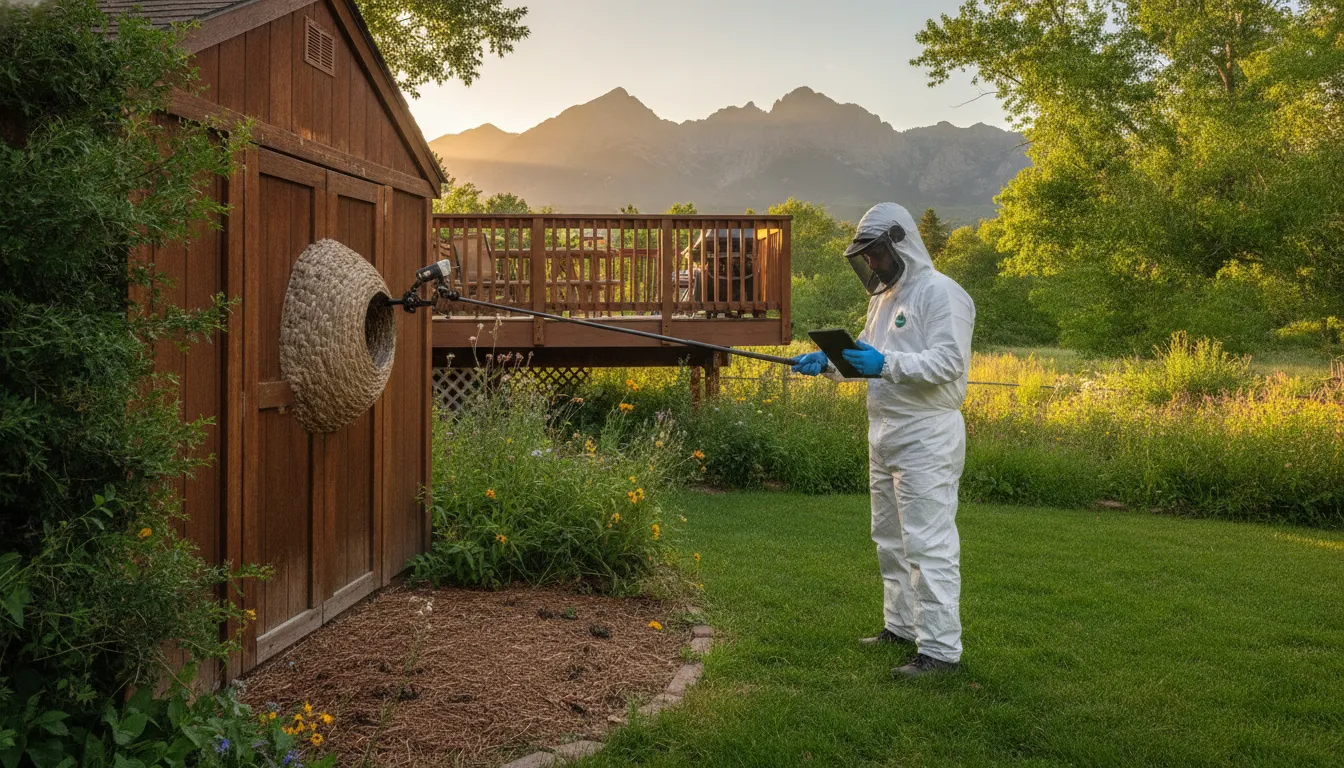
Prevention is most effective when it addresses both attractants and access. Keep outdoor garbage closed, rinse containers when practical, clean sugary spills, and do not leave pet food outside for extended periods. Inspect screens, soffits, vents, and visible gaps around siding before the next warm season. A technician can point out areas that may benefit from exclusion or maintenance.
It is also helpful to monitor the property in early spring, when a new social wasp colony is still small. Finding a nest early does not make DIY treatment safe, but it can make professional assessment simpler and reduce the time a mature colony has to grow. Avoid disturbing nests even when activity appears low.
For broader identification and safety guidance, read Beeline Pest Control's guide to wasp and bee control in Colorado. For a nest-specific discussion, see safe wasp nest removal guidance.
Frequently asked questions about Boulder wasp removal
The safest way to handle a wasp nest in Boulder is to keep people and pets away, avoid disturbing it, and arrange an inspection. Professional identification helps determine whether the issue involves yellowjackets, paper wasps, hornets, or bees and whether removal, relocation, or prevention is appropriate.
Are wasps common around Boulder homes?
Yes. Colorado State University Extension describes wasps as a recurring nuisance throughout Colorado, especially later in summer around outdoor food and garbage. Activity varies by species and property conditions.
Can I remove a wasp nest myself?
DIY removal can put you close to a defensive colony, especially when the nest is above a doorway, inside a wall, or near a ladder. Keep your distance and ask a licensed pest professional to assess the nest.
Will Beeline remove a nest from an eave or wall void?
Beeline Pest Control evaluates nest location and access as part of its inspection. The technician can recommend a targeted treatment plan for visible nests and activity associated with protected areas.
What if I think the insects are honey bees?
Do not spray or disturb a suspected honey bee hive. Honey bees are important pollinators and need different handling from wasps. Request identification and ask about beekeeper or humane relocation options when available.
Does Beeline offer a guarantee?
Beeline Pest Control offers a 100% satisfaction guarantee and free re-treatment when a customer is not satisfied with the service. Ask the team to explain how the guarantee applies to your specific treatment plan.
Call Beeline Pest Control at 303-586-5231 for Boulder wasp removal or request a free estimate online.
For source context on Colorado wasp and bee identification, see the Colorado State University Extension fact sheet on nuisance wasps and bees. Beeline Pest Control serves Boulder and the surrounding Front Range with local, safety-focused pest control and a personal approach.
Get Your Free Pest Control Quote in Aurora, CO
Ready to get rid of unwanted pests for good? Beeline Pest Control offers effective, reliable pest solutions for Aurora, Colorado homeowners. Simply fill out our quick form, and a friendly pest expert will call you back with a free, no-obligation quote to make your home pest-free again!
More Blogs
Some other blogs you might be interested in