Ground Wasps in Colorado: How to Find and Remove Their Nests
Ground wasps in Colorado may nest near lawns and play areas. Learn how to spot a nest, reduce risk, and know when to call Beeline Pest Control.
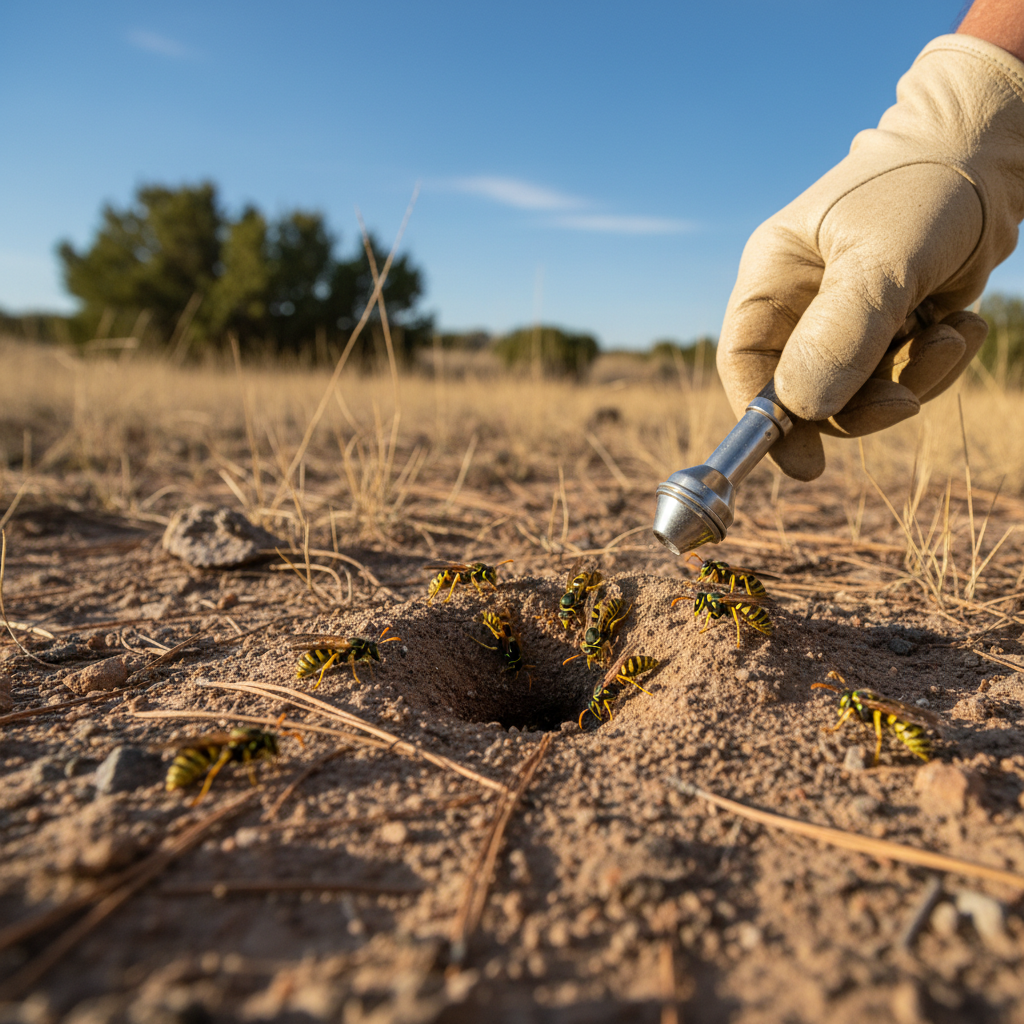
Ground wasps in Colorado can be easy to miss until people or pets get too close to the entrance. A small hole in a lawn, garden edge, or under a retaining wall may lead to an active yellowjacket colony, while other ground-nesting insects may be solitary and much less defensive. This guide explains how to find a nest without disturbing it, what the activity may mean, and how to plan safe ground wasp removal in the Denver metro and Front Range.
Call Beeline Pest Control at 303-586-5231 for a safe ground-wasp inspection.
What are ground wasps, and are they common in Colorado?
Answer: Ground wasps are wasps that nest below the soil surface or use an existing cavity at ground level. In Colorado, yellowjackets are the main concern around active underground colonies, but solitary wasps and ground-nesting bees may also be mistaken for them. Identification matters because colony size and defensive behavior can vary significantly.
The phrase ground wasp describes a nesting location, not one single species. Colorado State University Extension explains that yellowjackets commonly nest underground, often using an existing hollow, while solitary bees and wasps may use soil openings or natural cavities. The visible hole alone cannot tell you whether the nest holds a large social colony or one solitary insect.
Western yellowjackets are a common reason homeowners notice ground-nesting activity. They may forage around outdoor food, trash, fallen fruit, and other sweet or protein-rich sources. Their nest entrance can be small even when the colony is hidden below the surface. A few wasps moving in and out does not reveal the full size or depth of the nest.
Some harmless-looking lawn activity belongs to solitary ground-nesting bees or wasps. These insects generally do not defend a large shared colony, and many are important predators or pollinators. That does not mean you should kneel beside an unknown opening or attempt to excavate it. Observe from a distance and arrange identification when the nest is near a walkway, play area, door, or pet run.
For broader context on Colorado stinging insects, see Beeline Pest Control's wasp and bee control guide. That page covers the larger service category, while this article focuses on the special risks and clues associated with underground nests.
How can you identify a ground wasp nest in your yard?
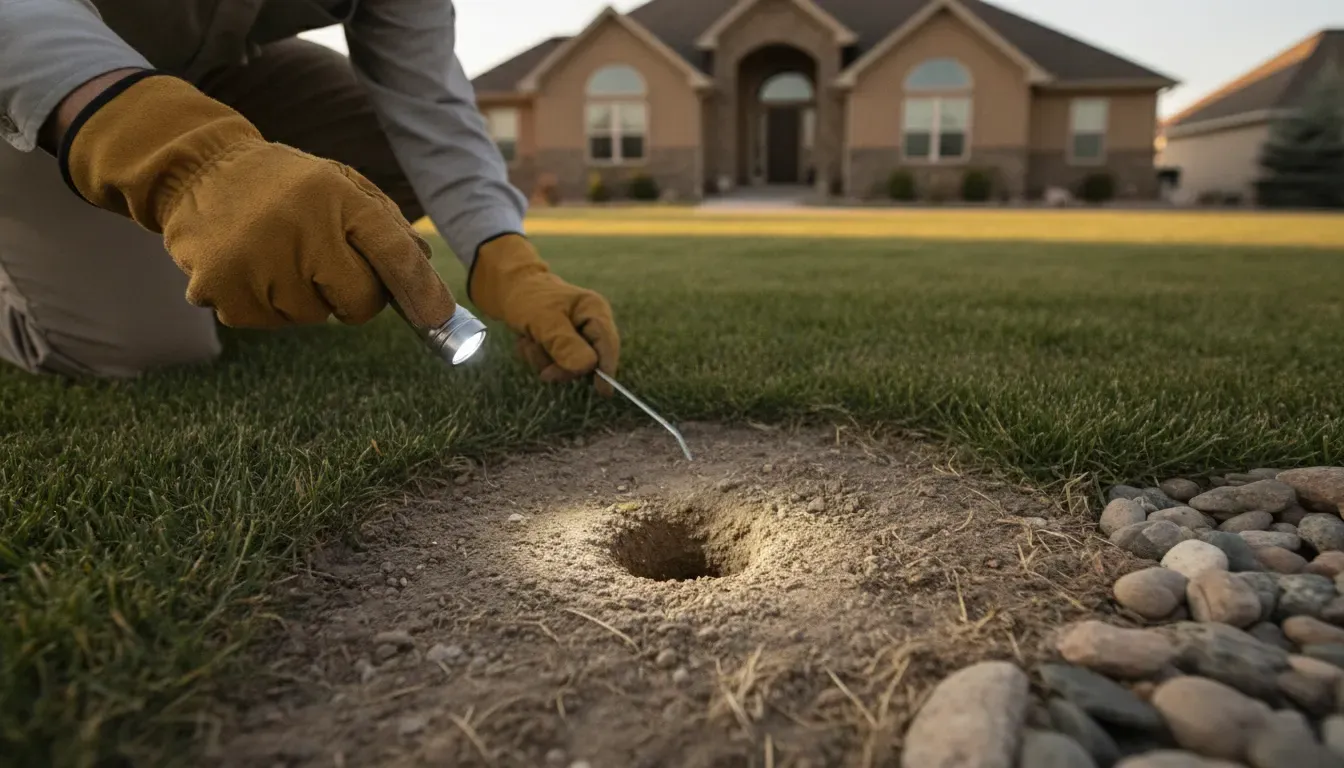
Answer: Look for a consistent flight path to and from one small opening in bare soil, a lawn edge, a retaining-wall gap, or another ground-level cavity. Watch from a safe distance during daylight, but do not poke, pour liquid into, cover, or dig around the entrance to confirm activity.
Use observation rather than contact. From several feet away, look for these signs:
- Repeated traffic: Wasps leave and return to the same opening over several minutes.
- A defined entrance: The opening may be in bare soil, under a stone, beside a root, or inside an abandoned rodent hole.
- A visible flight path: Foraging insects may travel low across the grass before disappearing into the entrance.
- Defensive behavior: Wasps may circle, hover, or approach when someone walks close to the nest.
- Location near activity: A nest becomes a higher priority when it is beside a front walk, patio, playset, garden path, or dog area.
Do not assume every hole is a wasp nest. Irrigation gaps, vole or mouse burrows, solitary bee tunnels, and ground beetle openings can look similar. A nest that seems quiet in the morning may still be active later, and a small entrance may serve a hidden nest chamber that cannot be seen from above.
Take a photo only if you can do so without approaching. Use a phone zoom from a safe distance, keep children and pets indoors or away from the area, and mark the general location from far away for the technician. Never place your face near the opening, insert a stick, kick the soil, or lift nearby stones.
Are ground wasps more dangerous than other wasps?
Answer: An underground social wasp nest can be more hazardous to approach than a single visible wasp because many colony members may defend the same entrance. Yellowjackets can sting repeatedly, and a disturbed nest may create a fast-moving threat near the ground. Risk depends on species, nest location, colony activity, and individual sting sensitivity.
The key distinction is usually colony defense. A solitary ground-nesting insect may be focused on its own nest and may not respond to a person at a distance. A social yellowjacket colony has many workers protecting a shared nest. Disturbing the entrance, nearby soil, or a concealed nest chamber can trigger defensive activity.
Risk is higher when the nest is beside a place people cannot avoid. A hidden nest under a lawn edge may be crossed by a child chasing a ball, a dog running through the yard, or a homeowner mowing. A nest beside a doorway can turn ordinary foot traffic into repeated disturbance. People with a known severe sting allergy should avoid the area entirely and make sure household members know where the hazard is.
Colorado State University Extension notes that most stings occur when social wasp colonies are accidentally disturbed. It also explains that ground-nesting yellowjackets can be difficult to control because the nest may be some distance from the visible opening. Those details are why locating the entrance is useful, but trying to expose or treat the hidden colony yourself is not a safe next step.
What should you do when you find an underground wasp nest?
Answer: Keep people and pets away, avoid mowing or working around the entrance, and do not block or disturb the opening. Note the location from a safe distance and contact a licensed pest professional when the nest is active, inaccessible, near a high-traffic area, or associated with a person who may have a serious sting reaction.
Start with simple exposure control:
- Leave the area calmly: Do not swat at insects or run through the nest zone. Move away without stepping closer to the entrance.
- Keep others out: Close gates or use a temporary barrier that does not require approaching the nest. Keep pets indoors or on a leash away from the area.
- Pause yard work: Avoid mowing, edging, digging, watering directly over, or moving objects near the opening until the nest is assessed.
- Record useful details: Note the location, time of day, visible insect pattern, and whether activity increases when someone passes nearby.
- Arrange an inspection: A licensed technician can identify the pest, assess the nest location, and select a targeted treatment plan for the property and household.
Do not pour gasoline, boiling water, or household chemicals into a hole. Do not seal the entrance while the colony is active, because forcing insects toward another opening can create a new hazard. Avoid placing a trap directly beside a suspected colony without professional guidance. Traps may reduce some foraging activity, but they do not safely resolve a hidden nest.
If someone is stung, follow their existing medical plan. Seek emergency medical help immediately for trouble breathing, swelling of the lips or throat, faintness, widespread hives, or other signs of a severe allergic reaction. Pest control does not replace medical care.
Why is professional ground wasp removal safer?
Answer: Professional ground wasp removal combines identification, distance-based inspection, targeted treatment, and follow-up. A technician can account for the visible entrance, hidden nest location, nearby people and pets, and the possibility of more than one nest. The goal is to reduce exposure while addressing the colony rather than only the wasps seen above ground.
Underground nests create a visibility problem. The entrance may be easy to spot, but the nest chamber, secondary opening, and travel path may not be. A professional inspection helps determine whether the activity matches a social yellowjacket colony or a lower-risk solitary insect. It also identifies property factors that may make the area hazardous, such as a playset, gate, patio, or narrow walkway.
Beeline Pest Control uses a three-step service approach: inspect the property, apply a targeted treatment plan, and recommend ongoing protection where appropriate. For a ground nest, that can include assessing surrounding activity and conditions instead of treating only the first insect a homeowner sees. State-licensed technicians can also discuss precautions for children, pets, and household members before and after treatment.
Professional service is especially appropriate when:
- The entrance is near a doorway, play area, patio, pool, or pet run.
- Wasps become defensive when anyone walks past.
- The nest may be inside a wall void, retaining wall, crawl space edge, or other inaccessible cavity.
- A household member or frequent visitor has a known severe sting allergy.
- Previous DIY attempts did not stop activity or caused wasps to appear elsewhere.
- You cannot identify whether the insects are wasps, bees, or another ground-nesting species.
Beeline is a family-owned Colorado company with owner-led accountability, licensed technicians, and a 100% satisfaction guarantee. The team serves Denver metro and Front Range communities, including Boulder and Colorado Springs. Learn more about the company's local approach and service standards before booking.
How can you prevent ground-nesting wasps around your Colorado home?
Answer: Prevention starts with reducing sheltered cavities, food sources, and easy access around high-traffic areas. Keep outdoor food and trash secured, remove fallen fruit, maintain lawn and garden areas, and inspect gaps around walls or hardscape. Prevention can lower attraction, but it cannot guarantee that a new ground nest will not form.
After an active nest has been professionally addressed, ask about practical prevention for your property:
- Secure attractants: Keep trash lids closed, clean spills promptly, and bring pet food indoors after feeding.
- Manage fallen fruit: Pick up overripe fruit and other food sources that can attract foraging yellowjackets.
- Maintain high-traffic areas: Keep grass, weeds, and dense ground cover trimmed enough to see walking paths and lawn edges.
- Inspect hardscape: Check gaps under steps, edging, pavers, and retaining walls where insects may find protected cavities.
- Plan seasonal checks: Look over likely nesting areas in spring and during late-summer activity without disturbing holes or crevices.
Colorado's seasons change nesting and foraging patterns. A quiet area in spring can become active later as colonies grow and outdoor food sources increase. If you notice repeated insect traffic, treat it as a location to observe and report, not a hole to investigate by hand.
Frequently Asked Questions About Ground Wasps in Colorado
What do ground wasp nests look like?
A ground wasp nest may have a small, repeatedly used entrance in bare soil, a lawn edge, beneath a stone, or inside an existing cavity. The nest itself is usually underground and hidden. Consistent insect traffic is more useful than the hole's appearance, but only a professional inspection can reliably identify the insect and nest.
Are all ground-nesting insects in Colorado aggressive?
No. Colorado has social yellowjackets as well as solitary ground-nesting bees and wasps. Social colonies may defend a shared underground nest, while solitary insects are generally less defensive. Because a homeowner cannot safely identify behavior by looking at one hole, keep your distance and avoid disturbing any unknown nest near people or pets.
Can I fill in a ground wasp hole?
Do not fill, cover, flood, or dig into an opening that may be an active wasp nest. Blocking the visible entrance may redirect insects toward another opening or increase the chance of an encounter. Keep the area clear and contact a licensed pest professional for identification and removal guidance.
When are ground wasps most active in Colorado?
Activity varies by species and weather, but homeowners often notice more social wasp activity later in the warm season as colonies and foraging pressure increase. A nest can still be active when visible traffic seems light. Avoid using a quiet period as a reason to approach or treat the entrance yourself.
Does Beeline Pest Control remove ground wasp nests?
Beeline Pest Control provides professional wasp and stinging-insect service across the Denver metro and Front Range. A technician can inspect the property, identify the concern, recommend a targeted plan, and explain household precautions. Call 303-586-5231 to discuss an active ground nest or schedule an inspection.
Protect your family and pets from a hidden nest. Call Beeline Pest Control at 303-586-5231 today.
Sources: Colorado State University Extension, Nuisance Wasps and Bees; Colorado State University Extension, European Paper Wasp.
Get Your Free Pest Control Quote in Aurora!
Tired of pests invading your home in Aurora, Colorado? Beeline Pest Control is here to help! Simply fill out our quick form with your contact details, and a friendly pest expert will call you back with a personalized, no-obligation quote. Let's make your home pest-free, fast and effectively!
More Blogs
Some other blogs you might be interested in